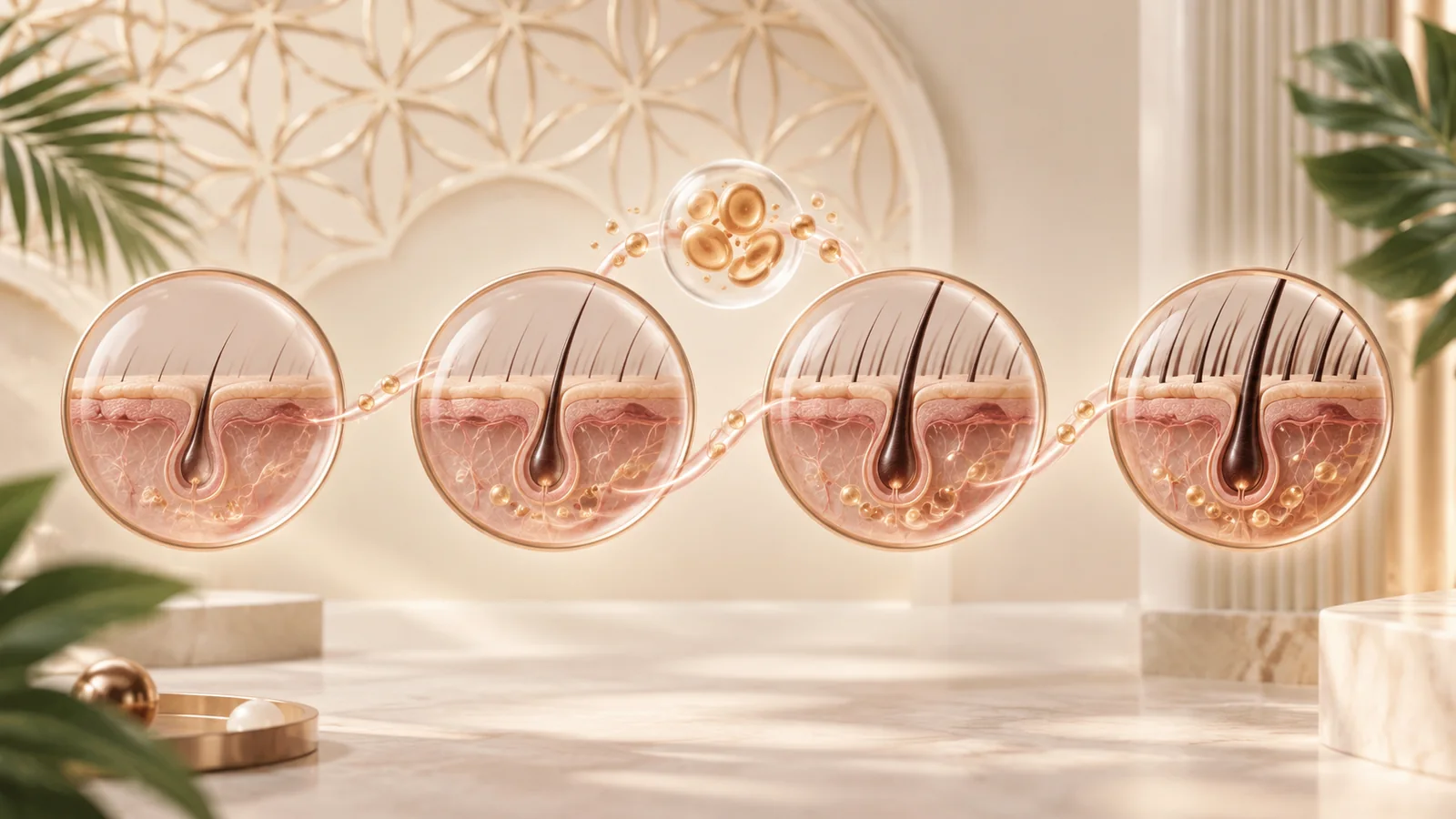
A PRP hair results timeline is measured in months, not days. Platelet-rich plasma is prepared from a patient’s own blood and injected into selected areas of the scalp. When it is appropriate for pattern hair loss, reduced shedding may be noticed before visible density changes. Results vary, and PRP cannot restore follicles that are no longer active.
Quick answer: when can PRP hair results appear?
During the first month, the scalp heals and some patients notice less shedding, although visible regrowth is usually too early to judge. At three months, early changes in shedding, hair calibre or short regrowth may become measurable. Six months is a more useful point for photographs and density assessment. At twelve months, the doctor reviews the overall response and whether maintenance or another strategy is appropriate. No timeline guarantees a result.
Online before-and-after photographs can make PRP look immediate. Hair biology is slower. Scalp hair spends years growing, then moves through transition, rest and shedding phases. A follicle that responds today still needs time to produce a shaft long enough to affect visible coverage. This guide explains what can realistically be assessed at one, three, six and twelve months, what may delay progress and when the diagnosis should be reconsidered.
What PRP hair treatment actually involves
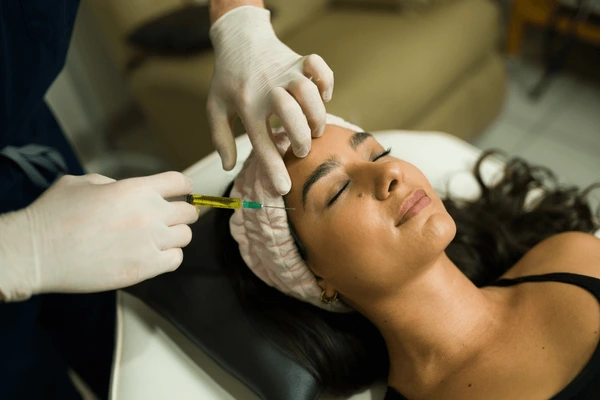
PRP stands for platelet-rich plasma. A small sample of blood is collected and processed in a centrifuge to separate plasma with a higher platelet concentration from other components. The prepared plasma is then delivered into the scalp according to the clinic’s protocol. Because preparation systems differ, PRP is not one completely standardised product.
Platelets release signalling proteins involved in tissue repair. Researchers have studied whether these signals can support follicles affected by androgenetic alopecia, also called male or female pattern hair loss. Systematic reviews report potential improvements in hair density, but study protocols, platelet concentrations, injection schedules and outcome measures vary. Evidence supports cautious optimism, not guaranteed regrowth.
The American Academy of Dermatology describes a common clinical schedule of monthly sessions for three months followed by maintenance every three to six months. This is a general pattern rather than a prescription for every patient. The treating doctor should choose the plan after diagnosis and response review.
The PRP hair treatment timeline at a glance
| Time point | What may be happening | What should be assessed |
|---|---|---|
| First 48 hours | Temporary tenderness, redness, pinpoint bleeding or swelling can occur. | Healing and adverse effects, not hair growth. |
| 1 month | The scalp has recovered. Some people report less shedding, while others notice no change. | Comfort, shedding trend, adherence and the next planned session. |
| 3 months | Early biological response may appear as reduced shedding, short regrowth or improved calibre. | Standardised photographs, hair-pull trend and tolerance. |
| 6 months | A meaningful cosmetic or measurable response may be clearer in responders. | Density, calibre, pattern stability and whether combined treatment is needed. |
| 12 months | The overall result and durability can be reviewed. | Maintenance, modification, stopping or alternative treatment. |
Before month one: the baseline matters
The best timeline begins before the first injection. Photographs should use the same lighting, camera distance, hair length, hairstyle and degree of wetness. A centre part can appear wider under harsh overhead lighting or when hair is oily. Casual selfies are useful memories but poor scientific comparisons.
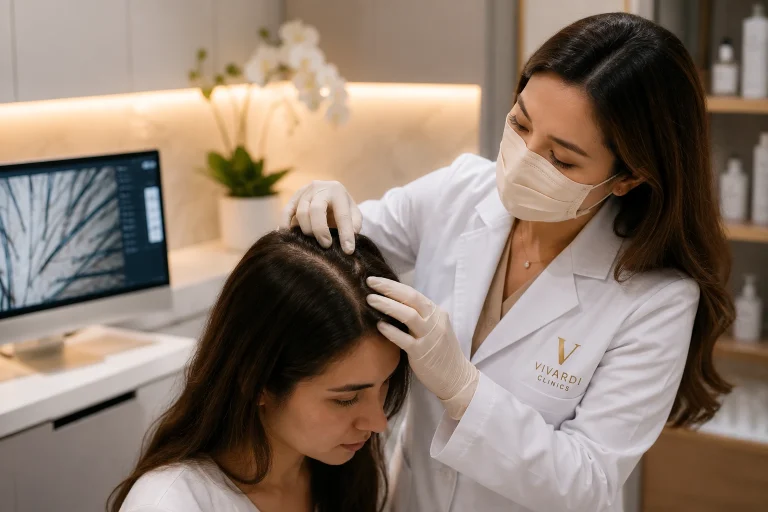
The doctor should record the diagnosis, affected zones and severity. Dermoscopy can identify follicle miniaturisation, diameter diversity, inflammation and scarring signs. Where available, a defined target-area hair count or trichoscopic measurement provides a more objective baseline.
Recent fever, surgery, childbirth, rapid weight loss, severe stress or nutritional deficiency can cause telogen effluvium on top of pattern thinning. If that trigger is not recognised, temporary shedding may be wrongly interpreted as PRP failure or success. Blood tests are selective, not routine for every patient. Review the guide to blood tests for hair loss when deciding what may be relevant.
What to expect during the first 48 hours
PRP is a procedure involving blood collection and scalp injections. Temporary injection-site discomfort, redness, swelling, pinpoint bleeding, headache or bruising can occur. Follow the clinic’s instructions on washing, exercise, sun exposure, hair products and medicines. Do not apply an unapproved numbing product or home treatment to irritated skin.
Contact the clinic if pain or swelling is increasing, redness is spreading, there is pus, fever, facial swelling, breathing difficulty or another unexpected reaction. PRP uses autologous blood, which reduces some allergy concerns, but sterile preparation and injection technique remain essential.
PRP hair results at one month
One month is usually too early for a dramatic change in coverage. Any newly produced shaft is still short. Some patients report fewer hairs in the shower or a calmer shedding phase. Others see no difference. Both can occur without determining the final result.
If a series is planned, this may be the time of the second treatment. The doctor should check scalp healing, ask about adverse effects and confirm that the diagnosis still fits. One-month photographs may establish consistency, but small changes can be caused by styling or lighting.
A temporary increase in shedding can also occur because the underlying condition is active, a recent trigger is reaching its shedding phase, or another treatment such as minoxidil was started. PRP should not automatically be blamed or credited without reviewing the full timeline.
PRP hair results at three months
Three months is an early but useful checkpoint. Several research studies assess density around this period, and a 2023 meta-analysis of randomised trials found a statistically significant increase in hair density at three and six months compared with placebo. However, the number of participants was limited, and results across PRP studies are heterogeneous.
Possible early signs include less shedding, short new hairs, improved hair calibre or better coverage under the same lighting. Short hairs must be distinguished from breakage. Regrowth usually has tapered ends, while broken hair may be blunt, frayed and uneven.
A patient who sees no visible improvement at three months should not be promised that success is certain later. The doctor can review whether the condition is too advanced, the diagnosis is wrong, the protocol was completed, or an untreated trigger remains. Continuing blindly because a package was purchased is not good clinical reasoning.
PRP hair results at six months
Six months is often a better time to assess visible response. Hair that began growing earlier has had time to lengthen. Standardised photos may show improved scalp coverage, and trichoscopy may detect changes in density or diameter. A systematic review of randomised trials reported favourable pooled density outcomes at six months, while also noting substantial variation among studies.
Response does not mean the hairline returns to its teenage position. PRP is generally considered for living, miniaturised follicles. Smooth long-standing bald areas with little active follicular capacity are less likely to respond. Stabilisation or reduced shedding can be meaningful even when photographs are not dramatic.
At this review, discuss whether PRP is being used alone or alongside established treatment. Pattern hair loss continues to be influenced by genetics and hormones. PRP does not permanently remove those drivers. A combined plan may include appropriate topical or oral medicine, nutrition correction and scalp-disease management.
PRP hair results at twelve months
Twelve months allows comparison across a full year and reduces the distortion of short-term shedding cycles. The doctor should review patient satisfaction, objective change, maintenance burden, side effects and cost-effectiveness. A successful result may be maintained with periodic treatment, although the ideal schedule is not standardised.
If density has continued to decline, repeating the same plan indefinitely may not be sensible. Recheck the diagnosis, adherence to other treatment, progression and whether hair transplantation or camouflage options are more realistic. Scarring alopecia needs disease control, not cosmetic stimulation alone.
Why PRP results differ between patients
Clinical factors
- Correct diagnosis
- Stage and duration of hair loss
- Number of miniaturised follicles still present
- Age, genetics and hormonal influence
- Smoking, illness and nutritional status
- Untreated scalp inflammation
- Use of other effective treatments
Protocol factors
- Blood collection and centrifugation method
- Platelet concentration and final volume
- Activation method
- Injection depth and distribution
- Number and interval of sessions
- Outcome measurement method
- Maintenance schedule
This variation is why results from one clinic, device or social media photograph cannot be applied to everyone. Ask what protocol is used and how progress will be measured. Be cautious if a provider cannot name the diagnosis but guarantees a percentage of regrowth.
Who may be a reasonable candidate?
PRP is most often considered for men or women with early to moderate androgenetic alopecia who still have miniaturised follicles. It may also be explored for other conditions by specialists, but evidence and protocols differ. Suitability requires examination.
PRP may be less appropriate when hair loss is caused by untreated deficiency, uncontrolled thyroid disease, active scalp infection, a bleeding disorder or medicine that affects safety. Pregnancy, breastfeeding, autoimmune disease, low platelets, anticoagulant use and a history of fainting during blood collection should be discussed. Never stop prescribed medicine without the prescriber’s instruction.
PRP is not a blood test or stem-cell treatment
PRP is produced from the patient’s blood, but the treatment does not diagnose deficiencies or hormone problems. It is also not the same as stem-cell therapy. Accurate terminology helps patients understand what evidence applies to the procedure they are receiving.
Ask whether anything is being added to the preparation. Products, medicines or devices combined with PRP have their own risks and evidence. Consent should reflect the actual procedure, not a vague label such as “regenerative hair package”.
How to measure progress without fooling yourself
- Take standardised photographs: use the same room, lighting, angle, distance and hairstyle.
- Choose fixed time points: baseline, three months, six months and twelve months are more useful than daily photos.
- Record shedding carefully: note a general trend rather than counting every hair, which is difficult and anxiety-provoking.
- Use clinical measurements: dermoscopy or target-area counts can detect changes not obvious in a photograph.
- Track other treatment: record when medicine, supplements or diet changed.
- Judge function and burden: include styling ease, confidence, discomfort, visits and maintenance.
PRP with minoxidil or oral medication
Research has explored PRP alone and in combination with minoxidil. Some analyses suggest combination treatment may improve outcomes, but evidence certainty and protocol consistency remain limited. A combined plan can also make it harder to identify which component caused a change.
Medication may target an ongoing mechanism more continuously than intermittent injections. It also has contraindications and possible side effects. Visit the oral hair regrowth medication page to understand why prescribing requires an individual review. Do not use another patient’s medicine or combine products without telling the doctor.
PRP compared with QR678 Neo
PRP is autologous, while QR678 Neo is a manufactured formulation. They are not interchangeable despite both being delivered into the scalp. Evidence bases, ingredients, protocols and eligibility differ. The best choice depends on diagnosis and informed consent, not which package sounds newer.
See the QR678 Neo hair treatment page for its specific assessment pathway. A responsible consultation should also discuss medicine, observation, hair transplantation and cosmetic camouflage when relevant.
Can PRP make hair loss worse?
PRP is not expected to destroy healthy follicles when properly performed, but hair loss can continue because the underlying disease progresses. Temporary shedding may reflect the hair cycle or another simultaneous trigger. Infection, significant inflammation or trauma could harm the scalp, which is why sterile technique and follow-up matter.
Rapid worsening, painful inflammation, pustules or scarring signs require examination. Do not wait for the next scheduled package session if the clinical picture has changed.
What counts as a meaningful result?
A meaningful result is not limited to a dramatic photograph. For one patient, success may mean stabilising a widening part. For another, it may mean less shedding, thicker shafts or easier styling. The goal should be agreed before treatment and tied to a measurement that can be repeated. Satisfaction alone matters, but it can be influenced by lighting, hair fibres, a new haircut and expectations.
Ask the doctor to separate statistical change from visible benefit. A small density increase may be measurable without changing appearance, while modest calibre improvement across many hairs can improve coverage. Also consider the burden of blood draws, injections, travel and maintenance. Treatment is valuable only when its benefit is worthwhile for the individual patient.
Side effects and safety questions
Common temporary effects include injection discomfort, scalp tenderness, redness, swelling, headache, bruising and pinpoint bleeding. Less common concerns include infection, prolonged inflammation, nerve or vessel injury and reactions to any added material or anaesthetic. Blood collection can cause bruising or fainting.
Contact the clinic promptly
Seek advice for worsening pain, spreading redness, pus, fever, facial swelling, persistent numbness, a severe headache or any symptom outside the aftercare plan. Seek emergency help for breathing difficulty, collapse or signs of a severe allergic reaction.
Questions to ask before beginning a PRP series
- What exact type of hair loss do I have?
- Why is PRP suitable for this diagnosis?
- What result is realistic at three, six and twelve months?
- How is the PRP prepared and is anything added?
- How many initial sessions and maintenance visits are proposed?
- How will density or calibre be measured?
- Which side effects require urgent contact?
- What are the alternatives if I do not respond?
Frequently asked questions
Can PRP regrow a completely bald area?
PRP is more likely to be considered where living miniaturised follicles remain. A smooth, long-standing bald area is less likely to produce meaningful regrowth and may need a different strategy.
How many PRP hair sessions are needed?
Protocols vary. A common schedule described by the American Academy of Dermatology uses monthly treatment for three months, followed by maintenance every three to six months. Your plan may differ.
Will I see results after the first session?
Visible density change after one session is unlikely to be reliable. Some patients notice reduced shedding, but photographs and measurements over several months are more informative.
What should happen by three months?
A responder may notice less shedding, short regrowth or calibre change. Lack of visible change is a reason to review progress, not proof that later success is guaranteed or impossible.
Is six months the final result?
Six months is a valuable checkpoint, but hair can continue changing. A twelve-month comparison gives a broader view of response and durability.
Do PRP results last permanently?
Pattern hair loss is progressive, and PRP does not remove its genetic or hormonal drivers. Maintenance or additional treatment may be needed.
Is PRP better than minoxidil?
They work differently and evidence varies. Some patients use both. The choice depends on diagnosis, contraindications, preference and ability to maintain treatment.
Is PRP painful?
Multiple scalp injections can be uncomfortable. Pain-control methods vary, and patients should discuss anaesthetic options and their risks before treatment.
Can women have PRP hair treatment?
Women with suitable pattern hair loss may be candidates. Pregnancy, breastfeeding, hormonal symptoms and other causes of diffuse shedding must be considered first.
When should PRP be stopped?
Stopping may be reasonable if diagnosis changes, side effects occur, objective decline continues, the burden outweighs benefit or a proper trial shows no meaningful response. Decide with the treating doctor.
Medical references
Build a measurable hair treatment plan
Book a private assessment at Vivardi Clinics to confirm the cause, discuss whether PRP is suitable and record a reliable baseline.
Medically reviewed by Dr. Dinesh Kumar. This article provides general education and does not guarantee results or replace diagnosis and personalised medical advice.