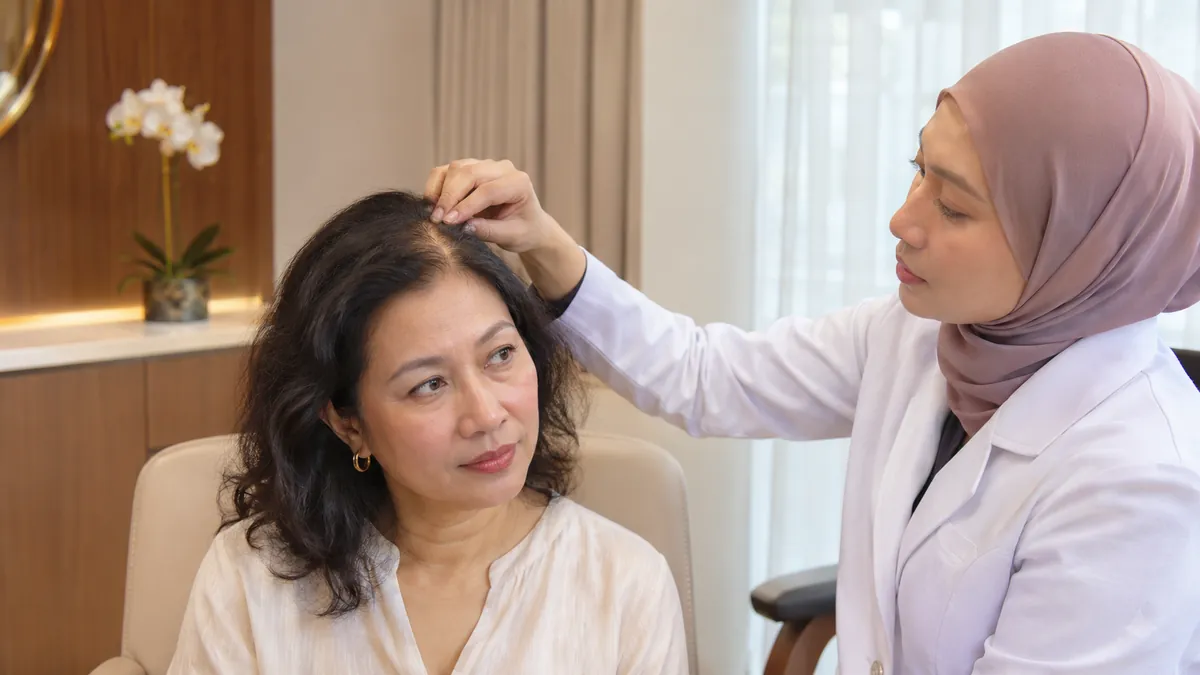
Hair thinning around perimenopause or menopause is common, but it should not automatically be dismissed as an unavoidable part of ageing. Changes in oestrogen, androgen balance, scalp biology, sleep, nutrition and stress can make an existing tendency to female-pattern hair loss more visible. Some women also have a separate cause of diffuse shedding that needs attention.
Quick answer
A widening central part, reduced ponytail volume or more visible scalp may develop gradually. Sudden shedding after illness, significant weight change, surgery, a new medicine or a restrictive diet has a different pattern. Itching, scale, pain, irregular periods, acne, facial hair growth or fatigue may give the doctor additional clues about hormonal, endocrine or scalp contributors.
What a proper assessment looks for
Assessment includes the distribution of thinning, hair calibre, scalp skin, medical history, menstrual and menopausal history, medicines and family history. Blood tests are not a routine checklist for everyone, but iron status, thyroid function or other tests may be considered when symptoms or examination suggest them. Photographs and trichoscopy can make follow-up more useful than relying on memory.
| Question | Why it matters |
|---|---|
| When did the change begin? | Timing can separate a gradual condition from a trigger-related or acute problem. |
| What else has changed? | Medicines, symptoms, sleep, nutrition, medical history and treatment history can change the next step. |
| What does the examination show? | Visible patterns and targeted tests are more useful than treating from a symptom alone. |
Options should match the diagnosis
Options depend on the diagnosis and health context. Topical minoxidil is commonly discussed for selected female-pattern hair loss. Prescription options, scalp treatment, nutrition advice or procedural therapies may be considered for suitable patients, while some people need dermatologist or menopause-care input first. No treatment can promise a particular density or timeline.
Vivardi’s approach is consultation-led: discuss your history, examination findings, realistic benefits, limitations, alternatives and follow-up before choosing a plan. Read the clinic’s related treatment guide or browse all doctor-led services.
Why the details matter in this situation
A widening central part, reduced ponytail volume or more visible scalp may develop gradually. Sudden shedding after illness, significant weight change, surgery, a new medicine or a restrictive diet has a different pattern. Itching, scale, pain, irregular periods, acne, facial hair growth or fatigue may give the doctor additional clues about hormonal, endocrine or scalp contributors. It is tempting to look for one direct answer online, especially when the concern feels personal or embarrassing. In clinical practice, however, the same headline symptom can arise from more than one cause. The sequence of events, what makes the symptom better or worse, other changes in the body and previous treatment all affect whether a suggested option is sensible.
For menopause hair thinning, the goal of a consultation is not to sell a procedure or give a generic checklist. It is to identify what is most relevant for the individual. That may mean reassurance and monitoring, a simple change in care, targeted testing, prescribed treatment, a referral, or choosing not to intervene. A safe plan starts by accepting that online information cannot examine a person or rule out every alternative.
Build a clear timeline before you decide on treatment
Try to describe when the issue was first noticed, whether it began suddenly or gradually, and whether it has changed in a predictable pattern. Include recent illness, surgery, stress, weight changes, sleep disruption, new medicines, supplements, skin or scalp products, sexual-health exposures where relevant, and previous procedures. These are not minor details. They can point towards a temporary trigger, a chronic condition, an adverse effect, or an unrelated problem that needs its own attention.
Bring photographs only if they are comfortable and clinically useful, such as consistent scalp photographs for a hair concern or a record of skin changes. Avoid repeatedly checking or measuring in ways that increase anxiety. The clinician can decide which examination, documentation or tests would add useful information. Results should be interpreted together with symptoms and examination, not in isolation.
What a doctor may ask about
- Pattern and timing: the first sign, the pace of change and whether symptoms are intermittent or persistent.
- Associated symptoms: pain, itch, swelling, fatigue, fever, sleep changes, urinary or sexual symptoms, mood changes, bleeding or digestive symptoms when applicable.
- Health context: diabetes, thyroid disease, cardiovascular disease, hormonal history, pregnancy possibility, allergies and relevant family history.
- Medicines and products: prescribed medicines, injections, over-the-counter products, supplements, hormones and previous cosmetic or clinic treatments.
- Goals: what improvement would be meaningful, what trade-offs are acceptable, and whether an important date makes a staged plan safer.
Assessment includes the distribution of thinning, hair calibre, scalp skin, medical history, menstrual and menopausal history, medicines and family history. Blood tests are not a routine checklist for everyone, but iron status, thyroid function or other tests may be considered when symptoms or examination suggest them. Photographs and trichoscopy can make follow-up more useful than relying on memory. If a test is suggested, ask what question it is meant to answer and how the result could change the plan. This helps avoid both unnecessary testing and false reassurance from a result that does not match the clinical picture.
How to judge information and treatment claims
Health content is most useful when it separates established information from marketing language. Be cautious of a claim that promises a permanent result, a fixed timeline, no risk, or suitability for everyone. The evidence, side effects, recovery time, contraindications and need for follow-up can differ substantially between people. A responsible clinician should explain uncertainty in plain language and give you time to consider alternatives.
Options depend on the diagnosis and health context. Topical minoxidil is commonly discussed for selected female-pattern hair loss. Prescription options, scalp treatment, nutrition advice or procedural therapies may be considered for suitable patients, while some people need dermatologist or menopause-care input first. No treatment can promise a particular density or timeline. Ask about the expected purpose of the option, what it cannot do, how progress will be reviewed, what would lead to a change in plan, and how complications are handled. If the result depends on repeated treatment, understand the likely follow-up before starting rather than after the first session.
A practical, safer way to monitor progress
Use a short symptom diary rather than memory alone. Note dates, severity, triggers, any treatment used and whether ordinary activities are affected. For visible changes, use the same lighting, angle and distance if photographs are appropriate. For medication-related concerns, record the exact product, dose, date started and other medicines taken at the same time. This makes a follow-up conversation more precise and can prevent an unhelpful cycle of stopping and restarting treatments.
Avoid crash dieting, excessive heat or traction and hair products that irritate a sensitive scalp. Aim for adequate protein and a varied diet rather than high-dose supplements without evidence of a deficiency. Record symptoms such as hot flushes, sleep disruption or new medicines to discuss at review. Self-care should support, not replace, professional assessment when symptoms persist, worsen or affect wellbeing. Do not share prescription medication, buy injectable or intimate-health products from unverified sellers, or rely on a social-media testimonial as evidence that something is safe for you.
Questions worth taking to the appointment
- What are the most likely explanations in my case, and what needs to be ruled out?
- Do I need an examination, a test, or a referral before treatment?
- What are the likely benefits, limits, recovery needs and known risks of each option?
- How does my health history or current medication change the decision?
- When should I expect a review, and what symptoms should make me contact the clinic earlier?
The answers should be specific to you. A good consultation does not rely on pressure, shame or a one-size-fits-all package. It gives you enough context to make a voluntary, informed decision.
What can make the situation look more complicated
One symptom can sit alongside another without both having the same cause. For example, a visible change may coexist with stress or poor sleep, while a medication, a chronic health condition or a separate skin problem is also contributing. This is why it is safer not to assume that one explanation accounts for every detail. Tell the doctor about changes that seem unrelated as well as the main concern. They may be important, or they may simply help narrow the possibilities.
It is also reasonable to say if the issue is affecting confidence, a relationship, work, sleep or daily routines. These effects matter when weighing the value of treatment against its burden. They do not prove a diagnosis, but they help the clinician understand what outcome would be useful and whether additional support or referral should be considered.
Set realistic expectations from the beginning
For Hair Thinning During Menopause: Hormones, Scalp Changes and Treatment Options, the safest expectation is improvement that is meaningful for the individual, not a guaranteed or identical outcome. Some causes respond quickly once the trigger is addressed; others require a longer period of observation or a gradual, staged treatment plan. Cosmetic and regenerative claims deserve particular care because results can vary with anatomy, biology, technique, lifestyle and the starting condition.
Before agreeing to a treatment, make sure you understand whether the intended change is temporary or durable, whether maintenance may be needed, whether there is any recovery or downtime, and what happens if it does not meet expectations. You should receive clear aftercare instructions and a way to contact the treating clinic if a concerning symptom occurs.
Medication, procedure and product safety
Do not assume that a product is safe simply because it is sold online, used by a friend or described as natural. The source, storage, dose, sterility and interaction with other medicines matter. This is especially important for prescription medicines, injections, intimate-health products and active skin treatments. Tell the clinician about blood thinners, hormones, diabetes medicines, allergy history, pregnancy possibility and prior reactions where these apply.
If a procedure is discussed, ask who will perform it, what training and emergency arrangements are in place, and what risks are uncommon but serious. You should never feel pushed to make a same-day decision simply because of a promotion or a limited-time price. Time to consider the information is part of informed consent.
After the consultation
A useful follow-up plan states what to do next, what to avoid, when to reassess and which warning signs should not wait. Keep any written instruction and bring it to a future review if symptoms change. If you obtain care elsewhere, share enough information to avoid conflicting medicines or duplicated procedures. If the explanation does not feel clear, ask for it again in plain language.
The trusted aim is not to chase a perfect online answer. It is to reach a diagnosis-led plan that is appropriate for your health, priorities and safety. That is particularly important where symptoms are persistent, treatment is elective, or an underlying condition could be missed.
Use reliable sources, but keep the context personal
The references below are included so readers can check established patient information rather than relying on a clinic claim alone. They cannot tell you whether a treatment is right for you. Official patient resources usually explain common causes, general warning signs and broad management principles. Your own medical history, examination findings and treatment goals determine how those principles apply.
For this reason, the safest next step for menopause hair thinning is usually a focused discussion instead of self-diagnosis. A clinician can explain whether the concern appears temporary, whether a test or referral is warranted, and whether treatment should be conservative, medical, procedural or simply monitored. That discussion should include the possibility that no treatment is needed.
Make a decision you can revisit
Except where there is an urgent warning sign, you can pause, seek clarification or get a second opinion before starting an elective intervention. Write down the key points after the consultation: the working diagnosis, the proposed option, expected benefit, main risks, cost and maintenance requirements, plus the planned review date. This is especially useful if several options are offered at once.
Health decisions are stronger when they are based on complete information, not embarrassment or urgency created by advertising. Private care should still be careful care. If something does not feel right, symptoms have changed, or the plan is not achieving its stated purpose, contact the clinic rather than making a new decision alone.
Key points to remember
- A headline symptom is a starting point for assessment, not a diagnosis by itself.
- The timing, associated symptoms and your medical history can materially change the safest option.
- Evidence-based care includes discussing alternatives, limits and follow-up, not only potential benefits.
- New, severe, persistent or rapidly worsening symptoms deserve earlier medical attention.
Hair thinning around perimenopause or menopause is common, but it should not automatically be dismissed as an unavoidable part of ageing. Changes in oestrogen, androgen balance, scalp biology, sleep, nutrition and stress can make an existing tendency to female-pattern hair loss more visible. Some women also have a separate cause of diffuse shedding that needs attention. Keep this context in mind when reading reviews, comparison posts or social-media content. Those sources may describe somebody else’s experience but cannot account for your examination, risk factors or priorities. An informed decision is usually calmer, safer and more useful than acting quickly on a promise.
For readers in Malaysia
Use a registered, appropriately qualified healthcare professional for an assessment and follow the clinic’s written advice. If you are unsure about a medicine, injection, device or procedure being offered online, do not proceed until its purpose, source and risks have been explained clearly. Keep your own health record up to date and seek urgent care when the warning signs above are present. If you already have a regular doctor or specialist, share the plan with them so that important conditions, treatments and medication interactions are not missed.
What you can do before the appointment
Avoid crash dieting, excessive heat or traction and hair products that irritate a sensitive scalp. Aim for adequate protein and a varied diet rather than high-dose supplements without evidence of a deficiency. Record symptoms such as hot flushes, sleep disruption or new medicines to discuss at review.
When not to wait
Seek earlier assessment for sudden patches, eyebrow loss, severe scalp inflammation, rapidly worsening thinning, signs of virilisation, marked tiredness, unexplained weight change or bleeding after menopause.
Frequently asked questions
Will menopausal hair thinning reverse on its own?
It depends on the cause. Temporary shedding can improve when a trigger resolves, while pattern thinning often needs a long-term management discussion.
Do hormone treatments fix hair loss?
Hormone therapy has its own indications, risks and benefits. It should not be started solely from an online hair-loss article.
Are supplements enough?
They help only if a relevant nutritional deficiency or dietary problem is present. More is not always safer.
Reliable further reading
Discuss it privately with a doctor
A private consultation helps separate online information from what is appropriate for your own health, medicines and goals.
Medically reviewed by Dr. Dinesh Kumar. This article is general education only and does not replace individual diagnosis, treatment or emergency care. Treatment suitability and results vary.