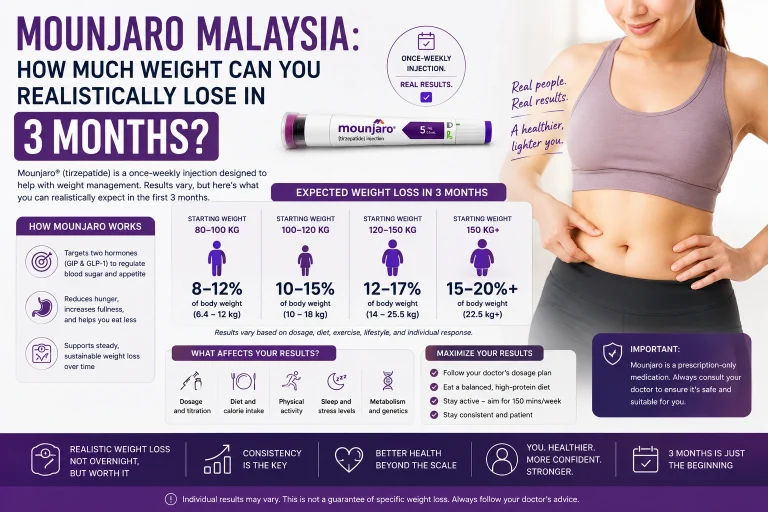
Let me be direct: Tirzepatide is the most effective weight loss medication I have prescribed in my career. But it is not magic, it does not work the same way for everyone, and there are things about it that most clinics in Malaysia will not tell you upfront.
This article is my honest clinical review — based on real patient outcomes, not promotional material.
What Tirzepatide actually is and how it works · Real weight loss results from Malaysian patients · Who it works best for (and who should not take it) · Side effects we actually see in clinical practice · The biggest mistakes patients make · How it compares to Oral Semaglutide · What to expect at a legitimate clinic
What Is Tirzepatide and Why Is Everyone Talking About It?
Tirzepatide is the brand name for tirzepatide, a once-weekly injectable medication developed by Eli Lilly. Unlike older weight loss drugs that target only one hormone pathway, tirzepatide works on two simultaneously — GIP (glucose-dependent insulinotropic polypeptide) and GLP-1 (glucagon-like peptide-1).
This dual action is why it outperforms every other weight loss medication currently available. According to the landmark SURMOUNT-1 trial published in the New England Journal of Medicine, patients on the highest dose lost an average of 22.5% of their body weight over 72 weeks — results previously only seen with bariatric surgery.
In Malaysia, Tirzepatide has been available since late 2023. At Vivardi Clinics, we began prescribing it in early 2024 and have now observed outcomes across a broad range of patient profiles.
How Does It Actually Work? (In Plain Language)
Most people understand that Tirzepatide “reduces appetite.” But the mechanism is more nuanced, and understanding it helps explain why results vary between patients.
Tirzepatide works through three main pathways:
- Slows gastric emptying — Food leaves your stomach more slowly, so you feel full longer after smaller amounts
- Reduces appetite signals in the brain — Acts on the hypothalamus to lower hunger hormones, particularly ghrelin
- Improves insulin sensitivity — The GIP component helps the body use glucose more efficiently and reduces visceral (abdominal) fat storage
The combination of these three effects is what makes Tirzepatide particularly powerful for patients who have struggled with weight despite diet and exercise — especially those with insulin resistance, which is extremely common in the Malaysian population due to our carbohydrate-heavy diet.
Real Results: What I Have Seen in 12 Months of Prescribing
| Patient Profile | Starting BMI | Duration | Average Weight Loss |
|---|---|---|---|
| High responders (insulin resistant, high BMI) | 32–40 | 6 months | 12–18% body weight |
| Moderate responders | 28–32 | 6 months | 7–12% body weight |
| Lower responders (lifestyle unchanged) | Any | 6 months | 3–6% body weight |
| Non-responders / discontinued early | Any | 1–3 months | <3% or stopped |
These figures reflect our clinic patient cohort and are consistent with published clinical trial data. Individual results vary based on lifestyle, genetics, and adherence.
Patients who made even modest dietary changes — reducing refined carbohydrates and increasing protein — consistently achieved 30–50% better results than those who relied on the injection alone. Tirzepatide amplifies good habits. It does not replace them.
Who Gets the Best Results?
| Patient Type | Expected Response | Verdict |
|---|---|---|
| BMI ≥30 with insulin resistance or pre-diabetes | Excellent — dual mechanism targets the root cause | Strong Candidate |
| BMI 27–30 with visceral (belly) fat | Good results, especially combined with diet changes | Good Candidate |
| Type 2 diabetic needing weight + glucose control | Excellent — also significantly improves HbA1c | Strong Candidate |
| BMI <27, wanting to lose 5–8kg cosmetically | Modest results, may not justify cost and side effects | Consider Alternatives |
| Thyroid cancer history or MEN2 syndrome | Contraindicated — must not use | Not Suitable |
| Pregnant or breastfeeding | Contraindicated | Not Suitable |
| History of pancreatitis | Requires careful evaluation — generally avoid | Not Suitable |
Side Effects: What We Actually See (Not Just What the Brochure Says)
Every patient deserves an honest answer about side effects. According to Mayo Clinic’s clinical reference on tirzepatide, the most common side effects are gastrointestinal — and this matches exactly what we observe:
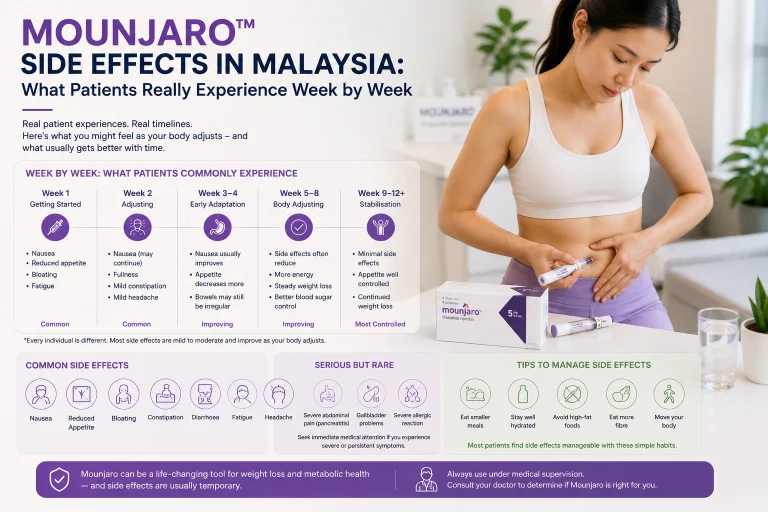
Very Common (majority of patients, especially in the first month)
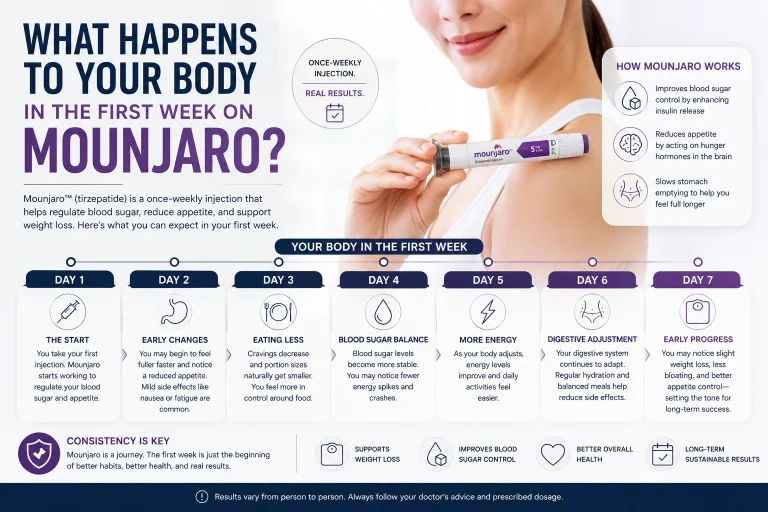
- Nausea — usually peaks in weeks 2–4 and improves significantly with proper dose titration
- Reduced appetite — the intended effect, but can feel uncomfortable initially
- Mild fatigue — particularly in the first 24–48 hours after each injection
Common (significant minority)
- Vomiting — more likely if patients eat too quickly or in large portions
- Constipation or diarrhoea — often linked to diet and hydration levels
- Injection site reactions — mild redness or bruising, resolves quickly
Less Common (but important to know)
- Hair thinning — caused by rapid weight loss, not the drug itself. Temporary and resolves as weight stabilises. We often recommend oral hair regrowth support during this phase.
- Muscle loss — without adequate protein and resistance exercise, significant weight loss can reduce muscle mass.
- “Tirzepatide face” — facial volume loss making patients look gaunt. Some benefit from dermal fillers to restore facial volume during their weight loss journey.
Rapid fat loss affects the face as well as the body. Patients losing more than 10% of body weight within 6 months may notice hollowing around the cheeks, temples, and under-eye area. This is manageable with the right aesthetic support — but every patient should be informed about it before starting treatment.
The 4 Biggest Mistakes Malaysian Patients Make on Tirzepatide
Mistake 1: Not Changing Their Diet At All
Tirzepatide reduces hunger but does not eliminate it. Patients who continue eating large portions of white rice, roti canai, and sugary drinks still get results — but far less than those who make even modest adjustments. You do not need a crash diet. But reducing refined carbs and increasing protein makes a measurable difference.
Mistake 2: Stopping Too Soon Because of Nausea
Nausea in the first 2–4 weeks is normal and expected. Most patients who push through this initial period with proper dose titration see side effects reduce substantially. The patients who stop at week 2 almost always regret it later. This is not a medication to self-manage — proper clinical supervision during the titration phase is critical.
Mistake 3: Buying From Unverified Sources
We regularly see patients who purchased what they believed was Tirzepatide from social media sellers or online groups. Counterfeit tirzepatide is a genuine and growing risk. As NHS guidance warns, fake injectables can contain incorrect dosages or harmful substances. Always obtain through a registered medical clinic with a verified pharmaceutical supply chain.
Mistake 4: Not Planning for Maintenance
This is the conversation most clinics avoid having. Tirzepatide works while you are on it. When patients stop, appetite returns — and without changed habits, weight regain is common. A sustainable exit strategy and maintenance plan must be discussed from the very beginning of treatment, not as an afterthought.
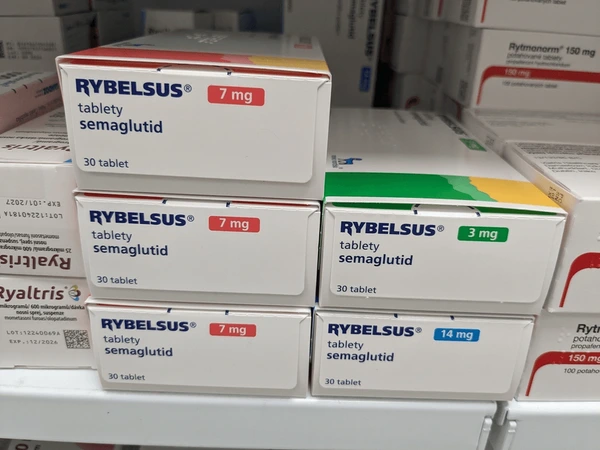
Tirzepatide vs Oral Semaglutide: Which Should You Choose?
| Feature | Tirzepatide | Oral Semaglutide |
|---|---|---|
| Mechanism | GIP + GLP-1 (dual action) | GLP-1 only |
| Administration | Once-weekly injection | Daily oral tablet |
| Average weight loss | 15–22% | 5–10% |
| Best for | Higher BMI, insulin resistance, maximum results | Needle-phobic patients, moderate weight loss goal |
| Side effects | Moderate GI initially | Milder GI profile |
| Cost | Higher | More accessible |
If you have significant weight to lose and are not needle-phobic, Tirzepatide typically delivers the best results. If you prefer oral medication or want a gentler start, Oral Semaglutide is a solid alternative. The right choice depends on your BMI, health profile, and personal preferences — which is exactly why a proper medical consultation matters before starting either.
5 Common Myths About Tirzepatide — Debunked
“Tirzepatide is only for diabetics.”
While tirzepatide was originally approved for Type 2 diabetes, it is now widely prescribed for weight management in non-diabetic obese patients. The SURMOUNT trials specifically studied non-diabetic populations.
“You will gain all the weight back the moment you stop.”
Weight regain is possible if lifestyle habits do not change — but not inevitable. Patients who use the medication period to build better eating habits and exercise routines retain most of their results. Those who make no changes are more vulnerable to regain.
“It is just an appetite suppressant, same as other slimming pills.”
Tirzepatide works on hormonal and metabolic pathways in a fundamentally different way from traditional appetite suppressants. Its effect on insulin sensitivity and visceral fat has no equivalent among older weight loss medications.
“Cheaper versions from TikTok sellers are the same thing.”
They are not. Counterfeit and unverified injectables sold through social media are a serious health risk. There is no way to verify what is inside those pens without laboratory testing.
“Anyone can self-inject at home without seeing a doctor.”
Tirzepatide is a prescription medication requiring proper medical assessment, dose titration, and monitoring. Self-administering without supervision significantly increases the risk of adverse effects and poor outcomes.
What to Expect at Vivardi Clinics
We do not simply hand over a prescription at the first appointment. Our process is designed to maximise results and minimise risk:
- Initial consultation — Full health history, current medications, contraindication screening
- Blood work — Fasting glucose, HbA1c, lipid panel, thyroid function, kidney and liver markers
- Body composition assessment — BMI, waist circumference, visceral fat estimate
- Personalised dose titration plan — We start at 2.5mg and increase based on individual tolerance
- Dietary guidance — Practical, Malaysian-food-compatible advice — not a Western diet plan nobody follows
- Follow-up at 4, 8, and 12 weeks — Monitoring weight, side effects, and blood glucose where relevant
- Exit strategy — From month 3 onwards, we plan for long-term maintenance
We also offer Aqualyx fat-dissolving injections as a complementary option for stubborn localised fat that Tirzepatide does not specifically target — such as the double chin or flanks.
We regularly see patients who had negative experiences elsewhere — prescribed Tirzepatide without proper screening, started at too high a dose causing severe vomiting, given no dietary guidance, and no plan for after the medication stops. If a clinic is willing to prescribe Tirzepatide in a 10-minute walk-in without blood work, that is a red flag.
My Honest Verdict After 12 Months
Tirzepatide works. In 12 months of prescribing it, I have seen results that genuinely change lives — particularly for patients who have struggled with weight for years and felt that diet and exercise simply were not enough on their own.
But the results are not uniform. The patients who do best treat Tirzepatide as a powerful tool within a broader lifestyle change — not as a shortcut that removes the need for personal effort.
The patients I am most proud of are not the ones who lost the most weight on the scale. They are the ones who, 12 months in, have built sustainable habits, reduced their HbA1c, come off blood pressure medication, and feel genuinely better in their daily lives.
That is what good weight management medicine should achieve. And in the right patients, with the right support, Tirzepatide makes it possible.
Considering Tirzepatide? Start With a Proper Consultation.
We assess your suitability, run the necessary blood work, and build a plan that goes beyond just the injection. No shortcuts. Just honest medical guidance.
📞 011-8888 6503
Pusat Komersial Anggun City, 63A-1, Jalan Anggun City 2, Rawang, Selangor
Related treatment: learn more about doctor-supervised weight loss in Rawang.

Medically reviewed by Dr. Dinesh Kumar, Medical Director, Vivardi Clinics. MBBS (AIMST), LCP-Certified Aesthetic Physician, Cert. Men’s Health. Last reviewed October 2026.
Care at Vivardi is provided by our team of qualified doctors. This page is for general education and does not replace a personal consultation.