Hair loss after dengue or another illness with high fever often begins after the patient already feels well. The usual explanation is telogen effluvium, a temporary shift in the hair-growth cycle that produces increased shedding several weeks or months after physical stress. The delayed timing can be frightening, but it also provides an important clue about the cause.
Quick answer
Dengue does not usually make every hair follicle permanently stop working. Fever, inflammation, reduced food intake, dehydration, weight change and the overall stress of illness can move more growing hairs into a resting phase. Those hairs remain in the scalp for a while and are shed later, commonly about two to four months after the illness. Most acute cases improve once the trigger has resolved, although visible density takes longer to return. Patchy loss, scalp pain, scarring, ongoing illness or shedding that continues beyond the expected recovery period needs medical assessment.
People often connect the shedding to a new shampoo, hair colouring or the most recent stressful week because the dengue infection happened months earlier. Understanding the lag between trigger and shedding prevents unnecessary panic and unsuitable treatment. It also helps a doctor decide whether the pattern fits post-illness telogen effluvium or whether another hair condition is present at the same time.
Why can hair start shedding after dengue?
Each scalp follicle follows its own cycle. During the anagen phase, the hair actively grows. It then passes through a short transition phase before entering telogen, the resting phase. At the end of telogen, the old fibre is released as a new hair begins to emerge. Because follicles normally cycle independently, everyday shedding is spread out and usually goes unnoticed.
A major physical stress can synchronise more follicles than usual. High fever and systemic illness are recognised triggers. Dengue may also involve poor appetite, nausea, fluid loss, disturbed sleep and temporary changes in nutrition. Hospital admission, another infection, surgery, significant psychological stress or rapid weight loss can add to the burden. The body does not consciously “switch off” hair to save energy, but the biological response to illness can alter follicle cycling.
The affected hairs do not fall out immediately. They complete the resting interval first. This explains why a person may recover from dengue in July but notice heavy shedding in September or October. The delay is typical of telogen effluvium and is different from hair loss that starts within days because of certain toxins or chemotherapy.
The usual timeline after fever or illness
| Time from illness | What may be happening | What the patient may notice |
|---|---|---|
| During dengue or high fever | The body is managing inflammation, fever and reduced intake. Some growing follicles may be signalled to enter transition. | Usually no immediate change in scalp density. |
| First 4 to 8 weeks | Affected hairs remain anchored while moving through the resting phase. | Hair may still look normal. Recovery from illness is the main focus. |
| About 2 to 4 months | More resting hairs are released as new growth begins beneath them. | Extra hair on the pillow, bathroom floor, brush and during washing. A ponytail may feel smaller. |
| Following months | Shedding should gradually settle if the trigger has ended and no other cause remains. | Short regrowing hairs may appear. Density improves slowly rather than overnight. |
| 6 to 12 months | New fibres continue gaining length and diameter. | Many patients see clearer recovery, although long hair takes more time to regain its former volume. |
The timeline is a guide, not a deadline. The intensity of illness, a person’s baseline hair density, nutrition and any overlapping condition affect recovery. Hair that grows around one centimetre per month cannot immediately replace months of lost length.
What post-dengue telogen effluvium usually looks like
Telogen effluvium is generally diffuse. Hair seems to come from all over the scalp rather than one perfectly smooth patch. The shower drain may collect more strands, and the scalp may become easier to see under bright light or along the parting. The temples can look thinner because density is naturally lower there.
The scalp itself is usually not severely inflamed. There should not be thick crust, pus, open wounds or loss of the tiny follicular openings. Shed telogen hairs often have a small pale club-shaped end. It is not the living follicle being pulled out, and seeing the club does not mean the follicle is permanently destroyed.
Counting every strand is rarely helpful. Wash frequency, hair length and styling change how dramatic a collection looks. Someone who washes twice weekly may see several days of normal and increased shedding at once. Consistent photographs of the centre part, temples and crown are more useful for monitoring.
Shedding is not always caused by dengue alone
The timing may fit dengue, but a careful assessment still considers other triggers. Iron deficiency, thyroid disease, childbirth, restrictive dieting, medication changes and ongoing inflammation can also cause diffuse shedding. Two or more triggers may occur close together. For example, a patient may eat very little during dengue and then continue an aggressive weight-loss diet during recovery.
Illness can also expose hereditary pattern hair loss that was already developing. Once the temporary shedding reduces overall density, widening of the central part or recession at the temples becomes more noticeable. In that situation, the telogen effluvium may recover while patterned thinning remains. Treating the correct combination matters more than choosing a product based on one symptom.
Features that support telogen effluvium
- Diffuse shedding from across the scalp
- A significant illness, fever or other trigger several months earlier
- No smooth isolated bald patch
- No obvious scarred or shiny scalp
- Short regrowing hairs appearing as shedding settles
- Gradual spontaneous improvement after the trigger resolves
Features that need closer assessment
- Smooth round patches or loss of eyebrows
- Rapid recession in a clear hereditary pattern
- Scalp pain, burning, pustules or heavy scale
- Broken hairs rather than full-length shed fibres
- Loss of follicular openings or shiny areas
- Persistent fever, fatigue, bleeding, weight loss or other systemic symptoms
Is post-dengue hair shedding permanent?
Acute telogen effluvium is non-scarring, which means the follicles remain present. When the illness has resolved and there is no continuing trigger, the hair cycle can normalise. The American Academy of Dermatology and DermNet both describe fever and illness as established triggers for temporary excessive shedding.
Recovery can still feel slow. Shedding may take months to settle, then the new hairs need time to become long enough to contribute visible volume. A person with shoulder-length hair cannot regain the same length within a few weeks. Texture may also look temporarily uneven because thousands of shorter fibres are growing among longer ones.
A poor outcome is more likely when another condition is missed. Continuing iron deficiency, thyroid dysfunction, inadequate nutrition, androgenetic alopecia or inflammatory scalp disease can prolong or complicate the picture. “It will grow back” should not replace examination when the pattern is atypical.
When should blood tests be considered?
Not every episode after fever requires a large commercial test package. The doctor chooses tests based on history, symptoms and examination. A full blood count and iron studies may be considered when there is fatigue, pallor, heavy menstruation, dietary restriction or possible blood loss. Thyroid testing may be appropriate with unexplained weight change, heat or cold intolerance, bowel changes, palpitations or menstrual disturbance.
Other tests may be selected for nutritional risk, prolonged symptoms or a suspected medical condition. A result should answer a clinical question. Mild abnormalities do not automatically explain the scalp pattern, and normal results do not rule out hereditary or inflammatory hair disorders.
Vivardi’s guide to blood tests for hair loss explains how ferritin, thyroid tests, blood count and selected nutrient or hormone tests are used. Avoid taking high-dose iron, zinc, vitamin A, selenium or biotin without a reason. Excess supplementation can cause harm, and biotin can interfere with certain laboratory assays.
How a doctor evaluates shedding after dengue
The consultation begins with the date of the fever, severity of illness, admission history, weight change, appetite and recovery. The doctor asks when shedding began and whether it is diffuse, patterned or patchy. Medicines and supplements are reviewed because some treatments or changes can influence the hair cycle.
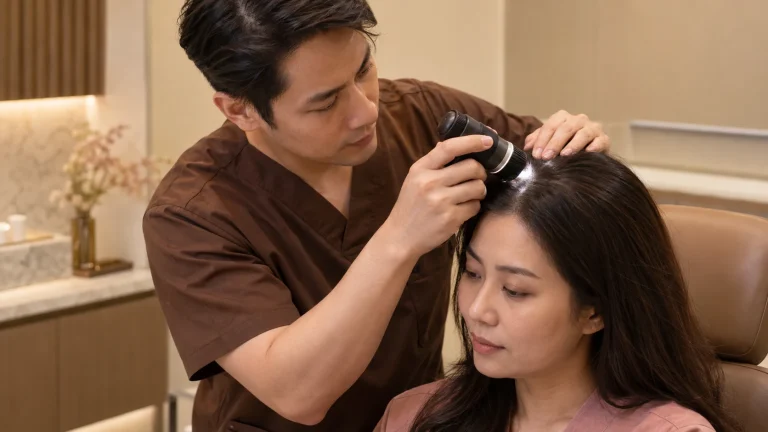
Scalp examination looks at density, part width, miniaturisation, inflammation, scale, broken hairs and follicular openings. A gentle hair-pull test may help assess active shedding. Dermoscopy, also called trichoscopy, magnifies the scalp and can reveal variation in shaft diameter, regrowing hairs, characteristic dots, perifollicular scale or signs that suggest another diagnosis.
Photographs under consistent lighting establish a baseline. If the diagnosis remains unclear, the doctor may arrange targeted blood tests, fungal testing or referral for a scalp biopsy. The aim is not to perform every test, but to distinguish a temporary cycle disturbance from a condition that needs early treatment.
What can you do while the hair cycle recovers?
Restore regular nutrition
Recovery is not the time for a crash diet. Aim for regular meals with adequate protein and a varied intake of vegetables, fruit, whole grains and suitable iron-containing foods. A Malaysian diet can support recovery through fish, eggs, poultry, tofu, tempeh, dhal, beans and other sources chosen for personal health needs. Patients with kidney, liver or metabolic disease should follow their clinician’s dietary advice.
Treat the scalp gently
Normal washing does not create telogen effluvium. Shampooing releases hairs that were already ready to shed. Avoiding washing for many days can make the next wash look more alarming. Use a comfortable routine, detangle carefully and reduce tight braids, extensions, aggressive brushing, frequent bleaching and high heat while density is reduced.
Manage ongoing medical triggers
Attend follow-up if fatigue, poor appetite, menstrual problems or other symptoms continue after dengue. Do not stop prescribed medicines solely because hair is shedding. A doctor can assess whether a medicine is relevant and whether a safe alternative exists.
Track progress monthly, not hourly
Take photographs of the same views once every four weeks, using the same room, lighting, hairstyle and distance. Daily inspection magnifies normal variation and increases anxiety. Useful signs include reduced shedding over time and the appearance of short tapered regrowth.
Do you need PRP, QR678 Neo or hair medication?
No clinic procedure should be presented as compulsory for uncomplicated acute telogen effluvium. Many cases improve after the trigger resolves. Treatment decisions depend on the diagnosis, severity, duration and whether another form of hair loss is present.
PRP hair treatment uses platelet-rich plasma prepared from the patient’s blood and may be discussed for suitable patterns of hair loss. QR678 Neo hair treatment is another clinic-based option. Oral hair-regrowth medication requires individual medical review because suitability, pregnancy considerations, side effects and monitoring differ.
These options do not replace investigation of anaemia, thyroid disease, ongoing infection, nutritional deficiency or scarring alopecia. A treatment plan should explain the diagnosis first, the realistic goal second and the intervention third.
Minoxidil and post-illness shedding
Minoxidil can be useful for certain hair-loss patterns, but it is not automatically required for every patient recovering from dengue. Some people experience a temporary increase in shedding after beginning treatment as follicles change cycle. Starting it without confirming the diagnosis can make the timeline harder to interpret.
Topical products can irritate the scalp, and oral forms have systemic considerations. Discuss personal health conditions, medicines, pregnancy plans and blood pressure with a doctor. If treatment is started, use it exactly as advised and agree on how long to assess response. Stopping and restarting repeatedly can create further confusion.
Seek prompt medical care for warning signs
Hair shedding itself is rarely an emergency. Get medical care promptly if you have recurrent fever, unusual bleeding or bruising, fainting, breathing difficulty, severe weakness, dehydration or other symptoms that could indicate unresolved illness. Arrange early scalp assessment for pain, pus, rapidly expanding smooth patches, eyebrow loss, scarring or shiny areas without follicular openings. Do not assume every symptom after dengue is a harmless recovery effect.
Common mistakes that delay recovery
- Blaming the latest shampoo: the real trigger may have occurred months earlier.
- Buying every supplement: more is not safer, and unnecessary products do not correct an unconfirmed diagnosis.
- Stopping washing: retained shed hairs accumulate and make the next wash look worse.
- Using harsh scalp treatments: irritation adds discomfort without changing the internal hair cycle.
- Changing treatment every week: hair responds over months, so constant switching prevents meaningful evaluation.
- Ignoring a patterned distribution: dengue-related shedding and hereditary thinning can exist together.
- Relying on unstandardised photos: wet hair, bright overhead light and different partings create misleading comparisons.
A practical recovery checklist
- Write down the illness dates, maximum fever period and when shedding began.
- List other possible triggers in the preceding six months, including dieting, childbirth, surgery and medication changes.
- Check whether loss is diffuse, patchy, inflamed or clearly patterned.
- Return to balanced nutrition and avoid unsupervised high-dose supplements.
- Use gentle hair care while continuing normal hygiene.
- Take standardised monthly photographs.
- Arrange an assessment if the pattern is atypical, severe, persistent or accompanied by other symptoms.
- Choose treatment only after the working diagnosis and realistic timeframe are clear.
Frequently asked questions
How long after dengue does hair shedding start?
Telogen effluvium commonly becomes noticeable around two to four months after a high fever or systemic illness. The interval varies, and multiple triggers can shift the timeline.
Why did my hair look normal immediately after dengue?
The follicles that changed cycle remain in the scalp during a resting period. They are released later, so visible shedding is delayed even though the trigger has already passed.
Can mild dengue still lead to shedding?
It can. The risk is not determined only by hospital admission. Fever, reduced intake, weight change and individual susceptibility all matter. A clinician should assess other possible causes as well.
Will every shed hair grow back?
Acute telogen effluvium is non-scarring and usually allows regrowth. However, density may not return as expected if there is an ongoing trigger, nutritional or thyroid problem, hereditary thinning or another scalp disorder.
Should I cut my hair short?
Cutting does not change follicle cycling or growth speed. A shorter style may make reduced volume easier to manage, but it is a cosmetic preference rather than treatment.
Does frequent shampooing worsen the problem?
No. Washing releases hairs that have already completed their cycle. Choose a gentle routine that keeps the scalp comfortable rather than avoiding hygiene.
Do I need a ferritin or thyroid test?
Possibly, depending on symptoms, medical history, diet and examination. Targeted tests are more useful than automatically ordering a large panel for everyone.
Can telogen effluvium reveal genetic hair loss?
Yes. Diffuse shedding can reduce coverage and make an existing pattern more visible. Dermoscopy helps assess shaft miniaturisation and distribution.
When should I see a doctor?
Arrange a review for severe or persistent shedding, visible patterned thinning, smooth patches, scalp inflammation, scarring signs or continuing general-health symptoms. Earlier assessment is sensible when you are unsure.
How quickly can treatment restore my former density?
No safe treatment replaces lost length immediately. Shedding may settle before regrowth becomes cosmetically obvious, and longer hairstyles can need many months to recover volume.
Medical references
Understand the cause before choosing treatment
If shedding began after dengue or another fever, a private hair and scalp assessment can distinguish temporary telogen effluvium from overlapping patterned, nutritional or inflammatory hair loss.
Medically reviewed by Dr. Dinesh Kumar. This article provides general education and does not replace diagnosis, blood-test interpretation or personalised medical advice. Treatment suitability and results vary.