Quick answer: QR678 and hair transplantation are not equivalent treatments. Injection-based therapy aims to support existing follicles and is most relevant when follicles are still present. A transplant moves permanent-zone follicles into areas where density has been lost and is considered when medical or injection treatment cannot replace absent follicles. Diagnosis, stability of loss, donor supply and long-term planning determine which option fits.
Patients often ask whether they should “try injections first” or proceed directly to a transplant. The answer depends on what is happening to the follicle. Early androgenetic alopecia miniaturises hairs but leaves follicles alive. Advanced bald areas may contain few usable follicles. No injection can manufacture an unlimited number of new follicles in smooth, long-standing bald skin.
A transplant also does not stop non-transplanted hair from thinning. Surgery without a long-term medical plan can produce an island of transplanted hair surrounded by continued loss. The best pathway may involve medical treatment, an injectable adjunct, surgery, combination care or no procedure until the diagnosis is clear.
First, identify the type of hair loss
Male and female pattern hair loss are common, but shedding can also result from:
- Telogen effluvium after illness, stress, childbirth or rapid weight loss.
- Iron, thyroid or nutritional problems.
- Alopecia areata.
- Scalp inflammation or infection.
- Traction from hairstyles.
- Scarring alopecia.
- Medicines or hormones.
- Hair-shaft breakage.
A transplant is inappropriate during active scarring alopecia or uncontrolled inflammatory disease. Injections marketed for pattern loss may not treat thyroid disease or telogen effluvium. Examination with a dermatoscope and selected blood tests can prevent wasted treatment.
The American Academy of Dermatology hair-loss guide emphasises that effective treatment begins with finding the cause.
What is androgenetic alopecia?
It is genetically influenced pattern hair loss. In men, recession often affects the temples, hairline and crown. In women, thinning is usually more diffuse across the top with preservation of the frontal line.
Hormone-sensitive follicles gradually miniaturise. Thick terminal hairs become finer, shorter and lighter. Early in the process, treatment may enlarge or support miniaturised follicles. When a region has been bald for years and follicular openings are absent, regrowth options are more limited.
What is QR678 Neo?
QR678 Neo is a proprietary injectable formulation promoted for hair restoration. It is described as containing a combination of growth-related peptides or factors. Treatment involves multiple small scalp injections across thinning areas, usually in a series.
Published studies have reported improvements in selected patients with pattern hair loss, but the evidence base is smaller and less independent than for established medicines such as topical minoxidil or oral finasteride in appropriate male patients. Protocols, comparators and long-term follow-up need to be considered.
Patients should receive a balanced explanation: promising evidence does not equal guaranteed regrowth, and proprietary treatment should not replace diagnosis or established options without reason.
Vivardi’s QR678 Neo treatment page and QR678 Malaysia guide provide clinic-specific information that should remain consistent with this article.
What is a hair transplant?
A hair transplant redistributes follicles from a donor area, usually the back and sides of the scalp, to thinning or bald areas. It does not create new hair. The donor supply is finite.
Two common harvesting approaches are:
- Follicular unit extraction, where individual follicular units are removed.
- Follicular unit transplantation, where a strip of donor scalp is removed and dissected.
Both can produce natural results when planned well. FUE creates many small extraction scars, while FUT creates a linear scar. “Scarless transplant” is misleading because any surgery heals with some scarring.
The central difference
QR678 attempts to improve the performance of follicles already present. A transplant physically relocates follicles to areas where coverage is inadequate.
An analogy is useful. If grass is thinning but roots remain, supportive treatment may improve growth. If the ground has no viable roots, fertiliser cannot recreate them, so transplanting roots is needed. Biology is more complex than this analogy, but it explains why stage matters.
Stage 1: Early thinning without visible bald areas
Signs include increased shedding, reduced hair calibre, wider parting or mild temple change. Dermoscopy shows miniaturisation but good follicle presence.
The priority is diagnosis and stabilisation. Options may include topical minoxidil, oral medicine for appropriate patients, management of contributing factors, PRP or QR678 as an adjunct. Surgery is usually premature because loss pattern and future donor needs are uncertain.
Read when to start hair-loss treatment for early intervention principles.
Stage 2: Established pattern thinning with remaining follicles
The scalp is visible under bright light, but many miniaturised hairs remain. Medical therapy can preserve and thicken some hair. QR678 may be considered if the diagnosis and expectations are suitable.
A transplant may be discussed for a defined hairline or persistent area, but stabilisation is valuable. The clinician should estimate how existing hair will change over five to ten years.
Stage 3: Significant recession or crown loss
Some areas may have few viable follicles. Injection therapy cannot reliably restore the density of a full transplant. Surgery may provide coverage if donor supply is good, but medical treatment remains important for surrounding native hair.
QR678 or other adjuncts may be used to support miniaturised hair outside the transplanted zone. They should not be sold as replacing the grafts needed for a bald region.
Stage 4: Advanced hair loss
Large bald areas require careful donor budgeting. A transplant cannot restore adolescent density across an unlimited area. The goal may be a conservative hairline and frontal framing rather than full crown coverage.
QR678 is unlikely to generate meaningful density where follicles are absent. Scalp micropigmentation, hair systems or accepting a shorter style may be alternatives.
Which treatment gives a permanent result?
Transplanted follicles from the permanent donor zone often retain resistance to androgen-related miniaturisation and can grow for many years. This does not guarantee every graft survives or that all transplanted hair lasts for life. Ageing and disease continue.
QR678 effects are not considered permanent. Maintenance sessions may be recommended, and gains can diminish when treatment stops. Long-term independent comparative data remain limited.
Established medicines also require continued use to maintain benefit. “Permanent” should be used carefully.
Which has stronger evidence?
Hair transplantation has decades of surgical experience for androgenetic alopecia, with outcome dependent on technique and surgeon. Minoxidil and finasteride have substantial evidence for selected patients.
QR678 has published clinical studies, but fewer than established therapies and with limitations. Patients should ask about study design, number of participants, follow-up, conflicts of interest and whether results apply to their diagnosis.
The absence of large evidence does not prove a treatment never works. It means certainty about effect size, ideal candidates and durability is lower.
Can QR678 prevent a future transplant?
It may delay surgery in patients whose follicles respond and whose loss is stabilised. It cannot guarantee that surgery will never be needed. Genetic loss can progress.
The more honest goal is to preserve existing hair and reassess. Photos, hair counts or dermoscopy can document whether treatment changes density.
Can a transplant work without medicine?
Transplanted hair may grow without ongoing medicine, but native hair can continue thinning. A patient may later need another procedure or develop an unnatural gap.
Not everyone can or wants to use medicine. The surgeon should design the hairline conservatively based on expected progression and donor supply.
What about minoxidil?
Topical minoxidil can stimulate growth and slow pattern loss in men and women. Initial shedding, irritation and unwanted facial hair can occur. Benefit takes months and is lost after stopping.
Oral low-dose minoxidil is used off-label by some doctors but can affect blood pressure, fluid retention and heart rate. It requires medical assessment.
What about finasteride?
Finasteride reduces conversion of testosterone to dihydrotestosterone and is approved for male pattern hair loss in many jurisdictions. It can preserve hair and improve some miniaturisation.
Sexual, mood and reproductive concerns require discussion. Women who are or may become pregnant must avoid exposure to crushed tablets. Individual counselling is essential.
QR678 versus PRP
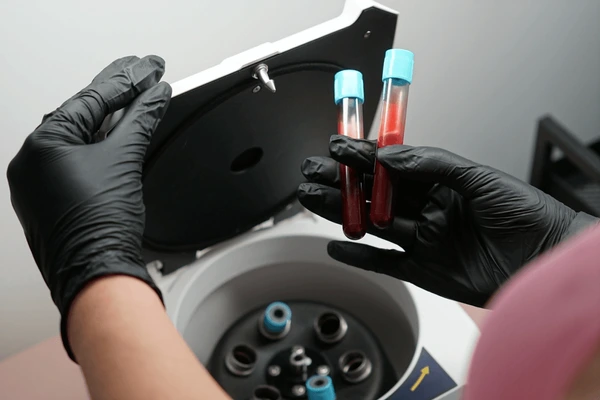
PRP is prepared from the patient’s blood and contains platelet-derived signals. QR678 is a manufactured proprietary formulation. Both are injected, but they are not the same.
Evidence, preparation, dosing and maintenance differ. Vivardi’s PRP versus QR678 BM article discusses this comparison.
Can QR678 be used after a transplant?
Some clinics use injectable treatments around transplantation to support native hair or healing. Evidence for improving graft survival or final density is not definitive across protocols.
Timing must be coordinated with the surgeon. Injecting too early could disturb grafts or introduce infection. Do not attend an unrelated clinic without telling the transplant team.
What is the downtime for QR678?
Small injection bumps, redness, tenderness, pinpoint bleeding or headache can occur. Most patients return to routine activity quickly. Avoid scratching, contaminated headwear and unapproved scalp products.
Infection, significant swelling or allergic reaction needs assessment. A short downtime does not make treatment risk-free.
What is the downtime for transplantation?
Surgery causes crusting, swelling and donor-area discomfort. Visible signs can last one to two weeks or longer. Transplanted hairs often shed before regrowing. Growth begins over months and final maturation may take a year or longer.
Shock loss can affect native or donor hair. Patients need instructions for sleeping, washing, exercise, sun and helmet use.
What results are realistic?
QR678 may reduce shedding and increase density in responders with viable follicles. It will not create a full adolescent hairline in advanced baldness.
A transplant can create visible coverage but cannot match natural childhood density. Hair calibre, curl, colour contrast and graft placement influence the visual result. Fine straight dark hair against pale scalp requires more grafts than coarse curly hair with low contrast.
Donor-area assessment
The surgeon examines density, calibre, miniaturisation and scalp laxity. Harvesting too aggressively can leave a moth-eaten donor area. Body hair is not an unlimited substitute.
Patients with diffuse unpatterned alopecia may have unstable donor follicles and be poor candidates. This diagnosis can be missed when surgery is sold from photographs alone.
What tests might be needed before choosing?
Not every patient needs a large blood panel. Testing is guided by history and examination. Sudden diffuse shedding may prompt a full blood count, ferritin, thyroid function or other investigations. Women with irregular periods or signs of androgen excess may need a hormonal assessment. Scalp scale, pustules or scarring may require microscopy, culture or biopsy.
A pull test and dermoscopy can show active shedding, miniaturisation, variation in shaft diameter and loss of follicular openings. Standardised photographs help document the part width, hairline and crown.
Before surgery, the transplant team may request blood tests for general surgical safety and transmissible infection according to local policy. The patient’s blood pressure, diabetes control, bleeding history and medicines also matter.
Do not start iron, thyroid hormone or high-dose vitamins solely because hair is falling. Treating a normal result does not improve pattern loss and can cause harm.
How should response to QR678 be measured?
Casual mirror impressions are unreliable because lighting, hair length, washing and styling change scalp visibility. A clinic should use consistent photographs, the same parting and lighting, and ideally dermoscopic measurements or hair counts.
Useful outcomes include reduced shedding, increased shaft calibre, improved density and patient satisfaction. Temporary swelling after injection must not be presented as hair growth. Assessment should allow enough time for the hair cycle, usually several months.
Define a stopping rule before treatment. If no meaningful improvement appears after an adequate course, repeating injections indefinitely may not be justified. Reconsider diagnosis, established therapy and surgical suitability.
Planning over ten years, not one year
Pattern hair loss progresses unpredictably. A 25-year-old with mild recession may eventually lose the mid-scalp and crown. A low, dense transplanted hairline can consume donor grafts needed later.
Conservative design leaves options. It may combine a mature hairline, medical preservation and staged surgery. QR678 or other adjuncts can be reassessed based on evidence and response rather than assumed as lifelong.
Ask the clinician to sketch how the result may look if native hair behind the treated area thins. A plan that looks good only under today’s hairstyle is incomplete.
Hairline design
A natural hairline is irregular, age-appropriate and planned for future loss. A very low straight hairline consumes grafts and may look unnatural later.
Patients in their early twenties need caution because the final loss pattern is unknown. Surgery is not prohibited by age alone, but long-term planning is essential.
Risks of QR678
Possible risks include pain, bleeding, bruising, infection, swelling, headache, allergic reaction and lack of benefit. Product authenticity and injection technique matter.
Ask whether the formulation is registered or authorised for the proposed use locally and how adverse events are managed.
Risks of hair transplantation
- Bleeding and infection.
- Scarring.
- Poor graft survival.
- Unnatural direction or hairline.
- Overharvested donor area.
- Numbness.
- Cysts or folliculitis.
- Shock loss.
- Need for further surgery.
Smoking, uncontrolled diabetes and scalp disease increase risk.
How to choose
Ask four questions:
- Are follicles still present in the target area?
- Is hair loss stable or actively progressing?
- Is donor supply sufficient for long-term goals?
- What evidence supports each option for this diagnosis?
Then consider budget, downtime, willingness for maintenance and tolerance of uncertainty. Do not choose solely because a treatment is non-surgical or permanent.
A practical decision pathway
Diffuse sudden shedding: investigate cause before either option.
Early pattern thinning: stabilise medically, consider adjunct injections.
Moderate thinning with miniaturised hair: medical and injection options, surgery for selected areas.
Smooth long-standing bald area: transplant assessment if donor supply is suitable.
Active scarring alopecia: control disease, avoid cosmetic procedures until specialist clearance.
Poor donor supply: consider non-surgical camouflage or hair systems.
Questions for the clinic
- What is my diagnosis and stage?
- Are miniaturised follicles visible?
- Which blood tests are needed?
- What established treatments have I tried?
- What evidence supports QR678 for me?
- How will response be measured?
- Will maintenance be needed?
- If surgery is considered, how many grafts and why?
- What is the donor plan for future loss?
- Who performs each step of surgery?
Frequently asked questions
Can QR678 grow hair on a completely bald scalp?
It is unlikely to restore meaningful density where follicles are absent. A transplant or camouflage may be more realistic.
Is QR678 better than a transplant?
No universal answer exists. They address different stages. QR678 supports existing follicles, while transplantation relocates follicles.
Is a transplant better for early thinning?
Often medical stabilisation is preferred first. Early surgery can waste donor hair and ignore future progression.
How soon does QR678 work?
Hair cycles are slow. Reduced shedding may be noticed before visible density, and assessment takes several months.
How soon does a transplant grow?
Grafts often shed first. New growth develops over months, with maturation continuing for a year or longer.
Does transplanted hair fall out?
Temporary shedding is expected. Permanent-zone grafts often resist pattern loss, but survival is not guaranteed and ageing continues.
Do I need maintenance after QR678?
Many protocols recommend maintenance. Frequency and evidence should be discussed. Do not assume one course is permanent.
Do I need medicine after a transplant?
Medicine may preserve native hair. Suitability depends on sex, health and preferences.
Can women have transplantation?
Yes, if diagnosis and donor supply are suitable. Diffuse thinning can make donor assessment more complex.
Can women use QR678?
It may be offered to selected women, but pregnancy, hormonal causes and deficiencies must be assessed.
Is QR678 the same as stem cells?
No. Do not describe it as stem-cell therapy unless it actually contains regulated stem-cell material, which is not the standard description.
Is hair transplantation scarless?
No. FUE creates small extraction scars and FUT creates a linear scar. Visibility varies.
Can I transplant beard hair to the scalp?
Body hair may be used in selected cases, but texture and growth differ. It does not replace a good scalp donor supply.
What if I am losing hair after Mounjaro?
Rapid weight loss can trigger telogen effluvium. Correct nutrition and assess other causes before assuming pattern baldness.
Which option has less downtime?
QR678 usually has less visible downtime. Lower downtime does not mean it can achieve a surgical result.
Final takeaway
Hair transplantation and QR678 solve different problems. Injections may support miniaturised follicles in early or moderate loss. Surgery redistributes a finite donor supply into areas where follicles no longer provide coverage.
The best plan starts with diagnosis, stabilises ongoing loss and protects donor hair. No injection should promise new follicles, and no transplant should be sold without a future-loss plan.
At Vivardi Clinics in Rawang, hair-loss consultation can include scalp examination and discussion of non-surgical options. Patients seeking surgery may require referral to an experienced transplant surgeon.
References and further reading
Related treatment: learn more about hair loss treatment at Vivardi Clinics.