Short answer: Diode laser hair removal gives long lasting hair reduction, not a one and done permanent result. Most people need six to twelve sessions spaced four to eight weeks apart to see roughly 70 to 90 percent fewer hairs in the treated area, followed by the occasional top up once or twice a year. It feels like a warm rubber band flick with a cold cooling tip, so it is very tolerable for most people, and it is well suited to Malaysian skin when the machine and settings are chosen correctly.
If you have been shaving the same patch for years, waxing every few weeks, or fighting ingrown hairs and razor bumps, you have probably typed “laser hair removal Malaysia” into a search bar more than once. This guide answers the real questions people ask before they book, in plain language, from a doctor led point of view. We will cover how diode laser actually works, whether it is truly permanent, how many sessions you should expect, how much it hurts, what it costs and what changes the price, who it suits, and how to prepare and recover.
How diode laser hair removal actually works
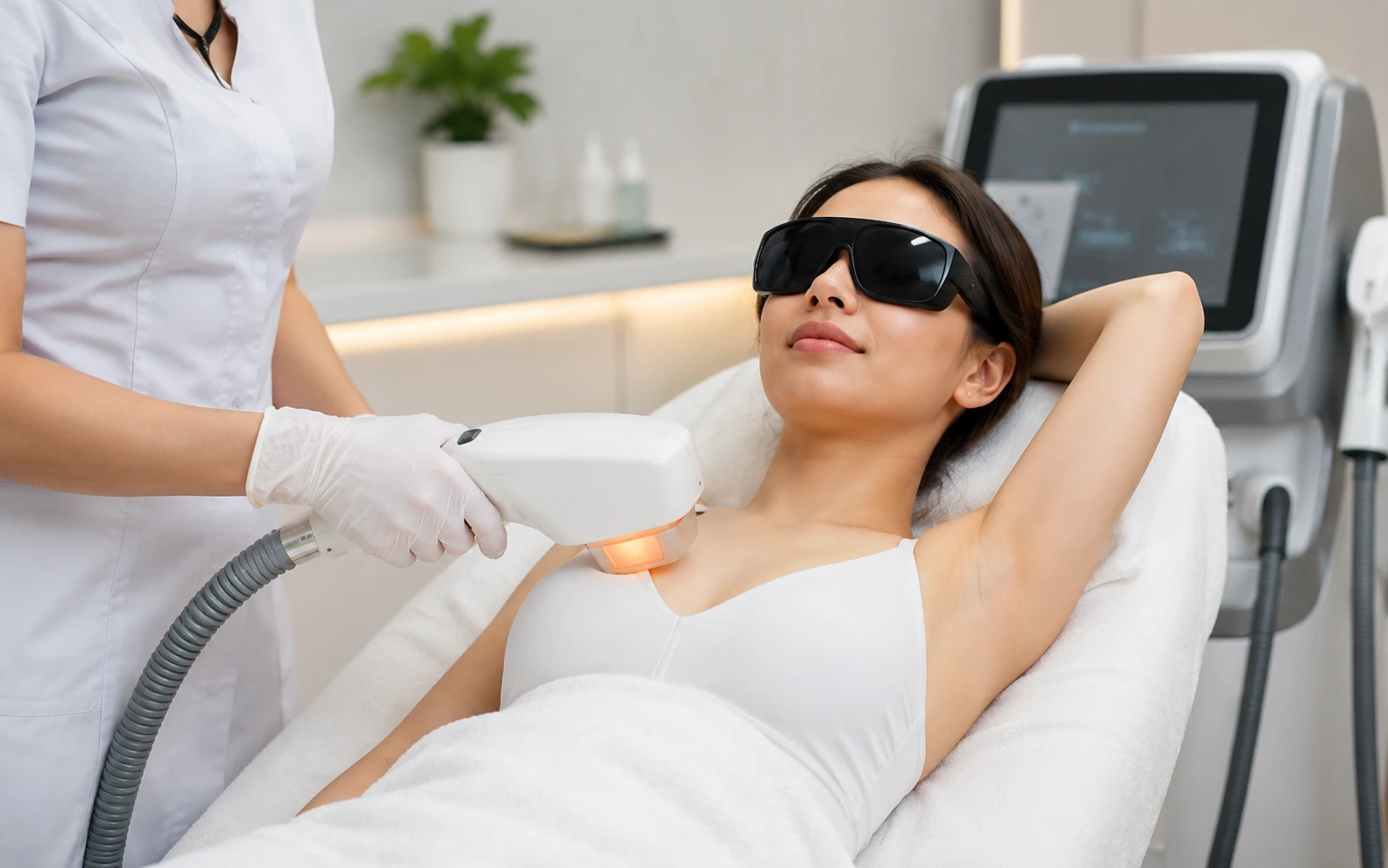
Every hair on your body sits in a follicle, and each follicle moves through a growth cycle. The part that matters for laser is the pigment, called melanin, inside the hair. A diode laser sends a single, focused wavelength of light (commonly around 800 to 810 nanometres) into the skin. The melanin in the hair absorbs that light and turns it into heat. That heat travels down the shaft and damages the follicle at the root, specifically the cells that tell the hair to grow back.
This is called selective photothermolysis, which is a long way of saying the laser is designed to heat the hair without cooking the surrounding skin. A built in cooling system, usually a chilled sapphire tip or a burst of cold air, protects the skin surface while the energy does its job below.
Two things follow from this. First, the laser only works well on hair that is in its active growth phase, because that is when the follicle is fully connected to its blood supply and pigment. At any given moment only a portion of your hair is in that phase, which is exactly why you need several sessions rather than one. Second, the laser is guided by pigment, so it works best when there is a clear contrast between dark hair and the skin around it, and it does very little for grey, white, or very fine blonde hair.
The wider science of how lasers target hair follicles is well documented by dermatology bodies such as the American Academy of Dermatology and the skin health resource DermNet, if you want to read the clinical background.
Is diode laser hair removal permanent?
This is the question everyone wants a straight answer to, so here it is without the marketing spin.
Regulators such as the United States Food and Drug Administration allow lasers to be described as offering “permanent hair reduction,” not “permanent hair removal.” The difference is not a technicality. It means a properly done course of treatment will permanently reduce the number of hairs that grow back, and many of the hairs that do return will be finer, lighter, and slower growing. It does not promise that every single follicle is gone forever.
In practice, most people who complete a full course see a long lasting drop in hair, often in the region of 70 to 90 percent, in the treated area. What you are left with is usually patchy, soft, and much easier to manage than the thick growth you started with. Over the years, hormones can wake up a few dormant follicles, which is why a maintenance session once or twice a year keeps things smooth.
So the honest framing is this. Diode laser is the closest thing to permanent hair removal that is widely available and safe, but you should think of it as permanent reduction plus light maintenance, not a lifetime guarantee after a single visit. Anyone promising total, forever removal in one go is overselling it.
How many sessions will you need?
Hair grows in cycles, and the laser only affects follicles in the active phase, so the sessions are spaced to catch different hairs at the right moment. Here is a realistic guide.
- Face (upper lip, chin, jaw): six to ten sessions, often spaced four to six weeks apart, because facial hair is frequently hormone driven and can be stubborn.
- Underarms and bikini: six to eight sessions, spaced four to six weeks apart. These areas tend to respond quickly and satisfyingly.
- Legs, arms, back, chest: six to ten sessions, spaced six to eight weeks apart, because body hair grows more slowly.
A few honest notes. People with hormonal conditions such as polycystic ovary syndrome (PCOS) may need more sessions and ongoing maintenance, because the hormones keep prompting new growth. Men treating dense beard or back hair usually sit at the higher end of the session count. And “how many sessions” is always an estimate until a clinician looks at your hair colour, thickness, skin tone, and the area involved.
You will start to notice a real difference after the second or third session, when regrowth comes back thinner and slower. The full result builds across the whole course, which is why finishing the plan matters far more than any single visit.
Does laser hair removal hurt?
Most people describe diode laser as a warm snap, similar to a rubber band flicked against the skin, immediately followed by a cool sensation from the cooling tip. It is uncomfortable rather than painful, and it is quick. A small area like the upper lip takes a couple of minutes. Underarms take a few minutes each. Larger areas take longer simply because there is more ground to cover.
Some spots are more sensitive than others. The upper lip, the bikini line, and areas over bone tend to feel sharper than the legs or arms. Comfort also depends on the machine. Modern diode systems with strong contact cooling and a gliding, in motion technique are noticeably gentler than older stamping style lasers.
Ways to keep it comfortable:
- Shave the area the day before, not on the day, so the skin is not freshly irritated.
- Avoid caffeine right before a session if you know it makes you jumpy.
- Tell your clinician early if a setting feels too strong. A good operator adjusts energy to your tolerance without dropping effectiveness below the useful range.
- Schedule around your menstrual cycle if you find you are more sensitive at certain times.
If you have a low pain threshold, a topical numbing cream can be applied beforehand for sensitive zones. Most people find they do not need it after the first session, once they know what to expect.
Is diode laser safe for Malaysian skin tones?
This matters a great deal in Malaysia, where skin tones span a wide range and many people have warmer, more pigmented skin. Older or poorly chosen lasers carried a real risk of burns, dark marks, or light patches on darker skin because the device could not tell the difference between pigment in the hair and pigment in the skin.
Diode lasers, especially longer wavelength systems with strong cooling, are generally considered one of the safer choices for medium to darker skin, which is why they are a common workhorse in Malaysian clinics. The safety, though, is not just about the machine. It is about the person holding it. The right wavelength, the right energy for your skin type, proper cooling, and an operator who reads your skin’s response are what keep treatment safe and effective.
This is one clear reason to choose a doctor led clinic over a walk in beauty counter. A medical setting assesses your skin type, screens for conditions and medications that affect laser safety, and can manage the rare reaction properly if it happens. If you want to understand why medical oversight matters for energy based treatments, our own explainer on choosing a doctor led clinic is worth a read alongside this article.
What affects the cost of laser hair removal in Malaysia?
Prices vary widely, so rather than quote a figure that goes out of date, here is what actually drives the cost so you can judge a quote sensibly.
- Size of the area. Upper lip is cheap and quick. Full legs or a full back cost more per session because they take more time and energy.
- Number of sessions. Because you need a course, the real number to compare is the total package price, not a single session teaser rate.
- The machine and the operator. A modern diode system run by trained medical staff costs more to deliver than a bargain device in a nail salon, and it should. Cheap laser that does not work is the most expensive laser of all, because you pay again elsewhere.
- Package structure. Many clinics bundle six or more sessions with maintenance, which usually works out better value than paying visit by visit.
When comparing, ask three questions: what machine is used, who operates it, and what does the full course cost including maintenance. A clear answer to all three is a good sign. For current pricing at Vivardi Clinics you can contact us or book a consultation, because the right plan depends on your hair and skin, not a one size number.
How to prepare for your session
Preparation makes the treatment safer and the result better.
- Shave, do not wax or pluck, for four to six weeks before. The laser needs the hair root in place, and waxing or plucking removes it. Shaving leaves the root while clearing the surface, which is exactly what you want.
- Avoid sun and tanning for two weeks before. A tan raises the pigment in your skin and increases the risk of a reaction. This applies to sunbeds and self tanners too.
- Skip strong actives near the treatment area for a few days if advised, such as retinoids or acids on the face.
- Tell your clinician about medications and conditions, including anything that makes you sensitive to light, recent Roaccutane use, cold sores in the area to be treated, or being pregnant.
On the day, come with clean skin, no make up, deodorant, or lotion on the area, and freshly shaved skin.
Aftercare: what to do once it is done
Good aftercare is simple and it protects your result.
- Expect mild redness and a warm feeling for a few hours, sometimes up to a day. This is normal.
- Apply a cool compress and a gentle, fragrance free moisturiser. Aloe based gels feel soothing.
- Use a broad spectrum sunscreen every day on treated areas, especially the face. Sun protection after laser is not optional in the Malaysian climate.
- Avoid hot showers, saunas, steam, heavy workouts, and swimming for a day or two.
- Do not scrub, wax, or pluck the area between sessions. If you need to manage hair in the meantime, shave.
- A few days after treatment, some hairs will look like they are growing but are actually being shed. Gentle exfoliation later in the week helps them fall out.
Call your clinic if you see blistering, spreading redness, or anything that looks like a burn. In a medical clinic these events are rare and manageable, which is another reason the setting matters.
Who is and is not a good candidate
Diode laser suits most people who have dark hair and want to stop shaving or waxing a specific area, from underarms and bikini lines to beards, backs, and legs. It is especially satisfying for anyone plagued by ingrown hairs and razor bumps, because removing the hair removes the problem at the source.
It is less effective, or not the right tool, for:
- Grey, white, or very fair blonde hair, because there is little pigment for the laser to target.
- Active infection, open wounds, or certain skin conditions in the treatment area.
- Pregnancy, where most clinics prefer to wait, not because of proven harm but out of caution.
- People on certain photosensitising medications, which need to be reviewed first.
A proper consultation sorts all of this out before you commit to a course, which is exactly how it should work.
How laser compares to shaving, waxing, and IPL
Shaving is cheap and instant but endless, and it feeds ingrown hairs. Waxing lasts longer but hurts, causes ingrowns, and needs regrowth before each session. IPL, the intense pulsed light devices you see in home gadgets and some salons, uses scattered light across many wavelengths rather than a single focused beam. IPL can help on fair skin with dark hair, but it is generally less precise and less effective on darker skin than a medical diode laser, and home devices are weaker again.
The trade off is straightforward. Laser costs more upfront and takes a course to work, but it aims at a long lasting reduction so you eventually stop the endless cycle of shaving and waxing. For most people who are tired of that cycle, that is the whole point.
Why choose a doctor led clinic in Rawang
Vivardi Clinics is a doctor led aesthetic and men’s health clinic in Rawang, Selangor. For energy based treatments like laser, that medical framing is not a luxury, it is the safety net. Your skin type is assessed, your history is reviewed, the settings are matched to you, and if anything unexpected happens it is handled by people trained to handle it. We follow the PDPA Act Malaysia, so your information stays private, and every plan is built around your skin rather than a generic template.
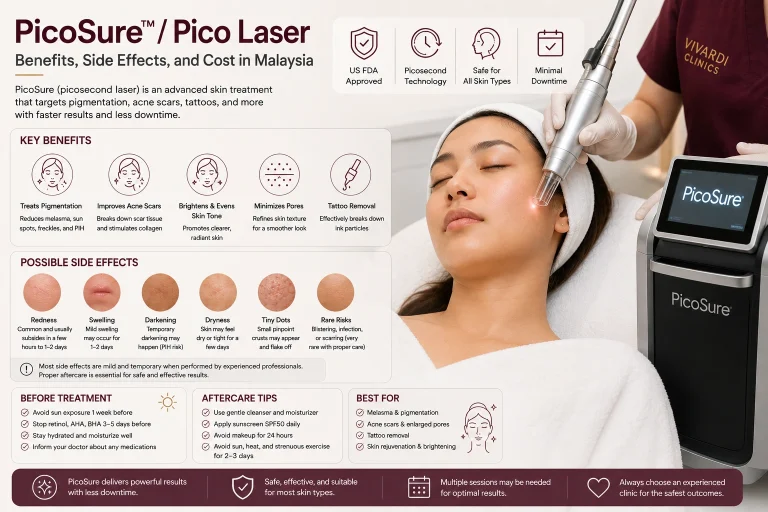
You can read more about our diode laser hair removal treatment, and if pigmentation or skin texture is also on your mind, our guides on pico laser and skin care are a useful next step.
Frequently asked questions
Is diode laser hair removal permanent?
It gives permanent hair reduction rather than total permanent removal. After a full course, most people keep a long lasting drop in hair of around 70 to 90 percent in the treated area, with occasional maintenance once or twice a year to catch new growth prompted by hormones.
How many sessions do I need?
Most areas need six to twelve sessions spaced four to eight weeks apart. The face often needs more because facial hair is frequently hormone driven, while underarms and bikini areas usually respond faster.
Does laser hair removal hurt?
It feels like a warm rubber band flick followed by a cool sensation from the cooling tip. Most people find it very tolerable, and numbing cream is available for sensitive areas like the upper lip and bikini line.
Is it safe for darker or tanned skin?
Modern diode lasers with strong cooling are among the safer choices for medium to darker skin when used at the correct settings by trained staff. Avoiding sun and tanning before treatment lowers the risk further. A doctor led clinic assesses your skin type before starting.
How soon will I see results?
You will usually notice thinner, slower regrowth after the second or third session. The full result builds across the complete course, which is why finishing the plan matters more than any single visit.
Can men get laser hair removal for beard or back?
Yes. Men commonly treat backs, shoulders, chest, and beard line shaping. Dense areas may need more sessions, and beard work is done conservatively so the result looks natural.
Book a consultation
If you are ready to stop the endless shaving and waxing cycle, the first step is a proper skin assessment so your plan is matched to your hair and skin type. Book a consultation or contact Vivardi Clinics in Rawang, Selangor. Everything is handled privately, in a medical setting, by trained staff.
Medically reviewed by the doctors at Vivardi Clinics, Rawang, Selangor. Last reviewed July 2026. This article is for general education and does not replace a personal consultation with our medical team.

Medically reviewed by Dr. Dinesh Kumar, Medical Director, Vivardi Clinics. MBBS (AIMST), LCP-Certified Aesthetic Physician, Cert. Men’s Health. Last reviewed October 2026.
Care at Vivardi is provided by our team of qualified doctors. This page is for general education and does not replace a personal consultation.