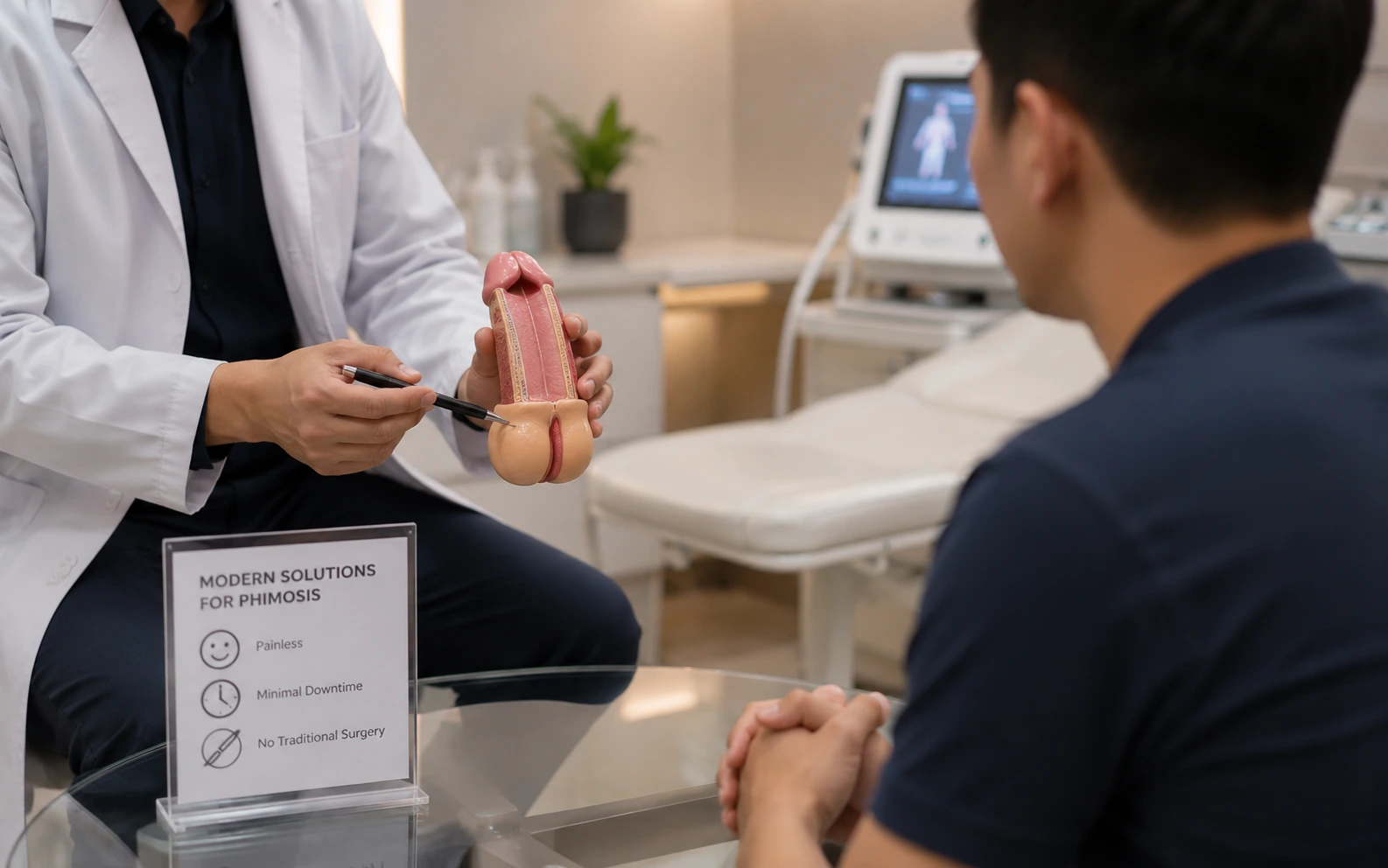
Short answer: Phimosis is a tight foreskin that will not pull back fully over the head of the penis. In adults it is common and treatable. Mild cases often improve with a prescribed steroid cream and gentle stretching over several weeks. When the foreskin is very tight, scarred, or causing repeated infections, pain, or problems during sex, circumcision usually solves it for good. Modern methods such as the stapler technique make the procedure quick, neat, and far more comfortable than the traditional cut and stitch approach, with most men back to light daily activity within a day or two.
Phimosis is one of those things men rarely talk about, which is a shame, because it is both common and very fixable. If you have found that your foreskin does not slide back the way it should, or it hurts, swells, or splits when it does, you are not alone and you are not stuck with it. This guide walks through what phimosis is, why it happens in adults, what actually works, and what a modern, low pain treatment looks like in Malaysia.
What is phimosis?
Phimosis simply means the foreskin cannot be pulled back over the glans, the head of the penis. In young boys a non retractable foreskin is normal and usually resolves on its own with age. In teenagers and adults, a foreskin that still will not retract, or one that used to retract and has become tight again, is what doctors call phimosis.
There are two broad types. Physiological phimosis is the natural tightness some men carry from childhood that never fully loosened. Pathological phimosis develops later because of scarring, inflammation, or infection, and this type tends to be firmer and less likely to stretch open on its own.
A related and more urgent problem is paraphimosis, where a tight foreskin gets pulled back behind the glans and then cannot be returned to its normal position. This can cause swelling and, if left, becomes a medical emergency. If that happens, seek care straight away rather than waiting.
General patient information on foreskin conditions is available from resources like the Mayo Clinic and the United Kingdom’s NHS, which are useful background reading alongside a proper assessment.
What causes phimosis in adults?
Several things can tighten a foreskin over time. The common ones include:
- Repeated infections of the head and foreskin (balanitis), often linked to yeast or bacteria, which leave behind scarring each time they heal.
- Poor glide from dryness or friction, including small tears that heal into tight bands of scar tissue.
- Diabetes, which raises the risk of recurrent yeast infections and can be the hidden reason behind adult phimosis. It is worth checking blood sugar if infections keep returning.
- Skin conditions, particularly a scarring condition called lichen sclerosus, which produces a firm, pale, tight ring that rarely responds to creams alone.
- Forcing a tight foreskin back, which causes micro tears that heal tighter than before, a frustrating cycle that makes the problem worse.
Because diabetes and skin conditions can sit behind adult phimosis, a doctor led assessment is genuinely useful. It is not just about the foreskin, it is about why it tightened in the first place.
Signs it is time to get it treated
A little tightness that causes no trouble may not need anything beyond good hygiene. You should get it looked at if you notice:
- The foreskin will not retract at all, or only with pain.
- Ballooning of the foreskin when you urinate.
- Redness, swelling, discharge, or a bad smell, which suggests infection.
- Splitting or bleeding of the foreskin during sex or erections.
- Pain during sex, or anxiety that is affecting your relationship and confidence.
- Recurrent infections that keep coming back despite treatment.
None of this is something to feel embarrassed about. These are ordinary medical problems with ordinary medical solutions, and the sooner they are addressed the simpler the fix tends to be.
Do phimosis creams work?
For mild to moderate phimosis, yes, creams often help, and they are usually the first thing a doctor will try before considering surgery.
The standard approach is a prescription topical steroid cream, applied thinly to the tight part of the foreskin once or twice a day for four to eight weeks, combined with gentle, patient stretching. The steroid thins and softens the tight tissue so it becomes more elastic, and the stretching gradually widens the opening. Done properly, this resolves a good number of milder cases without any procedure at all.
The key words are gentle and patient. Stretching should never be forced to the point of pain or tearing, because tears heal into more scar tissue and set you back. This is best done under guidance so you know how much is enough.
Creams are less likely to work when the tightness comes from heavy scarring or a condition like lichen sclerosus. In those cases the tissue simply does not stretch, and pushing harder only causes damage. That is when circumcision becomes the sensible, lasting answer.
When is circumcision the right choice?
Circumcision, the removal of the foreskin, is the definitive treatment for phimosis and it removes the problem at the source. It is usually recommended when:
- Creams and stretching have not worked.
- The phimosis is severe, scarred, or caused by lichen sclerosus.
- You have repeated infections that keep returning.
- The foreskin splits, bleeds, or causes pain during sex.
- You simply want a permanent solution rather than ongoing management.
Beyond fixing the tightness, circumcision often improves hygiene, reduces the risk of recurrent balanitis, and for many men removes a long standing source of discomfort and self consciousness. For a fuller picture of the procedure, recovery, and what to expect, see our detailed page on adult circumcision in Malaysia.
The modern stapler method: quicker, neater, more comfortable
When people imagine circumcision, they often picture the old fashioned version with a scalpel and a line of stitches that take weeks to heal. Modern techniques have moved on, and the difference in comfort and recovery is significant.
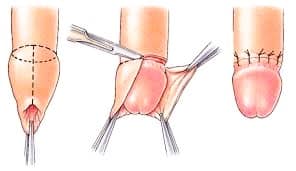
The stapler method, sometimes called disposable stapler or ZSR style circumcision, uses a single use device that removes the foreskin and seals the edges in one controlled action. Instead of hand stitching, the device places a ring of tiny surgical staples that hold the edges neatly together while they heal. Here is why men choose it:
- It is fast. The procedure itself typically takes around fifteen to twenty minutes.
- It is done under local anaesthetic, so the area is numbed and you are awake but comfortable, with no general anaesthetic needed for a routine case.
- Less bleeding and a neater edge, because the device cuts and seals in one step.
- No manual stitches to remove, since the staples are designed to fall away on their own as healing progresses.
- A more comfortable recovery, with most men managing normal daily activity within a day or two and returning to work quickly, depending on their job.
The traditional open technique still has its place, and the right method depends on your anatomy and the reason for the procedure. A doctor will talk you through which approach suits you rather than applying one method to everyone.
What recovery is really like
Honesty helps here, because knowing what to expect removes most of the worry.
In the first few days you can expect some swelling, mild discomfort managed with simple pain relief, and a need to keep the area clean and dry. Morning erections can feel tight in the first week, which is normal. Most men take one to two days off from strenuous activity and return to a desk job quickly, while physically demanding work may need a little longer.
Practical recovery tips:
- Wear supportive, breathable underwear to keep everything gently in place.
- Keep the area clean and follow the dressing instructions you are given.
- Avoid heavy lifting, sport, and swimming until you are cleared.
- Abstain from sex and masturbation for the period your doctor advises, usually a few weeks, to let healing complete.
- Take any prescribed medication and attend your review so healing can be checked.
Full internal healing takes a few weeks, but the day to day discomfort settles much sooner than most people fear. The stapler method’s neat edges are a big part of why the early recovery feels easier than the old approach.
Is adult circumcision painful?
During the procedure, no. It is done under local anaesthetic, so the area is fully numbed. You may feel pressure or movement, but not the cutting.
Afterwards, expect mild to moderate soreness for a few days, the kind that responds well to simple painkillers. Ice packs over clothing, rest, and supportive underwear all help. Most men are pleasantly surprised at how manageable it is, particularly with the modern technique. If you ever have severe pain, heavy bleeding, spreading redness, or fever, contact your clinic, because those are signs to be seen rather than to wait out.
Phimosis, sex, and confidence
Phimosis does not only cause physical symptoms. A tight foreskin that hurts, splits, or bleeds during sex can quietly chip away at confidence and put strain on a relationship. Many men live with it far longer than they need to, assuming it is just how things are.
Treating it, whether with creams for a mild case or circumcision for a stubborn one, often does more than fix the mechanics. It removes pain, ends the cycle of infections, and takes away the background worry. That is worth addressing, and it is a normal thing to want sorted.
If tightness is one part of a bigger picture that includes performance concerns, those are also treatable, and our resources on men’s health cover the wider topic discreetly.
Choosing where to have it done
Circumcision is a minor procedure, but it is still a procedure, and where you have it matters. A doctor led clinic assesses the cause of your phimosis, screens for things like diabetes and lichen sclerosus, uses sterile technique, and handles the rare complication properly. It also means the sensitive nature of the visit is treated with the privacy it deserves.
Vivardi Clinics is a doctor led men’s health and aesthetic clinic in Rawang, Selangor. Consultations are private, we follow the PDPA Act Malaysia to protect your information, and the whole experience is designed to be straightforward and free of embarrassment. Care is handled by qualified doctors, and the method is chosen to fit you.
Frequently asked questions
Can adult phimosis go away without surgery?
Mild to moderate phimosis often improves with a prescribed steroid cream and gentle stretching over four to eight weeks. Severe, scarred, or infection related phimosis usually needs circumcision, because the tissue no longer stretches.
Is the stapler circumcision method painful?
The procedure is done under local anaesthetic, so you do not feel the cutting. Afterwards there is mild to moderate soreness for a few days that responds well to simple pain relief. Most men find the recovery easier than they expected.
How long is the recovery after circumcision?
Most men return to light daily activity within a day or two and to a desk job quickly. Full internal healing takes a few weeks, during which you avoid strenuous activity and follow the advice on when to resume sex.
Is phimosis linked to diabetes?
It can be. Recurrent yeast infections of the foreskin, which cause scarring, are more common in people with high blood sugar. If infections keep returning, it is worth checking for diabetes as part of the assessment.
Do I have to be circumcised, or are there other options?
Not always. Creams and stretching are tried first for milder cases. Circumcision is recommended when those fail, when there is significant scarring, or when you want a permanent solution. A doctor will discuss what fits your situation.
Is it confidential?
Yes. At a doctor led clinic the consultation and procedure are handled privately, and your information is protected under the PDPA Act Malaysia.
Book a private consultation
If a tight foreskin is causing pain, infections, or worry, it is a common and very treatable problem. Start with a private assessment so the cause is identified and the right option is chosen for you. Book a consultation or contact Vivardi Clinics in Rawang, Selangor.
Written and clinically reviewed by the medical team at Vivardi Clinics in Rawang, Selangor. Last reviewed July 2026. It is general health information, not a substitute for a personal consultation with one of our doctors.

Medically reviewed by Dr. Dinesh Kumar, Medical Director, Vivardi Clinics. MBBS (AIMST), LCP-Certified Aesthetic Physician, Cert. Men’s Health. Last reviewed October 2026.
Care at Vivardi is provided by our team of qualified doctors. This page is for general education and does not replace a personal consultation.