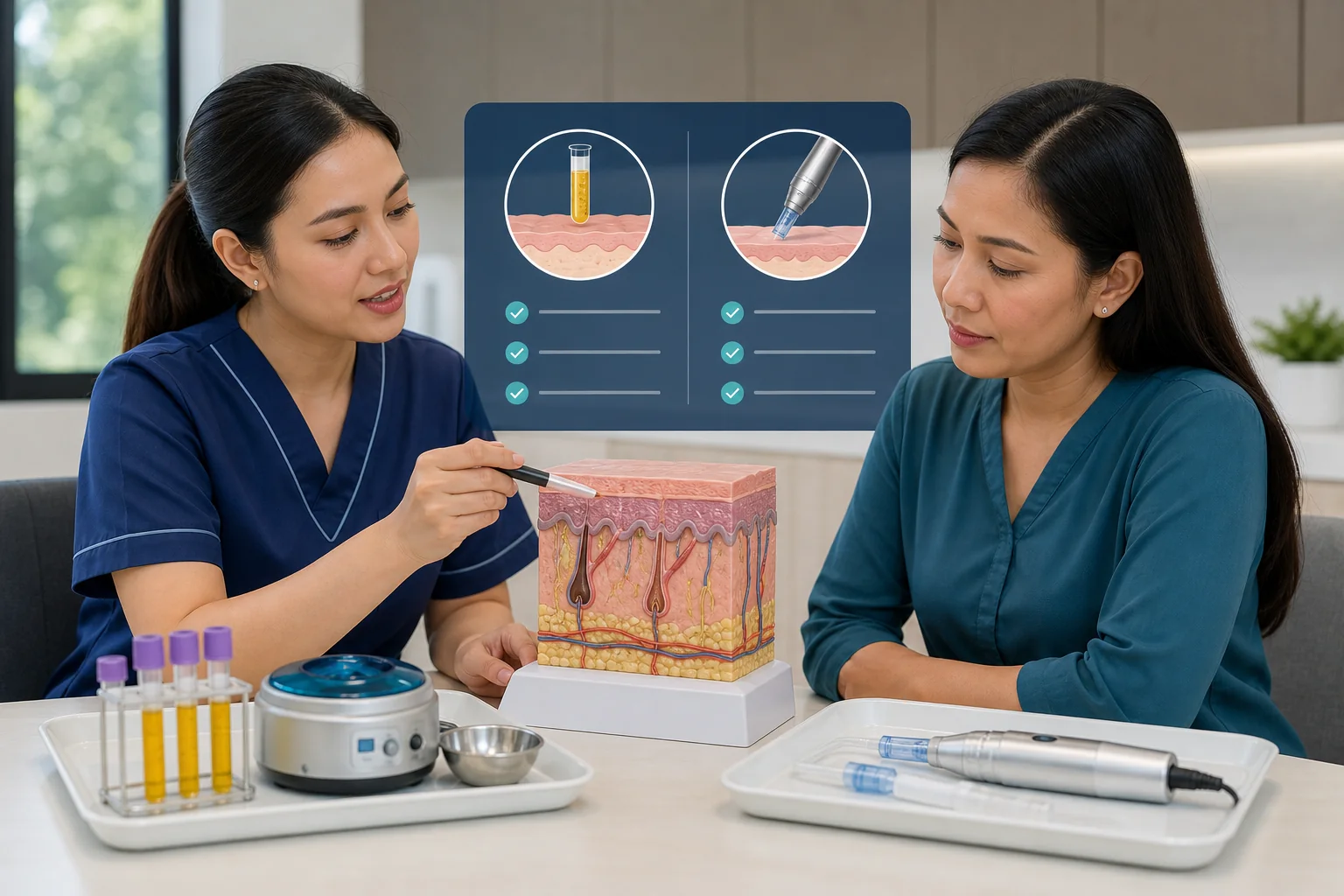
Quick answer: Microneedling creates controlled microchannels that stimulate wound healing and collagen remodelling. PRP is a concentration of platelets prepared from the patient’s own blood and used as an adjunct in selected procedures. A “vampire facial” commonly combines microneedling with topical or injected PRP, but the term is not medically precise. Microneedling can be performed without PRP, while PRP can also be injected without microneedling.
The internet often describes PRP and microneedling as competing treatments. In practice, they are different components that may be used separately or together. Choosing between them depends on the concern, scar type, skin tone, medical history, downtime and the evidence for the exact technique.
The phrase “vampire facial” adds confusion because clinics use it for different protocols. One provider may microneedle and apply PRP over the surface. Another may inject PRP and then microneedle. A third may use a superficial cosmetic roller. Patients should ask what will actually be done.
What is microneedling?
Microneedling uses a device with multiple sterile needles that enter the skin at controlled depths. The micro-injuries trigger a repair response involving growth factors, collagen and elastin. Over time this can improve selected depressed acne scars, texture and fine lines.
Medical microneedling differs from home rollers. Professional devices allow depth, speed and treatment area to be controlled. Sterility, skin preparation and diagnosis matter because needles can spread infection or cause pigment changes when used incorrectly.
The US FDA microneedling device guidance explains authorised uses and risks. It also notes that microneedling devices are not cleared to deliver cosmetics, drugs, vitamin solutions or blood products such as PRP into the skin in the United States. Regulatory status differs by country, but the distinction is important when discussing evidence and consent.
What is PRP?
Platelet-rich plasma is prepared from the patient’s blood. A blood sample is placed in a centrifuge to separate components. The resulting plasma fraction contains a higher concentration of platelets than whole blood, depending on the system and protocol.
Platelets release signalling proteins involved in clotting and tissue repair. PRP is used in several medical fields, but preparation methods vary. Platelet concentration, white-cell content, activation and injection technique affect the final product. “PRP” is not one standard medicine with an identical dose across clinics.
PRP for the face may be injected, applied after a procedure or combined with microneedling. Evidence is stronger for some indications than others and generally does not support guaranteed rejuvenation.
Vivardi’s PRP face treatment page explains the service, while what PRP is provides broader biological context.
What is a vampire facial?
It is a marketing term, not a single standardised medical protocol. It usually refers to blood being drawn, PRP prepared and then used with facial microneedling or injections.
Before consenting, ask:
- Is PRP injected, applied topically or both?
- What microneedling device is used?
- Is it standard or radiofrequency microneedling?
- What needle depth is planned?
- How is blood handled and labelled?
- Is the system closed and sterile?
- What evidence supports this protocol for my concern?
A memorable name should not replace a procedure description.
How do microneedling and PRP differ?
| Feature | Microneedling | PRP facial |
|---|---|---|
| Main mechanism | Controlled micro-injury and collagen remodelling | Platelet-derived signalling proteins from the patient’s blood |
| Material injected | None in standard needling | Autologous plasma preparation |
| Best-studied facial use | Selected acne scars and texture | Adjunct for rejuvenation or scar procedures, evidence varies |
| Downtime | Redness, swelling, dryness, possible pinpoint bleeding | Injection swelling or bruising, plus needling downtime if combined |
| Key risks | Infection, pigment change, scarring, device injury | Bruising, infection, blood-handling error, uncertain effect |
| Can be combined | Yes | Yes |
The table simplifies a complex decision. Device type and protocol change risk.
Standard microneedling versus RF microneedling
Standard microneedling creates mechanical channels. Radiofrequency microneedling uses insulated or non-insulated needles to deliver heat below the surface. RF can provide additional dermal remodelling but is a different procedure with different risks.
In 2025, the FDA issued a safety communication on RF microneedling after reports of burns, scarring, fat loss, disfigurement and nerve damage with certain uses. This does not mean every RF treatment is unsafe. It means device, settings, depth, anatomy and operator training matter.
Do not assume that adding radiofrequency makes treatment automatically better. Thin areas and patients seeking only superficial texture may need a different approach.
Which is better for acne scars?
Microneedling has evidence for depressed, atrophic acne scars. It stimulates collagen throughout the treated field. PRP may be used as an adjunct and some studies suggest improved scar appearance or recovery, but research varies in quality and protocol.
Scar type determines treatment more than the label:
- Rolling scars may respond to subcision, sometimes followed by microneedling or another resurfacing procedure.
- Boxcar scars may benefit from resurfacing, punch techniques or combination treatment depending on depth.
- Ice-pick scars often need focal treatments such as TCA CROSS or punch techniques rather than needling alone.
- Raised or keloid scars need a different approach and may worsen with unnecessary injury.
The American Academy of Dermatology acne-scar guide notes that treatment is tailored and often combines methods. Active acne should be controlled first to prevent new scars.
Which is better for fine lines and texture?
Microneedling can improve fine textural irregularity through collagen remodelling. PRP may modestly support healing and skin quality, but “glass skin” or facelift-level tightening should not be promised.
Fine lines caused by muscle movement, volume loss, sun damage and dryness have different drivers. Botulinum toxin, filler, laser, skincare or no procedure may be more appropriate. A full-face diagnosis prevents using needling for every concern.
Which is better for pigmentation?
Microneedling is not a universal pigment treatment. It can be used in selected melasma protocols, but inflammation can also trigger post-inflammatory hyperpigmentation, especially in deeper skin tones.
PRP has been studied as an adjunct for melasma, but evidence is not strong enough for guaranteed clearance. Sun and visible-light protection remain central. A patient with unstable melasma may be better served by topical therapy before procedures.
Can PRP make microneedling work better?
Some clinical studies report better scar scores, less redness or improved patient satisfaction when PRP is added. Other studies are small, use different platelet preparations and have limited follow-up.
The biologic rationale is plausible, but “contains growth factors” does not prove a large clinical benefit. Ask whether the added complexity and intervention are justified for your concern. A good clinic should be comfortable offering microneedling alone when appropriate.
Is topical PRP absorbed through microchannels?
Microneedling creates channels that can increase penetration. However, delivery depth and distribution are not as controlled as injection. Regulatory guidance in some countries does not authorise microneedling devices to deliver blood products.
Consent should explain whether PRP is being applied as an adjunct outside the device’s cleared use. This is not automatically wrong in every jurisdiction, but it should not be hidden behind the term vampire facial.
How is PRP prepared safely?
Safe blood handling includes:
- Correct patient identification.
- Single-use sterile tubes and needles.
- A validated centrifuge protocol.
- Separation in a clean clinical area.
- Clear labelling throughout.
- Avoiding open transfer where possible.
- Immediate use according to protocol.
- Proper disposal of sharps and blood waste.
The greatest preventable risk is mixing samples between patients or contaminating blood products. Treatment should not be performed at a beauty party or venue without medical infection-control standards.
What happens during a combined treatment?
A typical process may include:
- Consultation, photographs and consent.
- Cleansing and topical anaesthetic.
- Blood draw and PRP preparation.
- Microneedling at depths selected by area.
- PRP application or injection according to protocol.
- Cooling or barrier care.
- Written aftercare.
Exact steps differ. Blood should not be displayed for social-media entertainment without consent and appropriate handling.
Does it hurt?
Topical anaesthetic reduces discomfort. Bony areas such as the forehead and upper lip may feel more sensitive. PRP injections can sting and create pressure.
Pain should remain tolerable. Severe sharp pain, electrical sensations or burning during RF treatment should be reported immediately.
What is the downtime?
After standard microneedling, redness and warmth often resemble sunburn for one to three days. Dryness, tightness and mild flaking can last several days. Deeper treatment causes more downtime.
PRP injection may add swelling and bruising. RF microneedling can cause prolonged redness, grid marks or swelling, with risk depending on settings.
Do not schedule a first treatment immediately before a wedding or major event. Allow enough time for unexpected bruising or reaction.
Aftercare
Follow the treating clinic. General principles include:
- Cleanse gently.
- Use a bland moisturiser.
- Apply broad-spectrum sunscreen.
- Avoid retinoids, acids and scrubs until healed.
- Avoid makeup until the skin surface is intact and approved.
- Avoid heat, sauna, swimming and heavy exercise during early recovery.
- Do not pick flaking or crusts.
- Avoid unapproved serums through fresh microchannels.
Contact the clinic for blistering, severe pain, pus, fever, worsening redness or dark patches.
How many sessions are needed?
Many scar plans use a series spaced several weeks apart, but no fixed number fits all. Depth, scar type, skin response, device and combination treatment determine the schedule.
Collagen remodelling takes months. Performing sessions too close together may increase inflammation without allowing results to develop.
Who should avoid treatment?
Treatment may be unsuitable or delayed with:
- Active skin infection or herpes.
- Inflamed acne over the area.
- Poor wound healing.
- Uncontrolled diabetes.
- Bleeding disorders or certain anticoagulants.
- Active eczema or psoriasis flare.
- Tendency to keloids.
- Recent isotretinoin, depending on procedure and current evidence.
- Pregnancy for elective procedures.
- Blood or platelet disorders relevant to PRP.
Do not stop anticoagulants without medical direction.
Is PRP safe because it comes from my own blood?
Autologous material reduces allergy to the product itself, but does not eliminate risk. Blood draw can cause bruising or fainting. Injection can cause infection, pain and injury. Poor handling can contaminate the sample or mix it with another patient’s blood.
The fact that PRP is natural does not prove effectiveness for every claim.
What results are realistic?
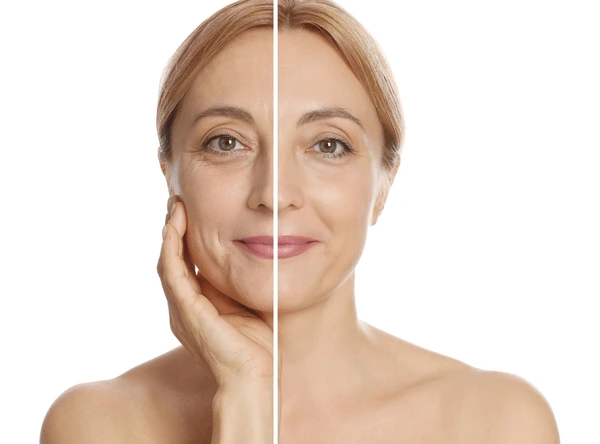
Expect gradual improvement, not an overnight transformation. Acne scars may become shallower and texture more even, but complete removal is unlikely. Fine lines may soften. Skin can look more refreshed as redness resolves, but temporary swelling can make early results appear better.
Standardised photographs after several months are more useful than next-day selfies.
Why PRP study results are difficult to compare
PRP research uses many preparation systems. One protocol may produce plasma with two times the baseline platelet concentration, while another produces a much higher level. Some preparations contain more white blood cells, some are activated before use and some are injected at different depths. Researchers also combine PRP with different needling devices and treatment intervals.
This variation means a positive study does not prove that every clinic’s “vampire facial” provides the same effect. Ask whether the clinic has a standard protocol and whether claims refer to the actual indication being treated. Evidence for acne scars cannot automatically be applied to pigmentation, enlarged pores or general anti-ageing.
Small studies can show promising differences that do not always remain in larger trials. Patient satisfaction is valuable, but swelling and short follow-up can exaggerate early improvement. High-quality evidence includes controlled comparisons, blinded scar assessment and follow-up long enough for collagen remodelling.
An honest consent discussion can say that PRP may add benefit without presenting the size of that benefit as certain.
Do I need blood tests before PRP?
Routine testing is not identical for every healthy patient. A clinician may ask about anaemia, platelet disorders, blood cancers, infection, anticoagulants, liver disease and recent illness. Full blood count or other tests may be considered when history suggests a problem.
PRP quality may be affected by platelet count and preparation, but a higher platelet concentration is not automatically better. Extremely concentrated or poorly processed products are not proven to produce superior facial results.
Eat and drink according to clinic instructions before the blood draw. Patients who faint with needles should tell staff and lie down. Do not stop prescribed anticoagulants, aspirin or supplements without a medical decision. Their presence may change bruising risk or whether elective treatment proceeds.
If blood cannot be drawn safely, the procedure should be postponed rather than improvising with another person’s product or an unlabelled vial.
Can microneedling cause scarring?
Yes, although uncommon when performed correctly. Excessive depth, repeated passes, infection, picking and inappropriate RF energy increase risk. Home devices can spread acne bacteria and create uneven trauma.
Patients with keloid history need careful assessment.
Can it cause hyperpigmentation?
Any inflammation can trigger pigmentation. Risk increases with aggressive treatment, sun exposure and deeper skin tones. Pre-treatment pigment control and conservative settings may help.
Sunscreen and visible-light protection are essential. Report worsening darkening instead of adding strong acids immediately.
Can home rollers replace medical microneedling?
Home rollers are shallow and difficult to sterilise. Reuse can dull needles and spread infection. They cannot safely reproduce a medical scar treatment.
Do not apply prescription drugs, acids or PRP through home-created channels.
How does it compare with laser?
Laser uses light energy, while needling uses mechanical injury. Fractional lasers may provide stronger resurfacing for selected scars but can involve more downtime and pigment risk. Pico fractional devices use different physics and are not interchangeable with ablative lasers.
The best option depends on scar type, skin tone and tolerance. Vivardi’s scar reduction treatment page explains related options.
How does it compare with a chemical peel?
Peels apply a controlled chemical injury at a selected depth. They can help acne, pigment and superficial texture, while deeper scars often need other methods. Combining peel and needling too closely can over-injure the skin.
A clinician should sequence treatments rather than stacking them for marketing.
Questions to ask the clinic
- What exact diagnosis are we treating?
- Is this standard or RF microneedling?
- Which device and depth will be used?
- Is PRP injected or applied?
- How is PRP prepared and labelled?
- What evidence supports adding PRP?
- What results are realistic for my scar type?
- What is the pigment risk for my skin tone?
- What aftercare and emergency contact are provided?
- When will results be assessed?
Frequently asked questions
Is a vampire facial the same as PRP?
Usually it means PRP combined with microneedling or facial injections, but there is no standard definition. Ask for the exact protocol.
Is microneedling better than PRP?
They do different things. Microneedling creates controlled injury, while PRP is a blood-derived adjunct. Choice depends on the concern.
Can PRP be done without microneedling?
Yes. It can be injected into selected areas. Evidence and technique vary.
Can microneedling be done without PRP?
Yes. Standard microneedling is an established stand-alone procedure for selected acne scars and texture.
Does PRP make results permanent?
No. Ageing continues and scar improvement varies. Maintenance may be discussed, but no permanent rejuvenation should be promised.
How long does redness last?
Often one to three days after standard needling, longer after deeper or RF treatment. Skin response varies.
When can I wear makeup?
Wait until the skin is intact and the clinic approves, commonly at least 24 hours and longer after stronger treatment.
When can I restart retinol?
When redness, tenderness and flaking have resolved, often around five to seven days. Follow individual advice.
Can it treat pores?
It may make pores appear less prominent by improving texture, but pores cannot be permanently closed.
Can it remove deep ice-pick scars?
Needling alone is often insufficient. Focal methods or combination treatment may be required.
Is RF microneedling always better?
No. RF adds heat and different risks. The FDA has reported serious complications with certain uses. Selection and settings matter.
Can PRP transmit infection?
Your own blood does not transmit another person’s infection if correctly handled. Sample mix-up or contamination is a serious preventable risk.
Can I do it during active acne?
Needling over inflamed acne can spread bacteria and worsen inflammation. Control active acne first.
How soon will I see results?
Redness resolves first, while collagen changes take weeks to months. Scar improvement should be assessed after sufficient time.
How many treatments do I need?
There is no universal number. The plan depends on diagnosis, depth and response.
Final takeaway
Microneedling and PRP are not the same treatment. Microneedling creates controlled channels and stimulates repair. PRP supplies a platelet concentrate that may be used as an adjunct. A vampire facial combines these in a protocol that must be described clearly.
For acne scars, scar type and treatment depth are more important than marketing names. PRP may offer incremental benefit in selected cases, but should not be sold as guaranteed regeneration. RF microneedling requires additional caution because heat introduces different risks.
At Vivardi Clinics in Rawang, consultation should identify the condition, discuss evidence and select the least aggressive effective plan.
References and further reading