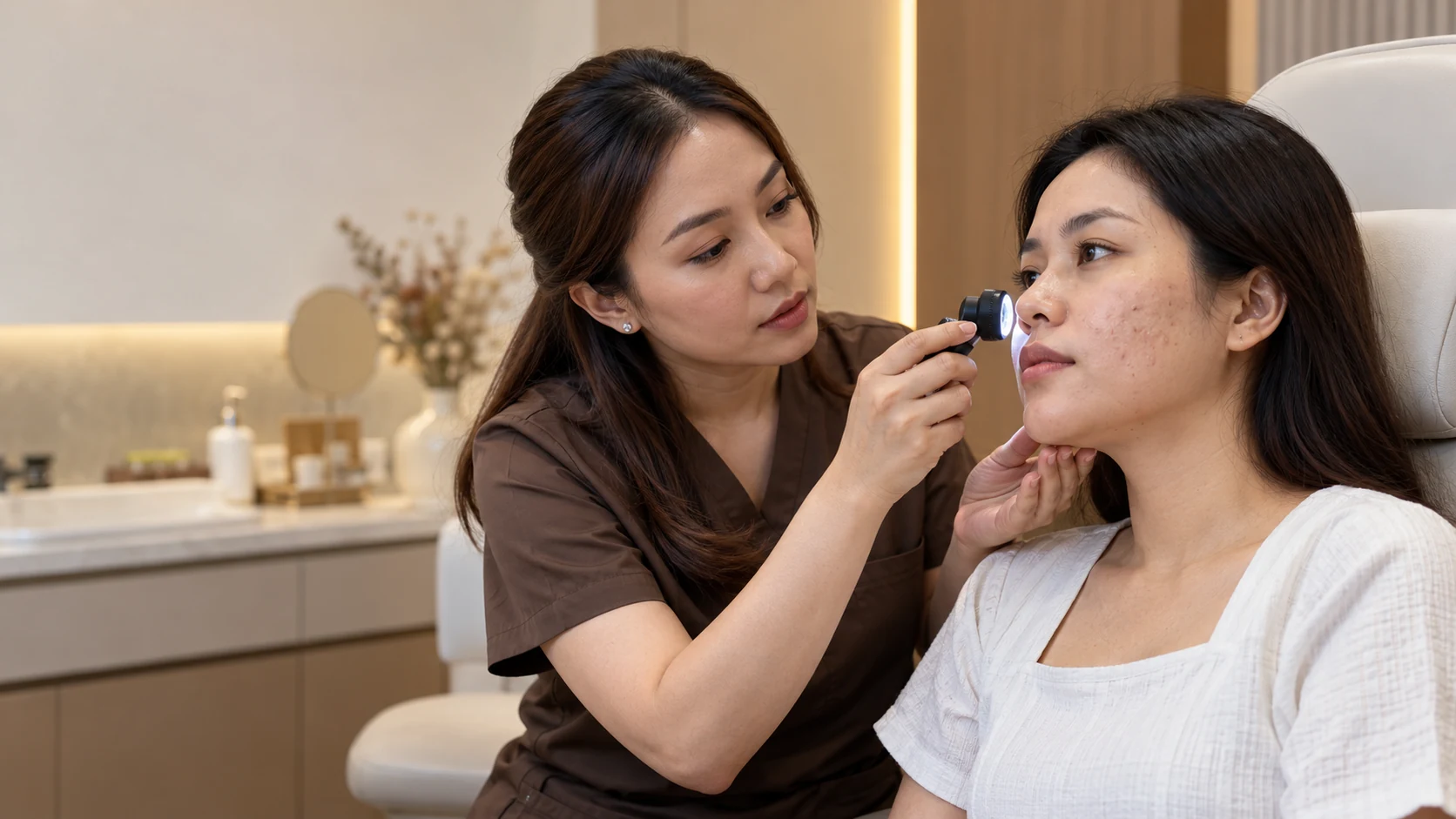
Flat red or brown acne marks are different from true scars that change skin texture. Pico laser, chemical peels and subcision target different structures, so correct classification matters more than choosing the newest device.
Quick answer
Brown post-inflammatory hyperpigmentation and red post-inflammatory erythema are flat marks. Ice-pick, boxcar and rolling depressions are atrophic scars, while keloids are raised. Pico laser may target selected pigment, superficial peels can improve tone and acne, and subcision releases tethered rolling scars. Combination treatment is often needed.
Marks are colour changes
Post-inflammatory hyperpigmentation is excess pigment after inflammation, while erythema reflects persistent vascular redness. Both are flat when viewed under side lighting. A careful assessment separates common, self-limited changes from findings that need testing or urgent treatment. The correct next step depends on timing, severity, associated symptoms, medical history and what has already been tried.
Keep a brief record of onset, progression, medicines, supplements and relevant photographs or test results. This reduces guesswork and helps the consultation focus on decisions that can change care.
They may fade with acne control, sun protection and topical treatment, although deeper pigment takes longer. Online descriptions can suggest possibilities but cannot confirm a diagnosis. Similar symptoms can have different causes, while more than one condition may be present at the same time. A clinician uses the pattern and examination to narrow the options.
Treatment should match the likely cause, not only the most visible symptom. Unnecessary products may irritate tissue, mask useful signs or delay appropriate testing. Do not start, stop or combine prescription treatment without medical advice.
Scars are structural
Atrophic scars include narrow ice-pick scars, sharp boxcar depressions and broad rolling scars. Hypertrophic scars and keloids rise above the surface. Online descriptions can suggest possibilities but cannot confirm a diagnosis. Similar symptoms can have different causes, while more than one condition may be present at the same time. A clinician uses the pattern and examination to narrow the options.
Treatment should match the likely cause, not only the most visible symptom. Unnecessary products may irritate tissue, mask useful signs or delay appropriate testing. Do not start, stop or combine prescription treatment without medical advice.
Texture changes cast shadows and usually require procedures that remodel, lift or remove scar tissue. Keep a brief record of onset, progression, medicines, supplements and relevant photographs or test results. This reduces guesswork and helps the consultation focus on decisions that can change care.
Results vary between people. A realistic plan defines what improvement means, how long it may take, which side effects to watch for and when the plan should be reviewed rather than promising a guaranteed outcome.
Control active acne first
New inflammatory lesions create new marks and scars. A scar plan without acne control can chase damage while it continues. Keep a brief record of onset, progression, medicines, supplements and relevant photographs or test results. This reduces guesswork and helps the consultation focus on decisions that can change care.
Results vary between people. A realistic plan defines what improvement means, how long it may take, which side effects to watch for and when the plan should be reviewed rather than promising a guaranteed outcome.
Treatment considers retinoids, benzoyl peroxide, hormonal factors and systemic therapy according to severity. Treatment should match the likely cause, not only the most visible symptom. Unnecessary products may irritate tissue, mask useful signs or delay appropriate testing. Do not start, stop or combine prescription treatment without medical advice.
A careful assessment separates common, self-limited changes from findings that need testing or urgent treatment. The correct next step depends on timing, severity, associated symptoms, medical history and what has already been tried.
Where pico laser fits
Pico devices deliver short pulses and may target selected pigment or use fractional effects for texture. Settings and wavelength must match skin and indication. Treatment should match the likely cause, not only the most visible symptom. Unnecessary products may irritate tissue, mask useful signs or delay appropriate testing. Do not start, stop or combine prescription treatment without medical advice.
A careful assessment separates common, self-limited changes from findings that need testing or urgent treatment. The correct next step depends on timing, severity, associated symptoms, medical history and what has already been tried.
They do not mechanically release deeply tethered scars and can trigger pigment change in susceptible skin. Results vary between people. A realistic plan defines what improvement means, how long it may take, which side effects to watch for and when the plan should be reviewed rather than promising a guaranteed outcome.
Online descriptions can suggest possibilities but cannot confirm a diagnosis. Similar symptoms can have different causes, while more than one condition may be present at the same time. A clinician uses the pattern and examination to narrow the options.
Where chemical peels fit
Superficial peels can improve comedonal acne, surface pigmentation and brightness. Medium or deep peels carry more downtime and pigment risk. Results vary between people. A realistic plan defines what improvement means, how long it may take, which side effects to watch for and when the plan should be reviewed rather than promising a guaranteed outcome.
Online descriptions can suggest possibilities but cannot confirm a diagnosis. Similar symptoms can have different causes, while more than one condition may be present at the same time. A clinician uses the pattern and examination to narrow the options.
Peel agent, concentration, contact time, preparation and aftercare determine safety. Home high-strength peels can cause burns. A careful assessment separates common, self-limited changes from findings that need testing or urgent treatment. The correct next step depends on timing, severity, associated symptoms, medical history and what has already been tried.
Keep a brief record of onset, progression, medicines, supplements and relevant photographs or test results. This reduces guesswork and helps the consultation focus on decisions that can change care.
Where subcision fits
Subcision passes a needle or cannula beneath a tethered rolling scar to release fibrous bands. Bruising and swelling are expected risks. A careful assessment separates common, self-limited changes from findings that need testing or urgent treatment. The correct next step depends on timing, severity, associated symptoms, medical history and what has already been tried.
Keep a brief record of onset, progression, medicines, supplements and relevant photographs or test results. This reduces guesswork and helps the consultation focus on decisions that can change care.
It is less suitable as a sole treatment for ice-pick scars or colour-only marks. Filler or energy treatment may be added selectively. Online descriptions can suggest possibilities but cannot confirm a diagnosis. Similar symptoms can have different causes, while more than one condition may be present at the same time. A clinician uses the pattern and examination to narrow the options.
Treatment should match the likely cause, not only the most visible symptom. Unnecessary products may irritate tissue, mask useful signs or delay appropriate testing. Do not start, stop or combine prescription treatment without medical advice.
Treatments for other scar types
Ice-pick scars may need focal chemical reconstruction or punch techniques. Boxcar scars may respond to resurfacing or surgical methods. Online descriptions can suggest possibilities but cannot confirm a diagnosis. Similar symptoms can have different causes, while more than one condition may be present at the same time. A clinician uses the pattern and examination to narrow the options.
Treatment should match the likely cause, not only the most visible symptom. Unnecessary products may irritate tissue, mask useful signs or delay appropriate testing. Do not start, stop or combine prescription treatment without medical advice.
Raised scars require a different approach such as injections, silicone, laser or combined therapy and should not be treated like depressions. Keep a brief record of onset, progression, medicines, supplements and relevant photographs or test results. This reduces guesswork and helps the consultation focus on decisions that can change care.
Results vary between people. A realistic plan defines what improvement means, how long it may take, which side effects to watch for and when the plan should be reviewed rather than promising a guaranteed outcome.
Skin tone and PIH risk
Malaysian skin spans many tones. A history of dark marks after irritation is often more useful than ethnicity labels alone. Keep a brief record of onset, progression, medicines, supplements and relevant photographs or test results. This reduces guesswork and helps the consultation focus on decisions that can change care.
Results vary between people. A realistic plan defines what improvement means, how long it may take, which side effects to watch for and when the plan should be reviewed rather than promising a guaranteed outcome.
Conservative settings, pre-treatment control, strict sun protection and staged testing reduce post-inflammatory hyperpigmentation risk. Treatment should match the likely cause, not only the most visible symptom. Unnecessary products may irritate tissue, mask useful signs or delay appropriate testing. Do not start, stop or combine prescription treatment without medical advice.
A careful assessment separates common, self-limited changes from findings that need testing or urgent treatment. The correct next step depends on timing, severity, associated symptoms, medical history and what has already been tried.
How a plan is sequenced
Doctors map each scar type and prioritise active acne, pigment, tethering and resurfacing. Sessions are spaced to allow healing and evaluation. Treatment should match the likely cause, not only the most visible symptom. Unnecessary products may irritate tissue, mask useful signs or delay appropriate testing. Do not start, stop or combine prescription treatment without medical advice.
A careful assessment separates common, self-limited changes from findings that need testing or urgent treatment. The correct next step depends on timing, severity, associated symptoms, medical history and what has already been tried.
Photographs with fixed lighting and angles are more reliable than daily mirror checks. Results vary between people. A realistic plan defines what improvement means, how long it may take, which side effects to watch for and when the plan should be reviewed rather than promising a guaranteed outcome.
Online descriptions can suggest possibilities but cannot confirm a diagnosis. Similar symptoms can have different causes, while more than one condition may be present at the same time. A clinician uses the pattern and examination to narrow the options.
Realistic results and safety
Improvement is gradual and complete erasure is unrealistic. Combination care may produce better balance than repeatedly using one device. Results vary between people. A realistic plan defines what improvement means, how long it may take, which side effects to watch for and when the plan should be reviewed rather than promising a guaranteed outcome.
Online descriptions can suggest possibilities but cannot confirm a diagnosis. Similar symptoms can have different causes, while more than one condition may be present at the same time. A clinician uses the pattern and examination to narrow the options.
Avoid treatment during active infection, uncontrolled dermatitis or when medication and healing history create excess risk. A careful assessment separates common, self-limited changes from findings that need testing or urgent treatment. The correct next step depends on timing, severity, associated symptoms, medical history and what has already been tried.
Keep a brief record of onset, progression, medicines, supplements and relevant photographs or test results. This reduces guesswork and helps the consultation focus on decisions that can change care.
Preparing for the consultation
Bring a complete medicine and supplement list, previous results and a timeline of symptoms. State allergies, pregnancy plans, chronic conditions and your main goal. Complete information helps the doctor avoid repeated testing and choose the steps most likely to change management.
- Record when symptoms began and what makes them better or worse.
- List treatments already tried, including dose, duration and response.
- Ask about benefits, risks, alternatives and the review timeline.
- Request written advice about warning signs and follow-up.
Seek urgent medical help
Do not wait for a routine appointment if there is severe pain, fainting, breathing difficulty, fever with deterioration, uncontrolled bleeding, tissue colour change, persistent vomiting or neurological symptoms. Contact emergency services according to the situation.
Frequently asked questions
Are brown marks scars?
Not necessarily. Flat brown marks are usually post-inflammatory hyperpigmentation. A careful assessment separates common, self-limited changes from findings that need testing or urgent treatment. The correct next step depends on timing, severity, associated symptoms, medical history and what has already been tried.
Can pico laser remove deep scars?
It may improve selected texture but cannot release every tethered scar. Online descriptions can suggest possibilities but cannot confirm a diagnosis. Similar symptoms can have different causes, while more than one condition may be present at the same time. A clinician uses the pattern and examination to narrow the options.
Is subcision suitable for ice-pick scars?
It mainly targets tethered rolling scars, not narrow deep pits. Keep a brief record of onset, progression, medicines, supplements and relevant photographs or test results. This reduces guesswork and helps the consultation focus on decisions that can change care.
Can peels worsen pigmentation?
Yes, especially if too strong or aftercare and sun protection are poor. Treatment should match the likely cause, not only the most visible symptom. Unnecessary products may irritate tissue, mask useful signs or delay appropriate testing. Do not start, stop or combine prescription treatment without medical advice.
Should acne be treated first?
Yes, controlling active acne helps prevent new scars. Results vary between people. A realistic plan defines what improvement means, how long it may take, which side effects to watch for and when the plan should be reviewed rather than promising a guaranteed outcome.
Which treatment is best?
The best option depends on scar type, skin tone, downtime and risk. A careful assessment separates common, self-limited changes from findings that need testing or urgent treatment. The correct next step depends on timing, severity, associated symptoms, medical history and what has already been tried.
Can one session be enough?
Many scar plans require staged or combined treatment. Online descriptions can suggest possibilities but cannot confirm a diagnosis. Similar symptoms can have different causes, while more than one condition may be present at the same time. A clinician uses the pattern and examination to narrow the options.
Is microneedling useful?
It can improve selected atrophic scars and is used across skin tones when performed properly. Keep a brief record of onset, progression, medicines, supplements and relevant photographs or test results. This reduces guesswork and helps the consultation focus on decisions that can change care.
Can keloids be subcised?
No. Raised scars need a different treatment strategy. Treatment should match the likely cause, not only the most visible symptom. Unnecessary products may irritate tissue, mask useful signs or delay appropriate testing. Do not start, stop or combine prescription treatment without medical advice.
What should consultation include?
Scar mapping, acne control, pigment risk, medication history and realistic goals. Results vary between people. A realistic plan defines what improvement means, how long it may take, which side effects to watch for and when the plan should be reviewed rather than promising a guaranteed outcome.
Medical references and related pages
Get a private clinical assessment
Discuss symptoms, risks and treatment options confidentially with the clinical team.
Medically reviewed by Dr. Dinesh Kumar. General education only and not a substitute for diagnosis or individual treatment.
A practical monitoring framework
When monitoring acne marks vs acne scars, change from the personal baseline is more useful than one isolated observation. A careful assessment separates common, self-limited changes from findings that need testing or urgent treatment. The correct next step depends on timing, severity, associated symptoms, medical history and what has already been tried. Consistent records help distinguish expected recovery, adverse effects and findings that justify further testing. Treatment decisions should be shared with a clinician and balance safety, evidence, patient priorities and access to follow-up.
When monitoring acne marks vs acne scars, change from the personal baseline is more useful than one isolated observation. Online descriptions can suggest possibilities but cannot confirm a diagnosis. Similar symptoms can have different causes, while more than one condition may be present at the same time. A clinician uses the pattern and examination to narrow the options. Consistent records help distinguish expected recovery, adverse effects and findings that justify further testing. Treatment decisions should be shared with a clinician and balance safety, evidence, patient priorities and access to follow-up.