Skin Biology · Oily Skin · Rawang Selangor
Oily skin is not a hygiene problem. It is a biological response driven by genetics, hormones, and gland activity that no amount of extra face washing will permanently fix. Understanding the biology is the first step to actually managing it.
Dr. Dinesh Kumar · LCP-Certified Physician
📅 May 2026 | Vivardi Clinics, Rawang
If you have oily skin, you have probably been told — explicitly or implicitly — that your skin is not clean enough. You may have been recommended harsh foaming cleansers, mattifying toners, or instructed to wash your face more frequently. Most of this advice is not only unhelpful but actively counterproductive. Oily skin is not a hygiene issue. It is biology. And once you understand what sebaceous glands are actually doing and why, the path to genuine management becomes much clearer.
What Are Sebaceous Glands?
Sebaceous glands are microscopic oil-secreting structures embedded in the dermis of your skin. They are found almost everywhere on the body except the palms of the hands and soles of the feet. In most areas, sebaceous glands are attached to hair follicles, forming what is called the pilosebaceous unit. The face, scalp, chest, and upper back have the highest density of these glands — which is precisely why these areas are most prone to oiliness and acne.
Each sebaceous gland is composed of specialised cells called sebocytes. As these cells mature, they become completely filled with lipid droplets, eventually rupturing and releasing their contents — this release is the sebum you feel on your skin surface. This process is called holocrine secretion and is unique to sebaceous glands; the entire cell disintegrates to deliver its contents.
The average person has between 2,500 and 6,000 sebaceous glands per square centimetre on the nose and forehead — the highest density on the body and the reason the T-zone is almost universally the oiliest area of the face.
What Is Sebum Made Of?
Sebum is not simply “oil.” It is a complex mixture of multiple lipid classes, each with a specific function in skin health:
- Triglycerides (41%): The primary lipid component. Bacteria on the skin surface convert these into free fatty acids, which contribute to the skin’s acidic pH and antimicrobial environment.
- Wax esters (26%): Unique to sebum and found almost nowhere else in human biology. They provide the waterproofing function that prevents excessive water loss from the skin surface.
- Squalene (12%): A natural antioxidant that protects skin surface lipids from oxidative damage. Interestingly, squalene oxidation (caused by UV and pollution) is now recognised as a key trigger for acne in people with oily skin.
- Free fatty acids: Produced partly through sebocyte activity and partly through bacterial metabolism of triglycerides. They contribute to the skin’s acidic pH barrier and have antimicrobial properties.
- Cholesterol and cholesterol esters: Support skin barrier function and cell membrane integrity.
The Squalene-Acne Connection
Recent research has identified oxidised squalene as a significant acne trigger. UV radiation causes squalene in sebum to oxidise, producing comedogenic compounds that block pores and trigger inflammation. This is one reason why wearing SPF every day reduces acne severity — it protects squalene from oxidation. For Malaysians with UV Index 10-12 year-round, this connection is particularly relevant.
What Sebum Actually Does For Your Skin
Sebum is not a waste product or a sign of poor hygiene — it is an essential biological secretion with multiple protective functions:
- Waterproofing the skin: The wax esters in sebum coat the skin surface and hair shaft, reducing water loss and maintaining optimal hydration levels in the stratum corneum.
- Maintaining acidic pH: The skin’s surface pH is naturally between 4.5 and 5.5 — slightly acidic. This acidity is partly maintained by fatty acids from sebum. The acidic environment inhibits growth of pathogenic bacteria like Staphylococcus aureus while supporting the beneficial skin microbiome.
- Delivering antioxidants: Vitamin E and squalene in sebum reach the skin surface through sebaceous secretion and provide antioxidant protection against UV-generated free radicals.
- Lubricating hair shafts: Sebum coats the hair shaft from follicle to tip, reducing friction, providing sheen, and protecting hair keratin from environmental damage.
- Antimicrobial defence: Specific fatty acids in sebum — particularly sapienic acid — have direct antimicrobial properties against certain pathogens.
Why Some People Produce More Sebum Than Others
Sebum production is regulated primarily by androgens — male sex hormones (including testosterone and DHT) that are present in both men and women. The sebaceous gland is one of the most androgen-sensitive tissues in the body. Here is how the cascade works:
- Testosterone is converted to dihydrotestosterone (DHT) by the enzyme 5-alpha reductase in sebaceous gland cells.
- DHT binds to androgen receptors in the sebocyte nucleus.
- This directly stimulates sebocyte proliferation (more cells) and increases lipid synthesis per cell (more sebum per cell).
- The result is larger sebaceous glands producing more sebum, and more visibly oily skin.
The degree to which your skin responds to androgens is largely genetic. Two people with identical testosterone levels can have very different skin oiliness if their sebaceous gland androgen receptor sensitivity differs. This is why oily skin runs in families and why no topical product can permanently change your skin type — it is encoded in your receptor genetics.
“When a patient tells me they wash their face five times a day but it is still oily within an hour, that tells me their sebaceous glands are highly androgen-sensitive. No amount of cleansing changes that. We need to address the sebum production at the gland level, not just remove it from the surface.”
Dr. Dinesh Kumar, MBBS, LCP-Certified — Vivardi Clinics Rawang
The Over-Washing Problem: Why It Backfires
One of the most common mistakes people with oily skin make is over-cleansing. The logic seems sound: if oil is the problem, remove it more frequently. But the skin has a homeostatic response that defeats this strategy:
- Harsh cleansers and frequent washing strip the stratum corneum of its lipid barrier.
- The skin detects this barrier disruption and responds by increasing sebum production as a compensatory mechanism.
- The result: oilier skin than before, plus a damaged barrier that makes the skin more reactive to irritants.
The optimal approach for most oily skin types is gentle cleansing twice daily — morning and night — with a low-foaming, pH-balanced cleanser. The goal is to remove excess surface sebum without disrupting the skin barrier or triggering a compensatory overproduction response.
Age and Sebum Production: What Changes Over Time
Sebum production follows a predictable trajectory across life:
This explains why teenage and young adult skin is characteristically oily and acne-prone, and why many people notice their skin becoming drier — sometimes uncomfortably so — in their 40s and 50s.
The Acne Connection: When Sebum Becomes a Problem
Sebum itself does not cause acne. The sequence is more specific:
- Excess sebum production fills the follicular channel.
- Abnormal desquamation (dead skin cells failing to shed properly) creates a plug at the follicular opening — a comedone (blackhead or whitehead).
- Cutibacterium acnes bacteria colonise the blocked follicle, feeding on the trapped sebum.
- Bacterial byproducts trigger an inflammatory cascade, producing the red, painful pimple.
Reducing excess sebum is therefore one component of acne management, but not the only one. This is why sebum-controlling products alone rarely clear acne completely — the bacterial and inflammatory components also need to be addressed.
Evidence-Based Ingredients That Regulate Sebum
- Niacinamide (5-10%): Reduces sebum production by approximately 20% in clinical trials. Also improves skin barrier function and reduces pore appearance. Well-tolerated by all skin types.
- Salicylic acid (BHA, 0.5-2%): Oil-soluble, penetrates into the follicular channel, dissolves the sebum-dead cell plug, and has anti-inflammatory properties. The best OTC pore-clearing ingredient.
- Retinol/retinoids: With consistent use, retinoids normalise follicular desquamation, reduce sebocyte proliferation, and decrease sebaceous gland size. Require gradual introduction and night-only use.
- Zinc: Functions as a natural 5-alpha reductase inhibitor, reducing DHT production in skin cells. Available topically and orally. Oral zinc at 30-45mg daily has evidence for acne reduction.
- Azelaic acid (10-20%): Reduces sebum production and has direct antimicrobial and anti-inflammatory effects. Particularly good for sebum-related acne with pigmentation.
What Does Not Work (And Why)
- Mattifying primers and powders: Absorb surface oil temporarily but do nothing to regulate sebaceous gland activity. Effect lasts 2-4 hours maximum.
- Harsh toners with alcohol: Strip surface lipids, trigger compensatory sebum increase, damage skin barrier. Counterproductive.
- Oil-free everything: Your skin needs certain lipids. Avoiding all oils in skincare can paradoxically worsen barrier function and trigger reactive oiliness.
- Drinking more water: Hydration affects transepidermal water loss but does not directly reduce sebum production, which is lipid-based, not water-based.
Clinical Treatment Options for Oily, Acne-Prone Skin
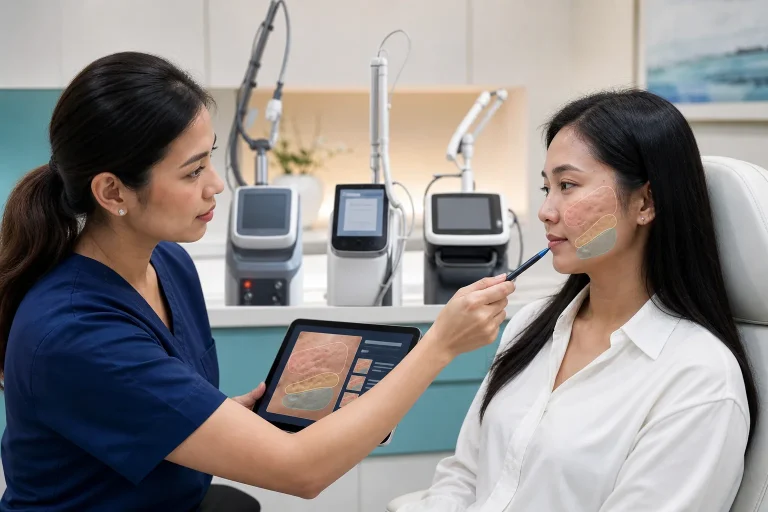
Salicylic acid peels (20-30%) dissolve sebum plugs, regulate follicular desquamation, and reduce sebaceous gland activity. Mandelic acid peels are gentler and more suitable for darker Malaysian skin tones. A course of 4-6 peels produces lasting improvement.
For sebum-related enlarged pores, Pico laser stimulates collagen remodelling around pore walls, tightening their appearance. Also addresses post-acne pigmentation and scarring that often accompanies chronic oily skin and breakouts.
Vivardi’s comprehensive acne programme addresses all four components of acne formation: excess sebum, follicular blockage, bacterial colonisation, and inflammation. Combines topical agents, clinic treatments, and lifestyle guidance.
Dietary Assessment
High-glycaemic diets (white rice, sweet drinks, processed foods) spike insulin and IGF-1, which directly stimulate sebaceous gland androgen receptors. Dietary modification is often an underutilised but highly effective component of long-term sebum management.
Frequently Asked Questions
Frequently Asked Questions
Skin Consultation · Rawang, Selangor
Stop Fighting Your Sebum. Start Managing It Intelligently.
Book a consultation with Dr. Dinesh. We will assess your skin type, sebum production patterns, and design a clinical and home care plan that actually addresses the biology — not just the surface.

Medically reviewed by Dr. Dinesh Kumar, Medical Director, Vivardi Clinics. MBBS (AIMST), LCP-Certified Aesthetic Physician, Cert. Men’s Health. Last reviewed October 2026.
Care at Vivardi is provided by our team of qualified doctors. This page is for general education and does not replace a personal consultation.