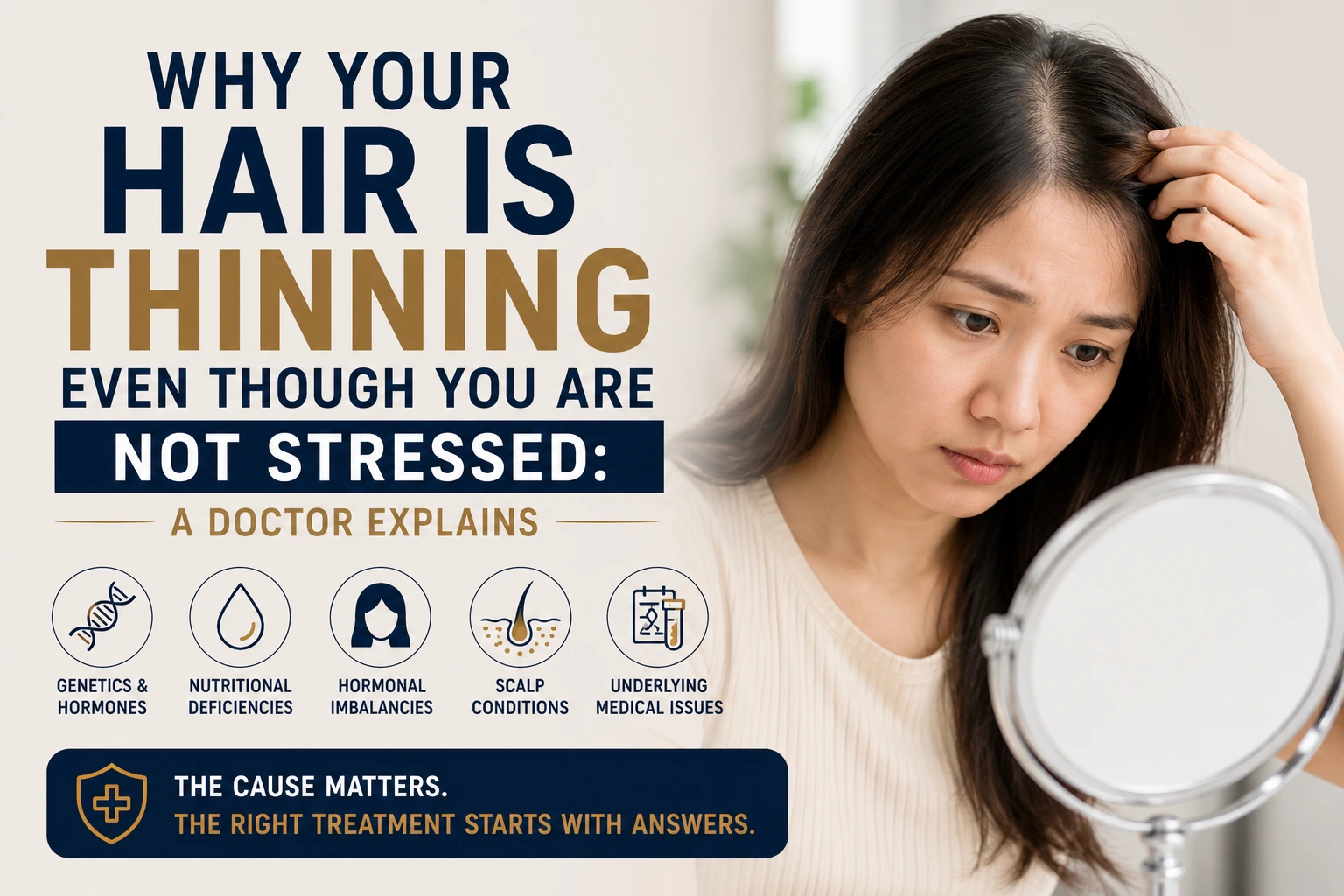
One of the most common things patients say when they come in about hair loss is: “I don’t understand why this is happening. My life isn’t even that stressful right now.”
The popular belief that hair loss is caused by stress leads many people to dismiss their thinning hair until significant loss has already occurred. The reality is that stress is just one of many causes, and some of the most common reasons for hair thinning in Malaysia have nothing to do with how stressed you feel.
This article is educational. A proper diagnosis is essential before starting any hair loss treatment.
The Stress Myth: Why It Misleads People
Stress does cause hair loss. But the type of hair loss it causes, called telogen effluvium, is usually temporary and self-resolving. More importantly, it requires a significant acute stressor, not just the everyday stress of work and responsibilities that most people carry.
When people assume their hair thinning must be from stress and they cannot identify a recent major stressor, they sometimes wait months or years before seeking help. By then, more hair loss has occurred and recovery is more challenging.
Here are the most common reasons hair thins that have nothing to do with being stressed.
Reason 1: It Is Genetic
Androgenetic alopecia, commonly called pattern hair loss, is the most common form of hair loss worldwide. It affects both men and women and is primarily driven by genetics and hormones, not stress.
In men, the hormone DHT causes hair follicles at the temples and crown to gradually produce thinner and shorter hair over time. In women, the same process typically causes diffuse thinning across the crown and widening of the hair parting.
Pattern hair loss can begin in your early twenties and has nothing to do with how stressed or relaxed you are. It is simply how your particular follicles respond to DHT over time, which is determined by your genes.
The fact that you do not feel stressed and are still losing hair is very often because the cause is genetic, not psychological.
Reason 2: Your Iron Levels Are Low
Iron deficiency is one of the most commonly missed causes of hair thinning in Malaysia, particularly in women. It affects more women than men because of menstrual blood loss, but men with dietary insufficiency can also be affected.
The important detail is that you can have iron deficiency affecting your hair even when your haemoglobin (the measure doctors check for anaemia) is still within normal range. What matters most for hair is ferritin, the stored form of iron. Low ferritin disrupts the hair growth cycle significantly, often causing diffuse shedding across the entire scalp.
Many patients have been told their blood results are normal because their haemoglobin was fine, when in fact their ferritin was very low. If you have not had your ferritin checked specifically, ask for it.
Reason 3: Your Thyroid Is Not Working Optimally
Both an underactive thyroid (hypothyroidism) and an overactive thyroid (hyperthyroidism) cause hair thinning. The thyroid gland regulates metabolism throughout the body, and hair follicles are particularly sensitive to thyroid hormone levels.
Hypothyroidism is more common and tends to cause diffuse hair thinning across the whole scalp, along with other symptoms like fatigue, weight gain, feeling cold, and dry skin. Hyperthyroidism can cause a more sudden shedding alongside symptoms like palpitations, weight loss, and anxiety.
Both are diagnosed by a simple blood test (TSH, Free T3, Free T4). If your thyroid is the issue, treating the thyroid condition usually leads to significant hair recovery, though it can take six to twelve months.
Reason 4: PCOS (In Women)
Polycystic Ovary Syndrome affects a significant proportion of women in their reproductive years in Malaysia. One of its effects is elevated androgens (male hormones), which can trigger the same follicle miniaturisation process that causes male pattern hair loss, but in women.
Women with PCOS-related hair loss typically notice thinning at the crown and widening of the parting. This can occur at any stress level. It is driven by hormones, not psychological state.
Other signs of PCOS include irregular periods, acne, weight gain especially around the waist, and excess facial hair. But some women have PCOS with very subtle other symptoms and hair loss is the most noticeable presentation.
Reason 5: You Have Been on a Diet
Restrictive dieting, particularly very low calorie or crash dieting, is a well-established trigger for telogen effluvium. Your body treats significant calorie restriction as physical stress, even if you felt perfectly calm and happy about your diet at the time.
The hair shedding typically begins two to four months after the restrictive period, which is why people often do not connect their past diet to their current hair loss. If you lost weight quickly in the past six months and are now noticing hair thinning, the diet is a likely contributor.
Rapid weight loss from prescription weight-loss medications like Tirzepatide can also trigger a temporary increase in hair shedding in some patients. This is typically temporary and resolves as the body adjusts. If you are concerned about this, discuss it with your doctor.
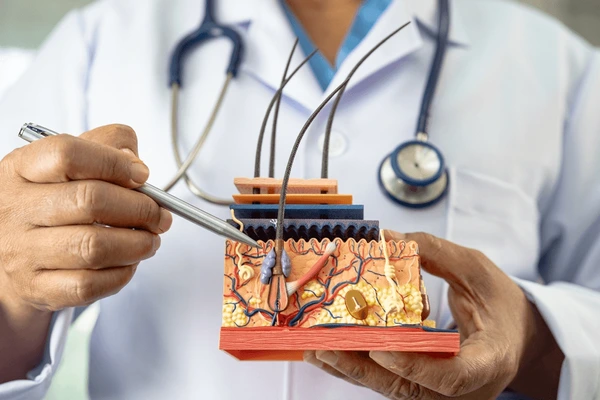
Reason 6: Your Scalp Has a Problem
In Malaysia’s hot and humid climate, seborrheic dermatitis (a scalp condition causing flaking, itchiness, and inflammation) is very common. Chronic scalp inflammation disrupts the follicle environment and can contribute meaningfully to hair thinning over time.
Scalp psoriasis can also affect follicle health. In either case, treating the scalp condition directly often improves hair quality noticeably.
Reason 7: Certain Medications
Several medications can cause hair thinning as a side effect. These include:
- Beta-blockers (used for blood pressure and heart conditions)
- Certain antidepressants
- Retinoids (vitamin A derivatives, including those used for acne)
- Some oral contraceptive pills, particularly those with more androgenic progestins
- Anticoagulants (blood thinners)
- High dose vitamin A supplementation
If you started a new medication in the months before your hair thinning began, it is worth discussing with your doctor whether it could be a contributing factor.
What Should You Do?
If you are noticing hair thinning and cannot identify an obvious stress trigger, the right next step is a proper assessment that includes:
- A blood test covering ferritin, thyroid function, full blood count, vitamin D, zinc, and relevant hormones
- A clinical examination of your scalp and hair pattern
- A review of your medication history
- Assessment of your diet and nutritional intake
Once the cause is identified, treatment can be targeted. A genetic hair loss cause requires one approach. Iron deficiency requires another. Treating the wrong cause wastes time and money.
Frequently Asked Questions
Can hair loss happen without any noticeable symptoms besides the hair loss itself?
Yes. Androgenetic alopecia, the most common cause, often has no symptoms other than the gradual hair thinning itself. Iron deficiency and mild thyroid dysfunction can also cause hair loss with minimal other symptoms, particularly in the early stages.
If I fix the cause, will my hair grow back completely?
It depends on the cause and how long it has been present. Correcting iron deficiency or thyroid problems often results in significant hair recovery over six to twelve months. Genetic pattern hair loss cannot be permanently reversed, but appropriate treatment can significantly slow progression and improve density.
How do I know if my hair thinning is serious or just normal shedding?
Normal daily shedding is 50 to 100 hairs. If you are losing significantly more than this, noticing visible thinning at the parting or hairline, or seeing scalp showing through areas where it did not before, a medical assessment is warranted.
Book a Hair Assessment at Vivardi Clinics Rawang
Hair thinning without an obvious cause is one of the most common presentations we see. A systematic assessment almost always finds the reason, and finding the reason is the first step to effective treatment.
Call or WhatsApp: 011-8888 6503
Pusat Komersial Anggun City, 63A-1, Jalan Anggun City 2, Taman Anggun, 48000 Rawang, Selangor
Educational content only. Proper diagnosis is essential before starting hair loss treatment.

Medically reviewed by Dr. Dinesh Kumar, Medical Director, Vivardi Clinics. MBBS (AIMST), LCP-Certified Aesthetic Physician, Cert. Men’s Health. Last reviewed October 2026.
Care at Vivardi is provided by our team of qualified doctors. This page is for general education and does not replace a personal consultation.