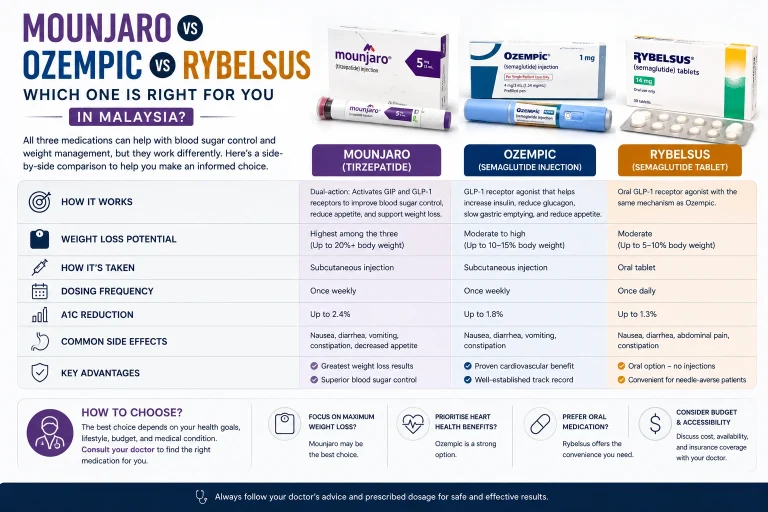
Quick answer: GLP-receptor based medicines have been studied in large clinical trials and can be used long-term in appropriately selected and monitored patients. Their most common side effects affect the digestive system. Less common but important risks include gallbladder problems, pancreatitis, dehydration-related kidney injury and complications relevant to delayed stomach emptying. Safety depends on the exact medicine, medical history, other drugs, dose escalation and follow-up. They are not suitable for everyone.
Weight-loss injections are sometimes described in two extreme ways. One view presents them as effortless, harmless solutions. The other claims that everyone who uses them will develop serious complications or regain all the weight. Neither approach helps a patient make an informed decision.
Medicines such as semaglutide and tirzepatide affect hormone pathways involved in appetite, fullness, glucose regulation and stomach emptying. They have produced clinically meaningful weight loss in trials, but benefit does not remove risk. Like medicines used for high blood pressure or diabetes, they work best when prescribed for the right patient, increased gradually when appropriate and reviewed over time.
Long-term safety also means more than asking whether a medicine is “toxic.” A good assessment considers side effects, nutritional intake, muscle loss, gallstones, interactions, pregnancy plans, anaesthesia, mental wellbeing, product authenticity and what will happen if treatment stops.
What counts as a weight-loss injection?
The phrase includes several prescription medicines and many unregulated products. GLP-receptor receptor agonists mimic glucagon-like peptide-1, a hormone involved in glucose and appetite signalling. Semaglutide is one example. Tirzepatide acts on both GIP and GLP-receptor receptors.
The approved indication and brand can differ by country. The same active ingredient may be marketed under different names for diabetes or chronic weight management. A medicine approved for one purpose should not be assumed to have identical labelling for another.
Compounded, counterfeit and social-media products are a separate safety concern. The US Food and Drug Administration warning about unapproved GLP-receptor products notes dosing errors, fraudulent labels and uncertainty about product quality. Malaysian patients should obtain prescription medicines through legitimate medical and pharmacy channels and confirm local registration.
Are GLP-receptor injections intended for long-term use?
Obesity is a chronic, relapsing condition for many people. Appetite signals and metabolic adaptation can drive weight regain after weight loss. For that reason, medicines approved for chronic weight management are generally evaluated as ongoing treatment rather than short detox programmes.
“Long-term” does not mean every patient must take an injection forever. It means the decision should be reviewed like other chronic treatment. If benefits remain meaningful, adverse effects are acceptable and no new contraindication appears, continuation may be reasonable. If treatment is ineffective, poorly tolerated, unsafe, unaffordable or no longer aligned with the patient’s goals, the clinician should reconsider it.
The Ministry of Health Malaysia Clinical Practice Guidelines for Management of Obesity describes obesity care as a comprehensive process that includes nutrition, physical activity, behavioural support, treatment of associated disease and, for selected patients, medication or surgery.
How much long-term evidence do we have?
The evidence base includes randomised trials lasting many months or years, extension studies, cardiovascular-outcome studies for selected agents and post-marketing safety monitoring. Semaglutide has evidence from diabetes and obesity programmes, while tirzepatide has growing trial and real-world experience.
However, no medicine has infinite follow-up. Newer drugs naturally have less multi-decade evidence than older treatments. Trial participants are also monitored more closely than patients buying injections without follow-up. Rare adverse effects may only become clearer when millions of people use a product.
An honest answer is therefore balanced: substantial evidence supports effectiveness and known safety patterns, but monitoring continues and individual risk must be assessed. Claims that a drug is completely risk-free are not supported. Claims that short social-media anecdotes disprove large trials are also unreliable.
What are the most common side effects?
Digestive effects are most common:
- Nausea.
- Vomiting.
- Diarrhoea.
- Constipation.
- Abdominal discomfort.
- Burping or reflux.
- Reduced appetite and early fullness.
Symptoms often occur when treatment begins or after a dose increase. Many are mild to moderate and improve as the body adapts. Starting low, increasing according to the prescribed schedule and avoiding very large or fatty meals can improve tolerance.
“Common” does not mean symptoms should be ignored. Repeated vomiting, inability to drink, severe constipation or pain can cause dehydration and require assessment. Vivardi’s Tirzepatide side-effects guide and first-week guide provide practical context for patients using tirzepatide.
Can weight-loss injections cause pancreatitis?
Acute pancreatitis is an important warning associated with medicines in this area. It causes inflammation of the pancreas and may present as persistent, severe upper abdominal pain, sometimes radiating to the back, with or without vomiting.
The absolute risk appears low, and research has not always shown a simple causal relationship across all drugs and populations. Nevertheless, prescribing information advises clinicians to consider pancreatitis when characteristic symptoms occur. A previous history of pancreatitis requires individual discussion.
Seek urgent medical care for severe, persistent abdominal pain. Do not take another dose while attempting to diagnose yourself online. Other causes such as gallstones, ulcers or bowel problems can produce similar pain and also need evaluation.
What about gallstones and gallbladder inflammation?
Gallstones can occur during substantial or rapid weight loss, regardless of method. GLP-receptor based treatment has also been associated with gallbladder events in trials. Symptoms may include pain in the right upper abdomen, pain after meals, fever, vomiting or yellowing of the skin and eyes.
Risk reduction does not mean eliminating fat completely. Extreme diets and very rapid loss can be counterproductive. Report symptoms promptly, especially if they recur after food. Imaging and blood tests may be required.
Can these injections damage the kidneys?
The medicines are not generally described as directly toxic to healthy kidneys. The more common pathway to kidney injury is dehydration from persistent vomiting or diarrhoea, particularly in older adults or people already using diuretics, blood-pressure medicines or other drugs that affect fluid balance.
Patients with chronic kidney disease may still be candidates for certain medicines, but dosing, hydration and monitoring require careful attention. Reduced urination, severe dizziness, confusion, inability to keep fluids down or ongoing gastrointestinal losses require medical advice.
Do not follow a generic instruction to “drink several litres” if you have heart failure, advanced kidney disease or a prescribed fluid restriction. Your plan should be individual.
Is the thyroid-cancer warning relevant to humans?
Some GLP-receptor based medicines carry a boxed warning because thyroid C-cell tumours occurred in rodents. It is not known whether the same risk occurs in humans. Product labelling for semaglutide and tirzepatide lists a personal or family history of medullary thyroid carcinoma, or Multiple Endocrine Neoplasia syndrome type 2, as a contraindication.
This warning is specific. It does not mean that every thyroid condition or family history of common thyroid disease is equivalent. Tell the prescriber the exact diagnosis. A vague statement that “my mother had thyroid problems” may need clarification.
Report a new neck lump, persistent hoarseness, difficulty swallowing or unexplained breathing difficulty. These symptoms have many possible causes, but they warrant assessment.
Do these medicines cause gastroparesis or bowel obstruction?
GLP-receptor and GIP/GLP-receptor medicines slow gastric emptying, particularly early in treatment. That action contributes to fullness, but it also matters for patients with severe gastrointestinal disease. Reports of severe delayed emptying and intestinal obstruction have prompted ongoing safety attention.
A history of gastroparesis, major gastrointestinal surgery or severe ongoing symptoms should be disclosed before treatment. Persistent vomiting of undigested food, severe distension, inability to eat, inability to pass stool or gas and escalating abdominal pain require urgent evaluation.
Do not assume that every episode of constipation represents an obstruction. At the same time, do not dismiss severe symptoms as a normal part of losing weight.
Why must the anaesthetist know about GLP-receptor treatment?
Delayed stomach emptying may leave food in the stomach despite usual fasting. During general anaesthesia or deep sedation, this can increase the concern about regurgitation and aspiration into the lungs.
Recommendations on withholding treatment before procedures have evolved and may depend on the medicine, weekly or daily dosing, symptoms, dose-escalation phase and type of procedure. Tell the surgeon, anaesthetist and prescribing clinician well in advance. Follow the current instructions from the team performing the procedure, not an old social-media chart.
Can weight-loss injections cause low blood sugar?
On their own, these agents generally have a lower risk of hypoglycaemia because their insulin effect is glucose-dependent. Risk rises when they are combined with insulin or sulfonylureas. If appetite and carbohydrate intake decrease while the old dose of another diabetes medicine continues, low glucose can occur.
Symptoms include shaking, sweating, palpitations, hunger, confusion and weakness. Patients using glucose-lowering medicines need a personalised monitoring and adjustment plan. Do not wait for repeated episodes before contacting the diabetes clinician.
What happens to the eyes in people with diabetes?
Rapid improvement in glucose can temporarily worsen diabetic retinopathy in some people with pre-existing disease, a phenomenon observed with intensive glucose lowering. Semaglutide labelling includes a warning about diabetic retinopathy complications in certain patients.
People with diabetes should keep up with retinal screening. Report sudden visual loss, new floaters, flashes or a curtain-like shadow urgently. These symptoms should not be attributed to a medicine without examination.
Do the injections cause muscle loss?
Any meaningful weight loss usually includes some lean mass as well as fat. Appetite suppression can increase the problem if protein and total nutrition become inadequate. Older adults, people with low baseline muscle mass and those losing weight very rapidly deserve particular attention.
Risk-reduction strategies include:
- Adequate protein based on individual needs.
- Resistance training when medically safe.
- Avoiding unnecessarily aggressive calorie restriction.
- Monitoring strength and function, not only scale weight.
- Addressing persistent nausea or vomiting.
- Reviewing dose if food intake is consistently inadequate.
Read what to eat on Tirzepatide for a detailed Malaysian nutrition framework after that article is published.
Is hair loss a long-term side effect?
Hair shedding can occur after rapid weight loss, illness, stress or inadequate nutrition. This is often telogen effluvium, in which more hairs enter the resting and shedding phase. It may be reported during weight-management treatment without proving that the molecule directly damages follicles.
Persistent shedding should be evaluated for iron deficiency, thyroid disease, pattern hair loss and other causes. Avoid adding high-dose supplements without assessment. Vivardi’s guide to stopping excessive shedding explains why diagnosis matters.
What about mental-health effects?
Regulators have investigated reports of suicidal thoughts with GLP-receptor medicines. Available reviews have not established a clear causal link for the class, but mental health still deserves attention. Major weight change, body-image pressure, previous eating disorders and unrealistic expectations can affect wellbeing.
Tell the clinician about depression, self-harm, an eating disorder or major mood changes before and during treatment. Seek urgent help for suicidal thoughts or immediate danger. A weight-loss consultation should never value a lower scale number over mental safety.
Are weight-loss injections safe during pregnancy?
Weight-loss medicines are not used to promote weight loss during pregnancy. Product information advises discontinuation when pregnancy is recognised, and some medicines require stopping in advance of a planned pregnancy because they remain in the body.
Discuss contraception and pregnancy plans before treatment. Tirzepatide can affect the absorption of oral medicines through delayed gastric emptying, and its labelling includes specific advice regarding oral hormonal contraceptives during dose initiation and escalation. The prescriber should explain the current product instructions.
Breastfeeding decisions also require individual advice because evidence differs by agent and is still developing. Do not rely on a forum answer.
Are these medicines safe for teenagers or older adults?
Age indications differ by medicine and country. Treatment in adolescents requires growth, nutrition, mental health and family context to be considered. It should not be obtained through an adult relative or beauty outlet.
Older adults may benefit from weight reduction but face greater risk of muscle loss, frailty, dehydration and interactions with multiple medicines. Goals may need to prioritise mobility, glucose and blood pressure rather than rapid weight reduction.
Can I stay on the lowest dose forever?
Dose should be based on the approved schedule, treatment goal, response and tolerance. The lowest starting dose is often intended for initiation rather than long-term maintenance, but escalating when side effects remain significant is not sensible.
More is not always better. The target is meaningful health benefit with acceptable adverse effects. Never combine pens, split doses or alter the schedule without instruction.
Is it safe to buy injections online?
The risks include counterfeit pens, wrong concentration, contamination, poor cold-chain storage and misleading labels. A genuine-looking box is not proof of authenticity. Medical assessment is also missing when products are sold through informal channels.
Use a licensed prescriber and legitimate pharmacy supply. Verify that the exact product is registered with the relevant Malaysian authority. Do not inject a product if the packaging, solution, storage history or source is uncertain.
How should long-term treatment be monitored?
Monitoring is individual, but may include:
- Weight and waist trend.
- Blood pressure and pulse when relevant.
- Glucose or HbA1c in patients with diabetes or prediabetes.
- Kidney function when indicated.
- Liver tests or lipid profile based on health conditions.
- Side effects and bowel symptoms.
- Food, protein and fluid intake.
- Strength and physical activity.
- Other medicine doses.
- Pregnancy plans.
- Mood and eating behaviour.
- Whether treatment is delivering meaningful benefit.
Routine amylase, lipase, thyroid ultrasound or every possible blood test is not automatically required for every asymptomatic patient. Testing should follow history, product labelling and clinical judgment.
The Tirzepatide treatment page at Vivardi Clinics explains the role of assessment and follow-up. Patients comparing options can also read Tirzepatide versus Oral Semaglutide.
What happens if I stop?
Appetite can increase and weight regain is common after stopping obesity medication. This does not mean the treatment “damaged metabolism.” It reflects the return of biological appetite signals and the chronic nature of obesity.
Before stopping, discuss why, what habits are established, whether another treatment is appropriate and how weight and metabolic markers will be monitored. A planned stop is better than discontinuing only because the scale has reached a short-term target.
Some patients stop due to side effects, pregnancy plans, access, lack of benefit or preference. The plan should respect the reason and avoid shame.
How do I decide whether benefits outweigh risks?
Ask these questions:
- Do I meet an evidence-based indication for medicine?
- What health benefit are we targeting besides appearance?
- Which exact product and indication are being used?
- Do I have a contraindication or condition requiring caution?
- Which other medicines may need adjustment?
- What side effects should I expect and what are the emergency signs?
- How will nutrition and muscle be protected?
- How often will follow-up occur?
- What will count as insufficient benefit?
- What is the long-term maintenance plan?
A responsible prescriber should be comfortable answering them.
Frequently asked questions
Are weight-loss injections safe for years?
Available trials and ongoing monitoring support long-term use for appropriately selected patients, but risk is not zero and multi-decade data are naturally limited for newer medicines. Continued review is necessary.
Is Tirzepatide safer than semaglutide?
They have overlapping and distinct evidence, indications and side-effect profiles. There is no universal winner. The better option depends on medical history, goals, other medicines and tolerance.
Will long-term use damage my pancreas?
Pancreatitis is a labelled warning, but it is uncommon and a direct long-term causal effect is not established for every patient. Severe persistent abdominal pain needs urgent evaluation.
Do these injections cause thyroid cancer?
Thyroid C-cell tumours occurred in rodents. It is unknown whether the medicines cause such tumours in humans. Certain products are contraindicated with personal or family medullary thyroid carcinoma or MEN2.
Can I take the medicine if I have gallstones?
This requires individual assessment. Weight loss and treatment may affect gallbladder risk. Report previous gallstones, gallbladder surgery and current symptoms.
Is nausea proof that the injection is working?
No. Weight-management benefit does not require suffering. Persistent or severe nausea may indicate that dose, meal pattern or treatment suitability needs review.
Is faster weight loss better?
Not always. Very rapid loss can increase gallstones, nutritional deficiency, muscle loss and hair shedding. Health improvement and sustainability matter more than speed.
Can I combine two weight-loss medicines?
Never combine prescription products unless a qualified clinician specifically directs it. Duplicate or interacting therapy can increase harm without proven benefit.
What if I miss a dose?
Instructions differ by product. Follow the current package information or contact the prescriber. Do not double the next dose unless specifically instructed.
Can I take it before surgery?
Tell the surgical and anaesthetic teams. Current recommendations depend on the medicine, symptoms, dose phase and procedure. Follow their individual fasting and withholding plan.
Do I need blood tests every month?
Not necessarily. Frequency depends on diabetes, kidney or liver disease, other medicines, symptoms and clinician judgment. Follow-up should still assess nutrition and adverse effects.
Can a normal-BMI person use it for a few cosmetic kilograms?
Prescription obesity medicines are intended for defined clinical indications. Using them without an appropriate indication can expose a person to risk without a clear health benefit.
Will I regain weight after stopping?
Regain is common, but degree varies. A maintenance plan involving food, activity, behavioural support and, when appropriate, other treatment is important.
Can I use the injection while breastfeeding?
Evidence and product recommendations vary. Discuss the exact medicine with the prescribing doctor and the clinician caring for mother and baby.
How do I know a pen is genuine?
Use an authorised medical and pharmacy supply chain, confirm local registration and correct storage, and avoid social-media sellers. Packaging alone cannot guarantee authenticity.
Warning signs that should not wait
Seek urgent medical care for severe persistent abdominal pain, repeated vomiting with dehydration, breathing difficulty or facial swelling, collapse, inability to pass stool or gas with severe swelling, or symptoms of severe hypoglycaemia. Report new significant visual symptoms promptly, particularly with diabetes.
Contact the prescriber soon for ongoing nausea, constipation that does not improve, progressive weakness, very low food intake, repeated low glucose, pregnancy or a planned operation.
Final takeaway
Weight-loss injections can be safe and effective long-term for selected patients, but they are medical treatment, not a casual wellness product. The most common problems are gastrointestinal, while rarer risks require patients to recognise warning signs. Nutrition, muscle, glucose medicines, pregnancy plans and procedures requiring anaesthesia all belong in the safety discussion.
At Vivardi Clinics in Rawang, weight-management consultation should include medical screening, product selection, dose planning and follow-up. No article can determine whether an injection is appropriate for an individual.
References and further reading