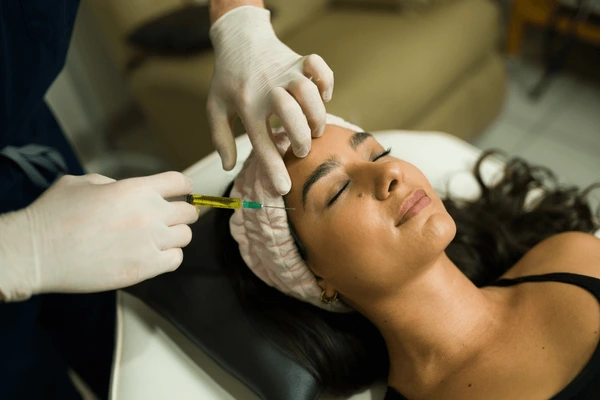
A heavy forehead or lower-looking brow after cosmetic botulinum toxin can be distressing, but the first task is to identify what moved. Brow ptosis, eyelid ptosis, swelling and loss of compensatory forehead movement are different problems. Most toxin-related weakness improves as the treatment wears off, while certain symptoms need prompt medical review.
What should I do if my brow feels heavy after Botox?
Contact the treating clinician, provide the injection date and product, and arrange assessment once the effect can be evaluated. Do not massage, apply heat, exercise the muscle aggressively or seek random “balancing” injections. Obtain urgent care for vision change, severe eye pain, difficulty swallowing or breathing, generalized weakness or other signs beyond the treated area.
Brow ptosis versus eyelid ptosis
| Feature | Brow ptosis or heavy forehead | Eyelid ptosis |
|---|---|---|
| What drops? | The eyebrow sits lower or the upper face feels weighted | The upper eyelid margin covers more of the eye |
| Common mechanism | Frontalis lifting function is weakened more than desired | Toxin affects the muscle that lifts the eyelid |
| Clue | Forehead lines are smooth and brow position changes | Lid opening is reduced even when trying to raise the brow |
| Treatment | Often observation and individualized balancing only if appropriate | Clinical confirmation; prescription drops may help selected cases |
| Urgency | Usually non-emergency unless other symptoms occur | Prompt review, urgent if vision or neurological symptoms accompany it |
Why the forehead can feel heavy
The frontalis muscle lifts the eyebrows. Some people naturally use it to compensate for low brows, hooded upper eyelids or excess upper-lid skin. When toxin relaxes this muscle, the hidden compensation disappears and the brow may sit lower even if injections were technically within the forehead.
Dose, placement, muscle strength, forehead height, brow shape and prior surgery all matter. Treating too low, using a dose that is excessive for the individual or failing to recognize compensatory movement can increase the chance of heaviness.
Why eyelid ptosis happens
Eyelid ptosis can occur if toxin affects the levator palpebrae muscle that lifts the upper eyelid. Diffusion from injections around the glabella is one possible mechanism. Anatomy varies, and previous surgery or baseline asymmetry can influence appearance.
The eyelid may droop on one side or both. It can feel worse later in the day with fatigue. A clinician needs to distinguish true lid ptosis from a lower brow pushing skin onto the eyelid.
When does heaviness begin?
Botulinum toxin does not reach its final effect immediately. Weakening often begins over several days and develops through roughly the first two weeks. A face that looks balanced on day two may look different on day ten.
Immediate fullness or asymmetry may instead reflect injection swelling, bruising, lighting or pre-existing anatomy. Unless there is an emergency, final assessment is usually more useful after the treatment has settled.
How long does it last?
Toxin effects are temporary and gradually reduce as nerve-muscle function returns. Many cosmetic effects last several months, but the timeline varies by product, dose, site and person. Ptosis may begin improving before all wrinkle-smoothing effect disappears.
No clinician can promise an exact reversal date. Standardized photos and symptom notes can document gradual change. Seek review if weakness is worsening, lasting unexpectedly long or accompanied by symptoms elsewhere.
Can Botox be dissolved?
No. Hyaluronidase can dissolve many hyaluronic acid fillers but does not reverse botulinum toxin. Time is the main mechanism of recovery. Advertising a “Botox dissolver” is misleading.
Treatments that claim to flush toxin with heat, massage, supplements or electric devices lack reliable evidence and can create irritation or other harm. Follow medical advice rather than attempting aggressive home reversal.
Can more toxin lift the brow?
In selected anatomy, carefully relaxing brow-depressing muscles may create a small balance change. However, adding toxin can also worsen asymmetry or affect the eyelid. It is not a universal rescue and should only follow face-to-face assessment.
If frontalis weakness is the main problem, adding more toxin to the same lifting system cannot restore strength. Sometimes waiting is safer than chasing a perfect result with repeated injections.
Prescription eye drops for eyelid ptosis
A clinician may consider prescription drops such as apraclonidine for selected true eyelid ptosis because they can stimulate an accessory eyelid-lifting muscle. They do not restore the frontalis and will not correct brow ptosis. Benefit is usually modest and temporary.
These drops can have contraindications and eye or systemic side effects. They should not be borrowed, bought online or used without examination. Persistent dry eye, irritation, light sensitivity or vision change may need ophthalmology review.
What can I safely do at home?
- Contact the treating clinic and keep the product and injection date.
- Take straight-on photographs in consistent light.
- Avoid manipulating the area unless told otherwise.
- Use prescribed eye drops exactly as directed.
- Manage dry-eye symptoms only with clinician-approved care.
- Allow time for the effect to evolve before judging.
- Do not cover one eye while driving if vision is impaired.
When is urgent care needed?
Seek urgent medical attention for double vision, sudden visual loss, severe eye pain, facial weakness unlike the expected cosmetic pattern, slurred speech, difficulty swallowing, breathing difficulty, generalized weakness or loss of bladder control. Botulinum toxin products carry warnings about possible spread of toxin effect beyond the injection site.
Heavy brow after a “forehead freeze”
Removing every forehead line often requires more frontalis weakening, which can conflict with maintaining brow elevation. A natural result leaves enough movement for the patient’s anatomy. The best dose is not the maximum dose.
Before treatment, discuss which matters more: completely smooth skin or preserving lift and expression. Patients with hooding may need conservative forehead dosing and staged review.
The role of baseline asymmetry
Most faces have one brow higher, one eyelid more hooded or unequal muscle strength. Toxin can reveal or change this imbalance. Baseline photographs with the face relaxed and brows raised help separate pre-existing anatomy from treatment effect.
A correction that makes both sides receive identical units may not create symmetry if muscles were unequal. Treatment should be individualized rather than mirrored automatically.
Can rubbing or exercise move Botox?
Patients are commonly advised not to rub or massage the injection sites during the early period. Follow the injector’s aftercare. There is no reliable home exercise that selectively moves toxin away from an unwanted muscle after heaviness develops.
Do not perform facial massage, gua sha, RF, ultrasound or heat treatment as an improvised fix. These can irritate tissue and make it harder to assess what happened.
What about sauna, gym and lying down?
Aftercare varies, but clinics often advise temporary limits on intense exercise, heat, alcohol and pressure. These precautions should be discussed before injection. They do not guarantee prevention, because anatomy, placement and dose remain central.
If heaviness develops days later, extending restrictions indefinitely will not reverse it. Contact the clinician instead of punishing yourself for one activity.
Could swelling mimic a droop?
Small bumps and mild swelling can occur immediately after injection and usually settle. Bruising near the eye may create temporary heaviness. Allergy or infection is less common but requires assessment if swelling increases, becomes hot or is accompanied by rash, pus or fever.
Rapid swelling of the lips, tongue or throat or breathing difficulty is an emergency. This is different from the gradual muscular heaviness described in this article.
How a clinician assesses the problem
- Confirms product, dose, dilution, injection map and date.
- Reviews baseline photographs and previous treatments.
- Measures brow height and eyelid opening.
- Observes forehead, glabellar and eye muscle movement.
- Checks pupil, eye movement and neurological symptoms when needed.
- Distinguishes brow ptosis, lid ptosis, swelling and baseline hooding.
- Discusses observation, eye care or a cautious adjustment.
How to reduce risk next time
Wait until function has returned and the event is documented. Bring photographs and the previous injection record. Tell the next clinician exactly where heaviness occurred and how long it lasted.
A future plan may use fewer units, higher forehead placement, staged dosing, different balance between elevators and depressors or avoidance of certain points. Some patients may choose not to treat the forehead again.
Choosing a qualified injector
Botulinum toxin is a prescription medicine, not a casual facial service. Ask who assesses, prescribes and injects, what product is used and how it is stored. Counterfeit or unapproved products add avoidable risk.
The injector should understand dynamic anatomy, examine the face at rest and in movement, explain alternatives and provide after-hours contact. Avoid providers who copy a fixed injection map for every forehead.
Product units are not interchangeable
Different botulinum toxin brands have different unit systems and approved indications. A number of units from one product cannot be assumed equal to another. Keep the product name and batch details in your record.
Online comparisons that say a dose is always “too high” without naming the product, pattern and anatomy are unreliable.
Botox versus filler around the brow
Toxin changes muscle activity. Filler adds volume or support. Neither should be used simply because the other caused a problem. Filler near the forehead and eye carries vascular risks, including rare vision loss.
A heavy brow caused by frontalis weakness is not usually fixed by injecting filler. Wait for diagnosis and avoid stacking procedures in distress.
Emotional impact and realistic reassurance
A facial change can feel more obvious to the patient than to others and may affect confidence or work. Reassurance should be honest: most toxin effects are temporary, but recovery takes time. A review plan is more useful than dismissing the concern.
Limit repeated mirror checking and filtered selfies. If anxiety becomes severe, seek support while the clinical team monitors recovery.
A week-by-week review framework
First few days
Record swelling or bruising and watch for urgent symptoms. Do not request correction before the effect is clear.
Around two weeks
The treatment can be assessed more accurately. Compare baseline photos and determine whether brow or lid is involved.
Following weeks
Track function and symptoms. Use prescribed treatment and attend review. Avoid serial adjustments without waiting for response.
Before future treatment
Document the outcome, discuss a conservative plan and decide whether the benefit still justifies the risk.
Why a pre-treatment movement examination matters
A good assessment asks the patient to relax, raise the brows, frown, squint and close the eyes. The clinician observes where lines form, which brow elevates more and whether the forehead is already working at rest. A patient who cannot fully relax the frontalis may be using it all day to hold heavy upper-lid tissue away from the visual field.
Photographs should include neutral expression, maximum elevation and frown. Makeup, tape and manually lifting the brow can hide relevant anatomy. Previous upper-eyelid surgery, brow lift, facial nerve weakness, thyroid eye disease and dry eye should be disclosed.
Forehead height and injection placement
A short forehead leaves less vertical distance between the eyebrows and hairline. Low injection points may be closer to the brow-lifting fibres that a patient depends on. A long forehead can have a different pattern of lines and muscle strength. Fixed diagrams cannot account for these variations.
Placement also interacts with dose and dilution. A small number placed strategically may behave differently from many injection points. Patients do not need to direct the needle locations, but they should expect the clinician to explain why the planned pattern suits their movement.
Hooded eyelids and compensatory frontalis use
Some people with hooded lids unconsciously raise their brows to see or to make the upper eyelid feel lighter. Their horizontal forehead lines are partly evidence of that compensation. Smoothing every line can expose the underlying hooding and feel like a sudden change even if the eyelid-lifting muscle was not affected.
This does not mean toxin is forbidden. It means the goal may need to be partial softening rather than total immobilization, with conservative treatment and a review before adding units.
Spock brow and uneven arch
A sharply elevated lateral brow, sometimes called a Spock brow, is different from generalized brow drop. It can occur when the central forehead is weakened while lateral frontalis remains active. One side may be more visible because baseline muscle strength differs.
A qualified clinician may make a small targeted adjustment after the result settles. Treating it too early or copying the same units to both sides can exchange one imbalance for another. Do not press or massage the high area to force it down.
Dry eye and altered blinking
FDA labeling notes reports of dry eye after cosmetic toxin near the orbicularis oculi. Symptoms can include irritation, light sensitivity or visual change. Reduced blinking in certain uses can expose the cornea. Persistent symptoms require assessment and sometimes ophthalmology referral.
Do not use redness-relief drops as a substitute for examination. Contact-lens wear may need adjustment if the eye surface is uncomfortable. Severe pain or reduced vision is not routine cosmetic downtime.
Could migraine, sinus pressure or headache explain heaviness?
Headache can occur after injections, but a subjective heavy sensation should still be examined if the brow or lid position changed. Sinus symptoms do not explain a clear new eyelid droop. Conversely, not every headache after treatment is caused by toxin.
Sudden severe headache, weakness, speech change, confusion or visual loss requires emergency care. Do not wait for a cosmetic review in that situation.
Why treatment records protect future results
Ask for the product name, batch, total units, treated areas and date to be retained in the medical record. A facial map can help identify which points may have contributed. “I had Botox somewhere on the forehead” is insufficient for a careful future plan.
Units cannot be compared directly across brands. If changing clinics, take the record rather than guessing. The new clinician also needs to know whether the result was heaviness, true eyelid ptosis, asymmetry, dry eye or dissatisfaction with expression.
A safer consent conversation
Consent should cover common effects such as bruising, headache and temporary asymmetry, plus ptosis, dry eye, unintended weakness and the rare possibility of systemic spread. It should explain that results take time, are temporary and cannot be instantly dissolved.
The patient should state priorities. Someone who values brow height for makeup may accept more forehead movement. Another person may prioritize line reduction and accept a small positional change. Consent is meaningful when these tradeoffs are discussed before injection.
What not to do while waiting
- Do not buy unverified prescription eye drops online.
- Do not have filler placed to compensate without diagnosis.
- Do not repeat toxin every few days.
- Do not use strong heat or electrical devices as reversal.
- Do not drive if the visual field is impaired.
- Do not conceal breathing, swallowing or generalized symptoms.
- Do not compare units across brands.
- Do not assume the injector can guarantee an exact recovery date.
Planning a conservative future session
Wait until baseline movement has returned sufficiently to assess true anatomy. Begin with the smallest plan that addresses the priority area and photograph movement. Treating the glabella and forehead as one fixed package may not suit someone with previous heaviness.
A staged approach allows a review before additional units. This can cost more time but reduces the pressure to predict every muscle response in one visit. If heaviness had a major emotional or functional impact, choosing no further forehead toxin is also a valid decision.
Frequently asked questions
Is a heavy forehead the same as eyelid ptosis?
No. Brow position and upper-eyelid opening involve different muscles and need different assessment.
How soon can heaviness appear?
It often develops over several days as toxin takes effect, rather than immediately.
Can Botox be dissolved?
No. There is no hyaluronidase-style dissolver for botulinum toxin.
Will more Botox fix it?
Only selected patterns may benefit from balancing. More toxin can worsen the problem and requires examination.
Do eye drops lift a dropped brow?
No. Prescription drops may modestly help selected eyelid ptosis but do not restore forehead muscle strength.
How long will it last?
It usually improves as the temporary toxin effect fades, but the exact duration varies.
Should I massage the forehead?
No improvised massage should be used. Follow the treating clinician’s aftercare and review advice.
Can I drive with ptosis?
Do not drive if vision is obstructed, double or otherwise unsafe. Obtain clinical advice.
What symptoms are an emergency?
Breathing or swallowing difficulty, generalized weakness, severe eye pain, vision change or stroke-like signs require urgent care.
Can I safely have Botox again?
Possibly, after recovery and review. A future plan may need lower or differently placed dosing, or avoidance.
Medical references
Related Vivardi care
Read about anti-wrinkle botulinum toxin, compare Botox versus fillers and review dermal filler treatment.
Get a careful facial assessment
If your brow or eyelid feels different after treatment, arrange a private review with the clinical team.
Medically reviewed by Dr. Dinesh Kumar. This article is general education and does not replace examination, prescription care or emergency assessment.