You can be healthy weight and still be insulin resistant. You can exercise regularly and still have this condition. It is one of the most common metabolic disorders in Malaysia — and one of the least discussed until it becomes diabetes.
Insulin resistance is estimated to affect approximately one in three adults globally, with rates in Southeast Asia including Malaysia rising rapidly. Most people who have it do not know. It progresses silently for years, manifesting as difficulty losing weight, persistent fatigue, visible skin changes, and eventually frank type 2 diabetes. The good news is that early identification and appropriate intervention can halt and reverse the progression. But identification requires knowing what to look for.
What makes insulin resistance particularly difficult to detect without testing is that many of its signs are dismissed as lifestyle issues or simple ageing — when they are actually metabolic red flags that become visible in the skin and body composition long before blood glucose becomes abnormal.
What Insulin Does and What Resistance Means
Insulin is a peptide hormone produced by beta cells in the pancreas. After you eat carbohydrates, blood glucose rises, the pancreas secretes insulin, insulin binds to receptors on muscle, liver, and fat cell surfaces, and glucose enters cells to be used as energy or stored as glycogen. This is the fundamental energy regulation system of the body — and it depends critically on cells being responsive to the insulin signal.
Insulin resistance occurs when this signalling breaks down. Cells stop responding adequately to insulin’s message — like a lock that no longer turns smoothly when the key is inserted. The pancreas detects that glucose is not being cleared efficiently and compensates by producing more insulin to achieve the same effect. For months or years, blood glucose remains controlled — but at the cost of chronically elevated insulin levels, a state called hyperinsulinaemia.
Over time, the pancreatic beta cells become exhausted from overproduction. Insulin secretion declines, blood glucose starts rising, and the condition crosses the threshold into prediabetes and then type 2 diabetes. But critically, insulin resistance produces measurable and visible consequences long before blood glucose becomes abnormal — and the skin is one of the first places these consequences appear.
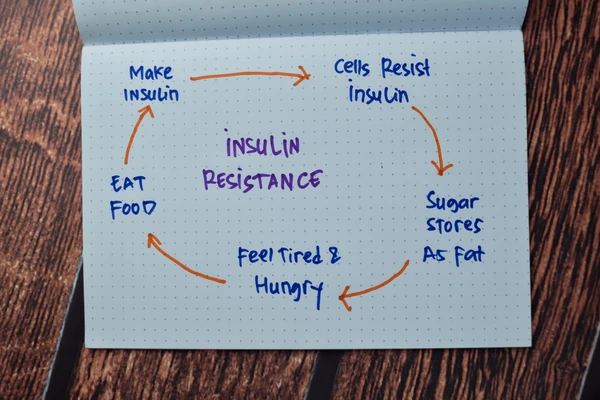
Normal: eat carbs → insulin rises → cells absorb glucose → insulin returns to baseline. With resistance: eat carbs → pancreas needs to produce far more insulin → cells absorb glucose slowly → prolonged insulin and glucose elevation → excess glucose stored as fat, especially visceral fat → visceral fat produces inflammatory cytokines (TNF-alpha, IL-6) that impair insulin signalling in muscle and liver → insulin resistance worsens further. Each element feeds the next.
How Insulin Resistance Appears on Your Body and Skin
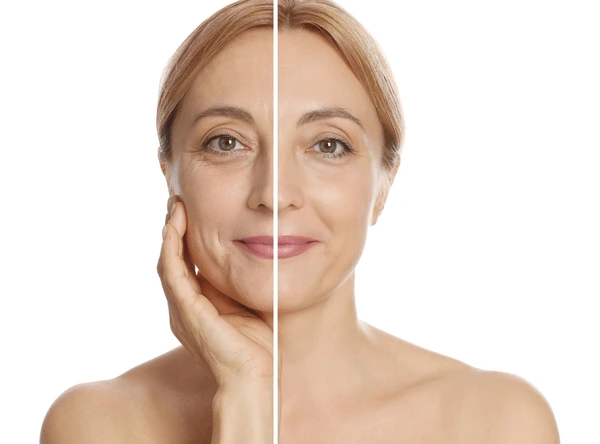
The skin changes of insulin resistance are often the first detectable clinical signs. They result directly from chronically elevated insulin stimulating certain cell types that are still highly insulin-responsive even as other tissues have become resistant.
Acanthosis Nigricans — The Most Reliable Skin Marker
Acanthosis nigricans (AN) appears as dark, velvety, thickened patches of skin in body folds — most commonly the back of the neck, axillae (armpits), groin, under the breasts, and over knuckles. The darkening and thickening is caused by elevated insulin stimulating keratinocyte and fibroblast proliferation in these locations, as these cells remain highly sensitive to insulin’s growth-promoting effects even in systemic resistance.
Many Malaysian patients who present with AN on the back of their neck assume it is due to sun exposure, friction, or poor hygiene. While these can cause superficial darkening, the characteristic velvety texture and bilateral symmetry of AN is metabolic in origin. A simple HOMA-IR blood test (fasting glucose and insulin) can confirm insulin resistance in most cases.
Skin Tags in Clusters
Skin tags (acrochordons) — small, soft, pedunculated growths, particularly in friction areas like the neck, axillae, and groin — when present in multiples, are strongly associated with insulin resistance and metabolic syndrome. Like AN, they result from insulin’s growth-promoting action on keratinocytes and fibroblasts that remain insulin-sensitive.
Adult Hormonal Acne
Chronically elevated insulin stimulates ovarian androgen production and reduces sex hormone binding globulin (SHBG), increasing free androgens circulating in the bloodstream. Androgens drive sebaceous gland overactivity, contributing to adult acne — particularly in women with polycystic ovary syndrome (PCOS), where insulin resistance is a core underlying mechanism in approximately 70% of cases.
A 32-year-old woman comes in with a dark patch on the back of her neck, multiple skin tags in her armpits, adult acne along the jawline, and difficulty losing weight despite dieting. She is not describing five separate problems. She is describing one problem — insulin resistance — visible across her skin and body composition.
Dr. Dinesh Kumar, MBBS, LCP-Certified — Vivardi Clinics RawangBody Composition Signs of Insulin Resistance
Beyond skin, insulin resistance produces characteristic body composition changes that are often attributed to “slow metabolism” or “age” rather than their actual metabolic cause.
Chronically elevated insulin actively suppresses lipolysis — the breakdown of stored fat for energy. This means that even when you create a caloric deficit through diet, high insulin prevents efficient fat mobilisation. The body preferentially breaks down muscle protein for energy (gluconeogenesis) rather than accessing fat stores. This is why insulin-resistant individuals often lose muscle while struggling to lose fat — the metabolic environment actively works against fat mobilisation.
The fatigue after carbohydrate-heavy meals characteristic of insulin resistance results from the blood glucose curve: initial spike followed by excessive insulin-driven drop, leaving blood glucose lower than before eating. The strong carbohydrate cravings that follow are the brain’s response to this glucose instability — creating a cycle that perpetuates the condition.
Malaysian Risk Factors for Insulin Resistance
Malaysia’s dietary culture and urban lifestyle create significant insulin resistance risk, particularly through:
- High-GI diet pattern: White rice 2–3 times daily, roti canai, teh tarik with condensed milk, nasi lemak, sugary beverages, fruit juices — all produce rapid glucose spikes requiring large insulin responses
- Sedentary desk work: Muscle is the primary site of insulin-stimulated glucose disposal. Less muscle activity means less efficient glucose clearance with each meal.
- Chronic sleep deprivation: A single night of 4-hour sleep impairs insulin sensitivity comparably to 6 months of high-fat diet in controlled studies — sleep debt is a direct metabolic toxin
- South Asian genetic predisposition: South and Southeast Asian populations develop insulin resistance and type 2 diabetes at significantly lower BMI than European populations — the threshold is lower, making lifestyle factors even more impactful
How GLP-1 Medications Address Insulin Resistance
GLP-1 (glucagon-like peptide-1) receptor agonists represent a major advance in metabolic medicine precisely because they target insulin resistance through multiple simultaneous mechanisms rather than simply lowering blood glucose downstream.
Mounjaro (tirzepatide) is particularly powerful for insulin resistance because it activates both GLP-1 and GIP (glucose-dependent insulinotropic polypeptide) receptors. GIP receptors on fat and muscle cells directly improve insulin sensitivity in these tissues — an effect beyond what GLP-1 alone achieves. Clinical trials showed Mounjaro produced 20%+ body weight reductions with significant improvements in insulin sensitivity, liver fat, and metabolic markers across all doses.
Rybelsus (oral semaglutide) provides GLP-1 receptor activation in a daily oral form — the only oral GLP-1 available — making it accessible for patients who prefer not to use injections. It slows gastric emptying (blunting glucose spikes), suppresses glucagon (reducing hepatic glucose output), and reduces appetite through hypothalamic action.
Lifestyle Changes With the Strongest Evidence
- Resistance training (2–3 sessions per week): Building muscle mass is the most powerful lifestyle intervention for insulin sensitivity — muscle is the primary site of glucose disposal and each kg of additional muscle permanently improves metabolic clearance capacity
- Reducing refined carbohydrate load: Not eliminating carbohydrates, but slowing their absorption through fibre, portion control, and choosing lower-GI alternatives substantially reduces insulin demand
- Sleep optimisation: 7–8 hours with consistent timing resets cortisol rhythm and restores insulin sensitivity that chronic sleep debt impairs
- 5–7% body weight loss: Even modest weight loss produces disproportionate improvements in insulin sensitivity — greater than medication in some studies, particularly when exercise is included
Frequently Asked Questions
Testing for Insulin Resistance: What to Ask Your Doctor
A standard fasting blood glucose test can miss insulin resistance for years — glucose stays normal while insulin climbs. More informative tests include: fasting insulin (elevated fasting insulin with normal glucose is the hallmark of early insulin resistance); HOMA-IR (Homeostatic Model Assessment of Insulin Resistance — calculated from fasting glucose and insulin, with scores above 2.0 suggesting resistance); HbA1c (reflects average glucose over 3 months); and a 2-hour post-meal glucose test (reveals impaired glucose clearance not visible in fasting values).
In Malaysia, standard health screening often measures only fasting glucose, missing early insulin resistance in millions of individuals. If you have risk factors — central obesity, family history of diabetes, PCOS, skin tags or acanthosis nigricans, strong sugar cravings — specifically requesting fasting insulin and HOMA-IR calculation from your GP provides a much more complete picture of your metabolic status.
For patients at Vivardi Clinics presenting with weight concerns, acanthosis nigricans, or PCOS-related acne, a metabolic screen including fasting insulin is a standard part of the consultation — because appropriate treatment requires understanding the hormonal landscape, not just the surface presentation.
At Vivardi Clinics in Rawang, metabolic health is an integral part of how we approach skin, hair, and aesthetic concerns. Many patients who present with acanthosis nigricans, adult acne, or unexplained weight gain benefit from metabolic assessment alongside their aesthetic treatment — because addressing the underlying condition produces better, more durable results than treating the surface signs alone.

Medically reviewed by Dr. Dinesh Kumar, Medical Director, Vivardi Clinics. MBBS (AIMST), LCP-Certified Aesthetic Physician, Cert. Men’s Health. Last reviewed September 2026.
Care at Vivardi is provided by our team of qualified doctors. This page is for general education and does not replace a personal consultation.