Short answer: There is no single “STD test” that covers everything, so which tests you actually need depends on your situation, your history, and any symptoms. For most sexually active people, a sensible routine screen covers the common, often silent infections: HIV, syphilis, chlamydia, and gonorrhoea, with hepatitis B and hepatitis C added based on risk. If you have symptoms, or a specific known exposure, targeted tests are added, for example herpes testing when there are sores. Timing matters too, because each infection has a window period during which it may not yet show up on a test. The most useful first step is a short, confidential conversation with a doctor, who tailors the right panel to you rather than testing blindly or missing something important.
Getting tested is a responsible, normal part of looking after your health, and the anxiety around it usually comes from not knowing what to ask for or worrying about privacy. This guide gives you a clear, confidential checklist: what the common tests are, which ones you actually need, when to test, and how private screening works, all from a doctor led point of view. It is educational and not a diagnosis.
Why “just test me for everything” is not quite the right approach
It is a common request, and understandable, but a good clinic tailors testing rather than running every possible test blindly.
The reason is that the right panel depends on you. A person with no symptoms wanting a routine check needs a different set of tests from someone with a specific symptom, or someone who has had a particular known exposure. Timing matters too, because testing too early, inside the window period, can give a falsely reassuring negative. And some tests, like routine herpes blood testing in people without symptoms, are not always recommended because of how they can be interpreted.
So the smartest approach is not “test me for everything,” it is a brief, honest conversation with a doctor who then selects the right tests for your situation and times them correctly. That is how you get an accurate, meaningful result rather than a false sense of security or unnecessary worry.
The core routine screen for most people
For a sexually active person with no symptoms wanting a responsible routine check, the common core screen covers the infections that are frequent and often silent, meaning they cause no symptoms while still being transmissible and, over time, harmful.
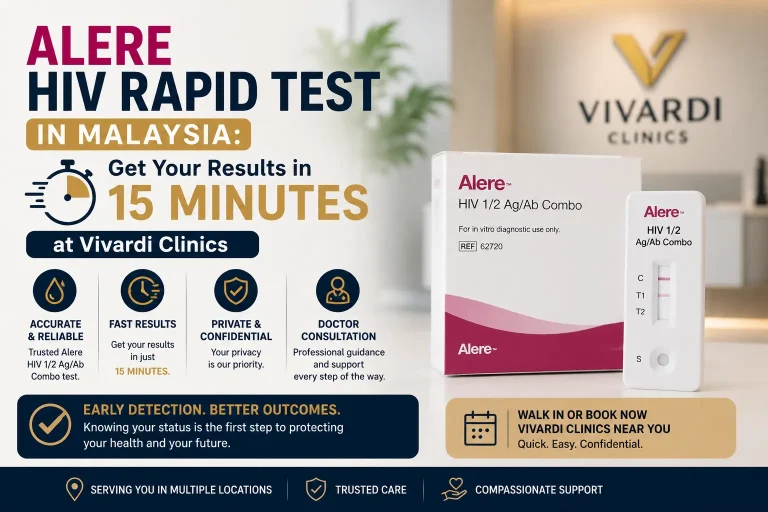
- HIV. A cornerstone test. Modern HIV testing is accurate and, tested at the right time, reliable. Early detection matters enormously because treatment is highly effective. Our anonymous HIV testing page explains private options.
- Syphilis. A blood test. Syphilis has been rising in many places, is often symptomless in its early or latent stages, and is easily treated when caught, so it belongs in a routine screen.
- Chlamydia. Extremely common and frequently silent, especially in its ability to cause complications like infertility if untreated. Usually tested by a urine sample or a swab.
- Gonorrhoea. Often tested alongside chlamydia from the same sample. Also frequently silent and important to catch.
This core group, HIV, syphilis, chlamydia, and gonorrhoea, is what most routine confidential screens are built around, because these are common, often symptomless, and treatable or manageable once found. Our general STD screening page explains how a full screen is put together.
Tests added based on your risk and history
Beyond the core group, a doctor adds tests depending on your specific situation:
- Hepatitis B and hepatitis C. These blood borne viruses are added based on risk factors and history. Hepatitis B is also vaccine preventable, which is worth knowing.
- Herpes (HSV). Testing here is guided by symptoms. If you have sores or blisters, a swab of the lesion is the appropriate test. Routine herpes blood testing in people without symptoms is generally not recommended, because the results can be difficult to interpret and cause unnecessary anxiety.
- HPV related concerns. HPV itself is very common. Where relevant, cervical screening and HPV vaccination are part of the wider picture, and genital warts are assessed and treated clinically. Our pages on the Gardasil 9 HPV vaccine and HPV wart removal cover prevention and treatment.
- Other targeted tests based on symptoms or specific exposures, chosen by your doctor.
This is exactly why the conversation matters. Your history and any symptoms decide which of these additional tests are worth doing, so you get a panel that fits you rather than a generic one that might miss something or include tests you do not need.
Window periods: why timing your test matters
This is one of the most important and least understood parts of testing, so it is worth being clear.
Every infection has a window period, the time between a possible exposure and when a test can reliably detect it. Test too soon, inside that window, and you can get a negative result even though an infection is present, because your body has not yet produced enough of what the test looks for. A negative test taken too early is not a reliable all clear.
Different infections have different window periods, so the timing of your test depends on what is being tested and when any exposure happened. Sometimes the right advice is to test now and repeat later to be sure, particularly after a specific recent exposure. This is another reason a doctor’s guidance is valuable: they time your tests correctly and tell you if and when a repeat is needed, so your result actually means what you think it means. General information on testing and window periods is available from public health bodies such as the World Health Organization.
If you have symptoms, do not wait for a routine screen
Routine screening is for people without symptoms. If you have symptoms, the approach is different and more urgent.
Symptoms worth getting checked promptly include unusual discharge, pain when urinating, sores, blisters, ulcers, unusual rashes, itching, or pelvic or genital pain. If you have any of these, you need a clinical assessment and targeted testing rather than a standard screen, because the symptom guides which tests are needed and treatment may be started quickly.
Do not sit at home searching your symptoms and worrying, and do not wait for a “routine” appointment. Symptoms deserve a proper look. Equally, do not assume no symptoms means no infection, since so many of these are silent, which is exactly why routine screening exists for people who feel completely fine.
How confidential testing actually works
Privacy is the single biggest reason people delay testing, so it is worth addressing head on. At a proper medical clinic, your visit and results are handled confidentially as part of standard medical practice. In Malaysia, clinics operate under the PDPA Act, which governs how your personal data is handled.
A typical confidential screen is straightforward. You have a short, private, judgement free conversation about your history and any concerns, the doctor selects the right tests, samples are taken, usually a blood sample and a urine sample or swab, and your results are given to you privately along with clear next steps. If anything needs treatment, it is arranged discreetly. The whole point is that you can look after your health without embarrassment.
For HIV specifically, anonymous testing options exist for people who want an extra layer of privacy, which our anonymous HIV testing page explains. The bottom line is that seeking testing is normal and responsible, and a good clinic makes it easy and private.
Your simple confidential testing checklist
To pull it together, here is a practical checklist:
- No symptoms, want a routine check? A core screen of HIV, syphilis, chlamydia, and gonorrhoea is the usual starting point, with hepatitis B and C added based on risk.
- Have symptoms? Do not wait for routine screening, get a clinical assessment and targeted testing promptly.
- Recent specific exposure? Timing matters, and you may need to test now and repeat later, guided by a doctor.
- Worried about privacy? Testing is confidential, handled under the PDPA Act, with anonymous HIV options available.
- Thinking about prevention? HPV vaccination and hepatitis B vaccination are worth discussing, and prevention is part of the conversation.
- Not sure what you need? Start with a short, confidential consultation and let a doctor build the right panel for you.
The single best action for almost everyone is that last one: have the brief conversation, and let the testing be tailored and timed properly.
Why a doctor led clinic in Rawang
Vivardi Clinics is a doctor led men’s health and aesthetic clinic in Rawang, Selangor. STD testing is most useful when it is tailored to you and timed correctly, which is a medical judgement, not a generic panel. We have a short, private, judgement free conversation, select the right tests for your situation, time them properly, and give you clear results and next steps, all confidentially. We follow the PDPA Act Malaysia, and anonymous HIV testing is available for added privacy. Getting checked is responsible, and we make it easy.
Frequently asked questions
Which STD tests do I actually need?
It depends on your situation. Most routine screens for people without symptoms cover HIV, syphilis, chlamydia, and gonorrhoea, with hepatitis B and C added based on risk. Symptoms or a specific exposure add targeted tests. A doctor tailors the right panel rather than testing blindly.
Can I just get tested for everything at once?
A good clinic tailors testing rather than running every possible test blindly, because the right panel depends on your history, symptoms, and timing. Some tests, like routine herpes blood testing without symptoms, are not generally recommended. A short conversation gives you an accurate, meaningful screen.
What is a window period and why does it matter?
It is the time between a possible exposure and when a test can reliably detect an infection. Testing too early can give a falsely negative result, so timing matters. Sometimes you test now and repeat later. A doctor times your tests correctly so the result is reliable.
Is STD testing confidential in Malaysia?
Yes. At a proper medical clinic your visit and results are handled confidentially under the PDPA Act. A typical screen involves a private conversation, samples, and results given to you privately. For HIV, anonymous testing options exist for added privacy.
I have symptoms, should I wait for a routine screen?
No. If you have symptoms like unusual discharge, pain passing urine, sores, or unusual rashes, get a clinical assessment and targeted testing promptly, because the symptom guides which tests are needed and treatment may start quickly. Routine screening is for people without symptoms.
How often should I get tested?
It depends on your circumstances, so this is worth discussing with a doctor. Regular screening is sensible for sexually active people, especially since many infections are silent, and the right interval is set based on your situation.
Book a confidential consultation
If you want a clear, tailored, confidential STD screen, the best first step is a short private conversation so the right tests are chosen and timed properly. Book a consultation or contact Vivardi Clinics in Rawang, Selangor. Everything is handled discreetly, by qualified doctors, under the PDPA Act Malaysia.
This guide was written and reviewed by the medical team at Vivardi Clinics in Rawang, Selangor. Last reviewed July 2026. It offers general education and is not a substitute for advice from your own doctor.

Medically reviewed by Dr. Dinesh Kumar, Medical Director, Vivardi Clinics. MBBS (AIMST), LCP-Certified Aesthetic Physician, Cert. Men’s Health. Last reviewed September 2026.
Care at Vivardi is provided by our team of qualified doctors. This page is for general education and does not replace a personal consultation.