Introduction
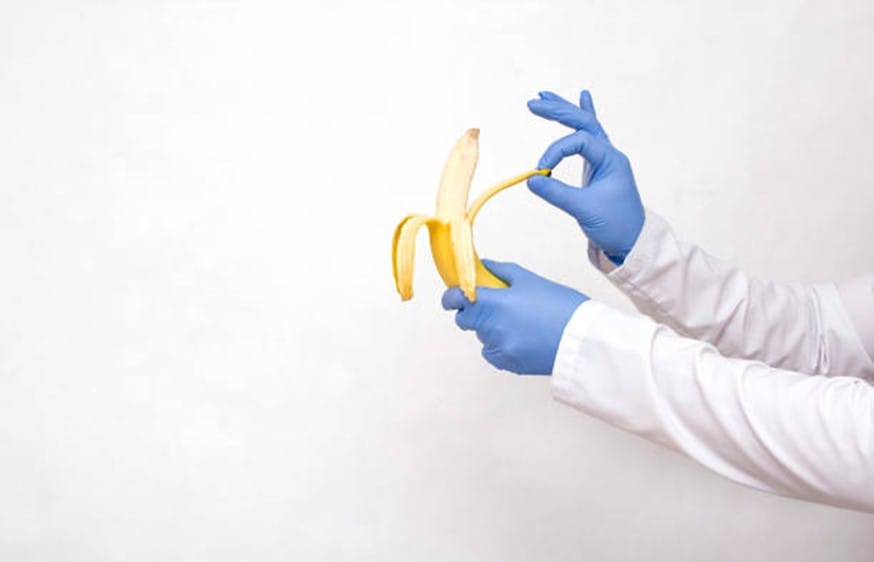
Circumcision is the surgical removal of the foreskin, the tissue covering the head of the penis. It’s a common procedure performed for various reasons, including religious, cultural, medical, and personal preferences.
Types of Circumcision:
- Traditional Surgical Circumcision: The foreskin is cut and removed using surgical tools like scalpels or scissors. Sutures are used to close the incision.
- Plastibell Method: A plastic ring is placed around the penis, and the foreskin is tied off, causing it to fall off after a few days.
- Gomco Clamp: A device that compresses the foreskin, cutting off blood flow, and then the foreskin is removed.
- ZSR Stapler Circumcision: This modern method uses a device that simultaneously removes the foreskin and staples the incision for faster healing.
The ZSR circumcision is currently the latest technology that makes the procedure simple, accurate, and safe for the patient.
What is ZSR Circumcision?
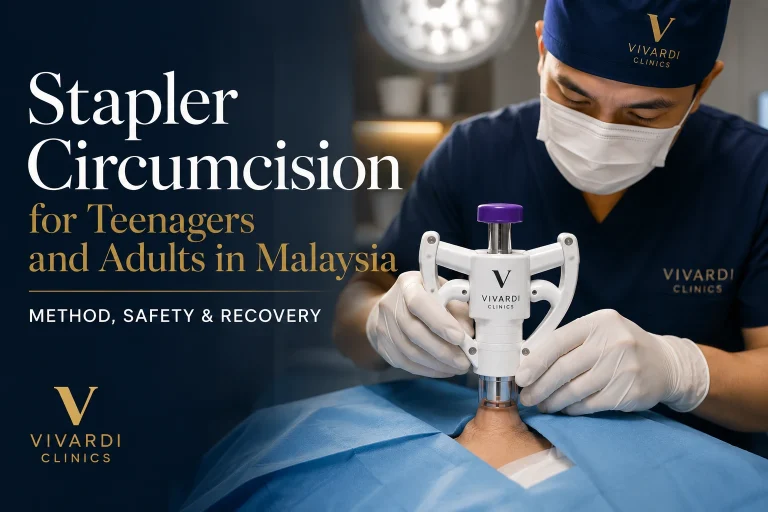
The ZSR stapler circumcision is a modern technique that uses a stapling device (the ZSR circumcision stapler) to remove the foreskin and close the wound with circular staples. It’s designed to make the circumcision process faster, no bleeding, and promote quicker recovery compared to traditional methods. Here’s a general overview of the procedure and potential considerations:
How It Works?
- Device: The ZSR device functions as a circular stapler that both cuts and staples the foreskin in one motion.
- Procedure: The device is placed over the penis, and once properly positioned, the foreskin is removed and the edges are stapled simultaneously, minimizing bleeding.
- Recovery: The staples are designed to fall off naturally within 1-2 weeks as the wound heals.
Advantages:
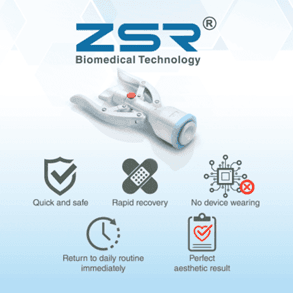
- Reduced Bleeding: The stapling technique generally reduces bleeding by immediately sealing the wound.
- Quicker Procedure: It typically takes less time than traditional circumcision methods.
- Faster Healing: Many patients report a faster recovery time.
- Less Pain and Infection Risk: Since the wound is closed immediately, the risk of infection may be lower, and postoperative pain might be reduced.
- Aesthetic Outcome: Excellent method as it gives an attractive cosmetic appearance with no black scars.
Possible Issues:
- Staple Complications: Some patients may experience discomfort from the staples, including irritation or delayed staple removal.
- Healing Complications: As with any surgical procedure, there is a risk of infection or incomplete healing.
What are the potential benefits of circumcision?
- Decreased Risk of Sexually Transmitted Infections (STIs):
- HIV: Studies show that circumcision reduces the risk of heterosexual men acquiring HIV from female partners by up to 60%.
- Other STIs: Circumcision may also reduce the risk of other infections such as herpes, human papillomavirus (HPV), and syphilis.
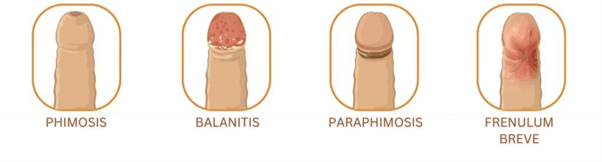
- Balanitis :- swelling and irritation of the tip(glans)of the penis.
- Balanoposthitis :- inflammation of the tip and foreskin of the penis.
- Paraphimosis :- the swelling of the penis in this condition the foreskin of the penis cannot be pulled over the tip.
- Phimosis :- the penis is not able to retract its skin due to tightness of the foreskin.
- Frenulum Breve :- frenulum of the penis becomes short or sensitive which creates problem during sexual activity.
- Prevention of penile cancer: – Though rare, circumcision is associated with a reduced risk of penile cancer. Penile cancer rates are higher in uncircumcised men, likely due to chronic inflammation or infections.
What should I expect during recovery?

After a circumcision, proper post-care is crucial to promote healing and reduce the risk of complications such as infection, excessive swelling, or bleeding. Here are general post-care guidelines:
- Wound Care: Always wash and sterilize your hands before touching the surgical area and must ensure the surgical area is dry and clean for first 5 days. Until the wound has healed, do not use any over-the-counter ointment or oil. For ZSR circumcisions, the staples typically fall off naturally within 1-2 weeks. Never attempt to remove the sutures or staples yourself unless directed by your healthcare provider.
- Swelling and Bruising: Some swelling and bruising are normal in the days following circumcision. An ice pack wrapped in a cloth can be applied for short periods to help reduce swelling. Over-the-counter pain relievers, such as ibuprofen or acetaminophen, can help manage discomfort.
- Healing Time: Typically takes 4-6 weeks. It’s essential to follow your doctor’s advice and attend follow-up appointments to ensure proper healing.
- Follow-up with Your Doctor: Attend any recommended follow-up appointments to ensure that healing is progressing properly
Related treatment: learn more about adult stapler circumcision in Rawang.

Medically reviewed by Dr. Dinesh Kumar, Medical Director, Vivardi Clinics. MBBS (AIMST), LCP-Certified Aesthetic Physician, Cert. Men’s Health. Last reviewed October 2026.
Care at Vivardi is provided by our team of qualified doctors. This page is for general education and does not replace a personal consultation.