Quick answer: There is no compulsory “Tirzepatide diet.” Most people do best with smaller, balanced meals built around protein, vegetables or fruit, fibre-rich carbohydrates and adequate fluids. Eating slowly and limiting very large, greasy or high-sugar meals may reduce digestive discomfort. Your plan should also protect muscle and micronutrient intake while appetite is lower.
Tirzepatide is the brand name for tirzepatide, a prescription medicine that affects glucose-dependent insulinotropic polypeptide and glucagon-like peptide-1 receptors. It can reduce appetite, increase fullness and slow the rate at which food leaves the stomach. Those effects can help selected patients manage type 2 diabetes and body weight, but they also change how eating feels.
Some people become full after only a few mouthfuls. Others notice nausea, burping, constipation or loose stools, especially when starting treatment or after a dose increase. A patient who simply “eats as little as possible” may lose weight, but can also fall short on protein, fluids, fibre, vitamins and minerals. Rapid weight loss without adequate nutrition and resistance exercise can increase the loss of lean tissue.
The purpose of nutrition during tirzepatide treatment is therefore not punishment or extreme restriction. It is to make each smaller meal count, reduce avoidable side effects, maintain strength and create habits that can continue beyond the injection.
What foods should I prioritise on Tirzepatide?
Build most meals around four components:
- A meaningful source of protein.
- Vegetables or fruit for fibre and micronutrients.
- A sensible portion of minimally processed carbohydrate when suitable.
- A modest amount of healthy fat.
This structure is flexible enough for Malaysian, Malay, Chinese, Indian and mixed meals. It does not require imported “diet food.” Portion needs vary by body size, diabetes medicines, activity, kidney function and treatment goals, so a clinician or dietitian may adjust the pattern.
Protein first
Protein helps maintain muscle, supports recovery and generally provides good satiety. When appetite is low, eating the protein component first can reduce the chance that you become full after rice, bread or drinks and leave the protein untouched.
Practical options include:
- Eggs.
- Fish, including ikan kembung, selar, tenggiri or salmon.
- Skinless chicken.
- Lean meat in moderate portions.
- Tofu, tempeh and dhal.
- Unsweetened yoghurt or milk if tolerated.
- Beans, chickpeas and lentils.
Fried protein is still protein, but the large fat load may worsen nausea, reflux or fullness. Grilled, steamed, baked, air-fried, soupy or lightly stir-fried preparations are often easier to tolerate.
Vegetables and fruit
Vegetables add fibre, potassium, folate and other nutrients without requiring a large energy intake. Aim for variety rather than relying on one “superfood.” Kangkung, bayam, sawi, bendi, kacang panjang, broccoli, cabbage, tomato, cucumber, carrots, mushrooms and ulam can all fit.
Whole fruit is generally more filling and fibre-rich than juice. Guava, papaya, apple, orange, pear, berries, dragon fruit and a small banana are examples. If you have diabetes, fruit still contains carbohydrate, so portion and total intake matter. Juice, sweetened fruit cups and large blended drinks can deliver sugar quickly without the same fullness.
Fibre-rich carbohydrate
Tirzepatide does not require complete removal of rice, noodles or roti. Carbohydrate quantity and quality matter more than a blanket ban. Depending on your medical plan, options may include brown or basmati rice, oats, wholegrain bread, chapati, sweet potato, corn, beans and dhal.
A smaller portion of white rice can also fit when combined with protein and vegetables. For many Malaysians, a realistic plan is more sustainable than suddenly eliminating staple foods and later rebounding.
Healthy fats in small amounts
Fat is necessary, but it is energy dense and can slow stomach emptying further. Very fatty meals may feel uncomfortable on tirzepatide. Use modest amounts of nuts, seeds, avocado, olive or canola oil, and naturally oily fish. Coconut milk dishes can be enjoyed less often or in smaller portions, particularly if they trigger nausea or reflux.
A simple Malaysian plate method
When you can tolerate a normal meal, a useful visual starting point is:
- About half the plate as non-starchy vegetables.
- About one quarter as protein.
- About one quarter as rice, noodles, bread or another carbohydrate.
On days when appetite is very low, the plate may be physically smaller. Keep the same priority order: protein, vegetables or fruit, then an appropriate carbohydrate portion. Do not force a large meal until you feel ill. Smaller meals spread across the day can work better.
The Malaysian Ministry of Health promotes balanced eating through national nutrition guidance. Patients can also use the MOH Clinical Practice Guidelines for Management of Obesity as a reliable reference for evidence-based weight management rather than fad diets.
What should breakfast look like?
Breakfast is optional if you are not hungry, but skipping it should not lead to under-eating protein all day or overeating at night. Suitable examples include:
- Two eggs with sautéed vegetables and one slice of wholegrain toast.
- Unsweetened yoghurt with fruit and a small amount of nuts.
- Oats prepared with milk, plus an egg or yoghurt for extra protein.
- Thosai with sambar, keeping sweet drinks and oily sides limited.
- Chapati with dhal and vegetables.
- A smaller portion of nasi lemak with egg or grilled protein, more cucumber and less sambal or fried accompaniments if fat triggers symptoms.
There is no single perfect breakfast. The better question is whether it contains useful nutrition and keeps you comfortable.
What can I order at a mamak or kopitiam?
Eating outside does not have to stop. Choose with portion, preparation and beverage in mind.
At a mamak, consider chapati with dhal, thosai with sambar, tandoori chicken with vegetables, or a smaller rice meal with grilled protein. Ask for less oil or sauce when practical. Roti canai, mee goreng and fried chicken are not forbidden, but their fat content and large portions may worsen nausea and make calorie intake difficult to judge.
At a kopitiam, options might include eggs, toast with less spread, clear soup noodles with added protein, chicken rice with less rice and skin removed, or yong tau foo selected with more vegetables and non-fried items. Sauces and soups can be high in sodium, which matters for some patients with high blood pressure or kidney disease.
Choose water, plain tea or coffee without sugar most of the time. Teh tarik, kopi with condensed milk, boba drinks and canned beverages can add substantial sugar without supporting fullness.
Foods that may worsen Tirzepatide side effects
Triggers differ, but common problems include:
- Very large meals.
- Deep-fried or greasy food.
- Rich coconut milk dishes.
- Large amounts of chilli when reflux or nausea is present.
- High-sugar drinks and desserts.
- Alcohol.
- Eating quickly.
- Lying down immediately after eating.
You do not need to avoid every food on this list forever. During the first weeks or after a dose increase, use smaller portions and observe your response. A food and symptom diary can identify patterns more accurately than relying on generic social media rules.
For a detailed side-effect guide, read Tirzepatide side effects in Malaysian patients and what to expect in the first week.
How can I manage nausea?
Mild nausea is a common early complaint. Strategies that may help include:
- Eat smaller meals and stop at the first sign of comfortable fullness.
- Eat slowly and chew thoroughly.
- Keep meals lower in fat during symptomatic periods.
- Separate large volumes of drink from meals if fullness is a problem, while still drinking enough across the day.
- Choose plain foods such as soup, yoghurt, egg, toast or rice in a modest portion when appetite is poor.
- Avoid strong smells if they trigger nausea.
- Do not increase the dose faster than prescribed.
Persistent vomiting is not something to “push through.” It can cause dehydration, kidney problems and electrolyte disturbance. Contact the prescriber if you cannot keep fluids down, urination is reduced, you feel faint or symptoms are severe.
What should I eat when I have constipation?
Constipation may improve with fluids, gradual fibre intake and movement. Useful foods include vegetables, oats, chia or flax in modest amounts, beans, lentils, guava, papaya, pear and kiwi. Increase fibre gradually because a sudden large increase can cause bloating, especially when gastric emptying is slower.
Drinking more water without adequate intake of food and electrolytes may not solve every case. Constipation can also be affected by iron supplements, other medicines and low activity. Severe abdominal pain, persistent vomiting, marked swelling or inability to pass stool or gas requires prompt medical advice.
What if Tirzepatide causes diarrhoea?
Prioritise fluids and simple, lower-fat meals. Avoid alcohol, large amounts of caffeine, very spicy food and sugar alcohols if they worsen symptoms. Milk may temporarily aggravate diarrhoea in some people. Oral rehydration may be appropriate if losses are significant, but patients with kidney or heart conditions should ask a clinician about fluid and electrolyte needs.
Seek advice if diarrhoea is severe, contains blood, causes fever, continues for several days or is accompanied by dehydration. Do not assume every episode comes from Tirzepatide because infection and other medicines are possible causes.
How much protein do I need on Tirzepatide?
There is no single gram target for everyone. Needs vary with body weight, age, kidney function, activity, calorie intake and clinical goals. An older adult, a person doing resistance training and a patient with chronic kidney disease may need different plans.
Rather than guessing a high target from social media, distribute protein across meals and ask a dietitian or clinician for an individual amount. Warning signs of inadequate intake may include progressive weakness, poor recovery, difficulty meeting basic meals or very rapid weight loss, although these symptoms can have other causes.
Protein shakes can be useful when food intake is difficult, but they are not automatically necessary. Check the sugar, calorie and ingredient list. Patients with kidney disease should not adopt a high-protein plan without medical advice.
How do I protect muscle during weight loss?
Weight loss includes a mixture of fat and lean tissue. To reduce unnecessary muscle loss:
- Consume adequate protein.
- Perform resistance exercise two or more times weekly if medically safe.
- Avoid extreme calorie restriction.
- Increase doses only according to the prescriber’s plan.
- Monitor strength and function, not only the scale.
- Address persistent nausea or vomiting early.
- Sleep consistently.
Resistance training can use machines, weights, resistance bands or body-weight exercises. A patient with heart disease, severe neuropathy, diabetic eye disease, joint pain or previous injury may need a tailored programme.
How much water should I drink?
Fluid needs depend on body size, climate, activity, kidney and heart function, pregnancy status and other factors. In Malaysia’s heat, people can underestimate losses through sweat. Sip regularly, especially if appetite reduction also reduces your usual drinking.
Urine that is persistently dark, dizziness on standing, dry mouth and reduced urination may suggest dehydration. However, patients with heart failure or advanced kidney disease may have fluid restrictions and must follow their medical team’s advice.
Plain water should be the default. Unsweetened tea, coffee in moderation, clear soup and milk can contribute. Sugary drinks, juice and sweetened coffee can undermine glucose and calorie goals.
Can I drink alcohol while taking Tirzepatide?
Alcohol can worsen nausea, dehydration and poor food choices. It may increase the risk of hypoglycaemia in people using insulin or sulfonylureas, particularly when food intake is low. Heavy use is also associated with pancreatitis and liver problems.
Ask your prescriber about your individual risk. If you drink, never use alcohol to replace a meal and do not ignore symptoms of low blood sugar. People with previous pancreatitis, significant liver disease, problematic alcohol use or certain other conditions may be advised to avoid it.
What about intermittent fasting?
Some patients prefer a shorter eating window, but tirzepatide already reduces appetite. Combining it with prolonged fasting can make adequate protein, fluids and micronutrients harder to achieve. It may also raise hypoglycaemia risk when used with insulin or medicines that stimulate insulin release.
Fasting during Ramadan requires an individual plan for medication timing, hydration, glucose monitoring and warning signs. Discuss this before Ramadan with the clinician managing diabetes. Do not change the injection or other diabetes medicines independently.
Can I follow keto on Tirzepatide?
A strict ketogenic diet is not required for tirzepatide to work. It can be difficult to maintain and may cause constipation, fatigue or inadequate fibre. High-fat meals may worsen gastrointestinal symptoms. It is also unsuitable for some medical conditions and medication combinations.
A moderate, balanced reduction in energy intake is often more practical. If you strongly prefer a low-carbohydrate approach, discuss how to maintain fibre, protein quality and medication safety with a dietitian or doctor.
How often should I eat?
Meal frequency should fit symptoms and nutrition needs. Some people tolerate three small meals. Others prefer two small meals and a protein-rich snack. Constant grazing can make it difficult to recognise fullness, while long fasting can lead to weakness or inadequate intake.
Use a planned structure. Stop eating when comfortably satisfied, not painfully full. If intake is repeatedly too low to meet basic nutrition, contact the prescriber instead of treating appetite loss as proof that the dose is “working better.”
A sample day using Malaysian foods
This example is for ideas, not a prescription:
Breakfast: Eggs with vegetables and a small wholegrain toast, or oats with unsweetened yoghurt.
Lunch: Grilled fish or chicken, two vegetable dishes and a smaller rice portion.
Snack if needed: Fruit with yoghurt, or a small handful of nuts.
Dinner: Tofu, tempeh, fish or lean meat with soup and vegetables, plus an appropriate carbohydrate portion.
Drinks: Water and unsweetened beverages.
The actual portions should reflect your nutritional needs, diabetes plan and tolerance.
Grocery list for a Tirzepatide-friendly week
Choose foods you will genuinely prepare:
Protein: eggs, chicken, fish, tofu, tempeh, dhal, beans, yoghurt.
Vegetables: leafy greens, bendi, tomato, cucumber, carrots, cabbage, mushrooms, frozen mixed vegetables.
Fruit: guava, papaya, apple, orange, pear, berries.
Carbohydrate: oats, brown or basmati rice, wholegrain bread, chapati flour, sweet potato.
Healthy fats: nuts, seeds, cooking oils used sparingly.
Convenience options: canned tuna in water, frozen vegetables, boiled eggs, plain yoghurt and portioned leftovers.
Convenience matters because nausea and fatigue can make complex cooking unrealistic.
What if my weight stops changing?
A plateau is not automatically a reason to eat almost nothing or increase the dose. Body weight fluctuates with fluid, bowel movements, menstrual cycle, sodium and carbohydrate intake. Review the trend over several weeks.
The clinician may assess adherence, side effects, injection technique, dose schedule, sleep, activity, other medicines and whether the target is realistic. Body composition, waist measurement and metabolic markers may provide useful context.
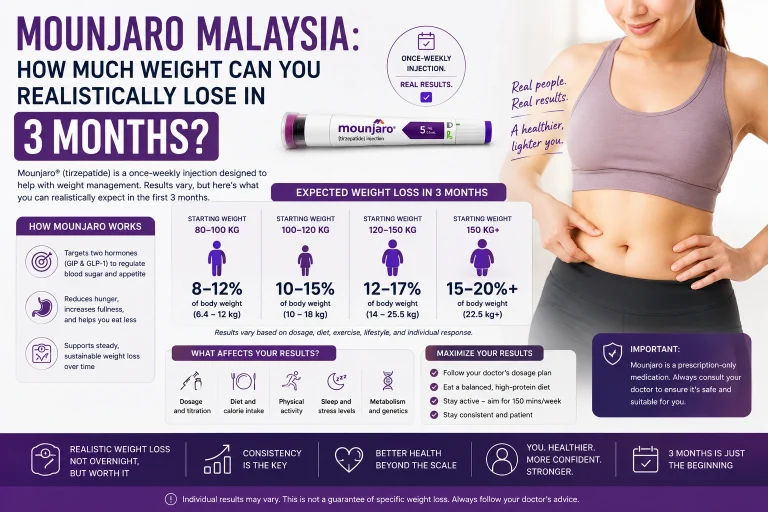
Vivardi’s three-month Tirzepatide guide discusses realistic variation in response. The main Tirzepatide treatment page explains assessment and monitoring at the Rawang clinic.
When should I call the doctor?
Contact the prescriber for persistent vomiting, inability to keep fluids down, severe or ongoing abdominal pain, signs of dehydration, symptoms of gallbladder disease, repeated low blood sugar or an allergic reaction. Severe abdominal pain that may radiate to the back, especially with vomiting, needs urgent evaluation.
Discuss the medicine promptly if you become pregnant, plan pregnancy or are undergoing a procedure requiring anaesthesia or deep sedation. Delayed gastric emptying may affect peri-procedural planning, so the relevant medical team must know you use tirzepatide.
Frequently asked questions
Do I need a special Tirzepatide meal plan?
No single branded diet is required. Smaller balanced meals, adequate protein, vegetables, fibre and fluids are a sensible foundation. Individual needs may require a dietitian.
Can I eat rice while taking Tirzepatide?
Yes. Portion, total carbohydrate intake and what accompanies the rice matter. Combine a sensible portion with protein and vegetables rather than treating rice as forbidden.
What foods should I avoid completely?
There is no universal banned list. Very large, greasy or high-sugar meals commonly worsen symptoms. Avoid foods that repeatedly trigger your symptoms and any food restricted for an allergy or medical condition.
Why do I feel sick after oily food?
Tirzepatide slows gastric emptying, and high-fat meals also take longer to digest. The combination can intensify fullness, nausea or reflux.
Can I drink coffee?
Many people can, but caffeine may worsen reflux, nausea, anxiety or dehydration in some. Avoid large sweetened coffee drinks and observe your response.
Should I use protein powder?
It can help when appetite is low, but is not essential. Choose a product with an appropriate ingredient and sugar profile. Ask for advice if you have kidney disease.
Can I take vitamins?
Supplements should correct a need, not replace food. Ask whether blood tests or a diet review indicate a deficiency. Some supplements cause nausea or interact with medicines.
What can I eat on injection day?
No compulsory injection-day menu exists. A smaller, lower-fat meal may feel more comfortable if symptoms tend to peak after dosing. Continue fluids and follow the prescribed schedule.
Can I eat spicy Malaysian food?
Yes if tolerated. Reduce chilli and rich sauces temporarily if they worsen nausea, diarrhoea or reflux.
Why am I not hungry at all?
Appetite reduction is expected, but inability to meet basic nutrition or fluids is not a goal. Contact the prescriber if intake is persistently very low or accompanied by weakness and vomiting.
How do I prevent hair loss during weight loss?
Avoid excessively rapid weight loss, maintain protein and micronutrients, and seek assessment for ongoing shedding. Hair loss has many causes. Read Vivardi’s guide to excessive hair shedding.
Will eating more protein stop all muscle loss?
No. Protein helps, but resistance exercise, adequate total nutrition, age, health and rate of weight loss also matter.
Can Tirzepatide cause low blood sugar?
Risk is higher when tirzepatide is combined with insulin or sulfonylureas. Your diabetes clinician may need to adjust other medicines. Know your personalised hypoglycaemia plan.
Is Tirzepatide safe to use without medical follow-up?
No. It is a prescription medicine with contraindications, interactions and potentially serious adverse effects. Follow-up helps assess benefit, tolerance, nutrition and dose.
Can I stop Tirzepatide once I reach my goal?
Do not stop without a maintenance plan. Appetite and weight can change after discontinuation. Discuss long-term treatment, nutrition, activity and monitoring with the prescriber.
Final takeaway
The best diet on Tirzepatide is not the smallest possible amount of food. It is a nutritionally complete pattern that fits a reduced appetite, protects muscle, supports glucose control and can continue in ordinary Malaysian life. Prioritise protein, vegetables, fibre and fluids. Keep portions comfortable, eat slowly and reduce foods that repeatedly trigger symptoms.
At Vivardi Clinics in Rawang, tirzepatide is discussed as part of a medical weight-management assessment, not as a stand-alone shortcut. Patients should receive advice based on medical history, current medicines and treatment response.
References and further reading
Related treatment: learn more about Mounjaro treatment at Vivardi.