Short answer: Yes, you can look slim and still carry a dangerous amount of the hidden fat that wraps around your internal organs, and you can also be visibly heavier while carrying relatively little of it. There are two different types of body fat. Subcutaneous fat sits just under the skin, the fat you can pinch, and it is the less harmful type. Visceral fat sits deep inside the abdomen, around the liver, pancreas, and intestines, and this is the metabolically dangerous kind, linked to type 2 diabetes, heart disease, and fatty liver. Because visceral fat is hidden, a normal weight or slim looking person can carry a harmful amount of it, often signalled by a larger waist relative to their frame. The good news is that visceral fat is also the fat that responds fastest to lifestyle change and medical weight management.
There is a common and dangerous assumption that thin equals healthy and heavier equals unhealthy. The reality is more nuanced, and understanding it could genuinely protect your health. This guide explains the two types of fat, why the hidden kind matters so much, how to tell if you might have too much, and what actually reduces it, all from a doctor led point of view.
Two very different types of fat
Not all body fat is the same, and lumping it together is where the confusion starts.
Subcutaneous fat is the layer directly under your skin, spread across your body, most noticeable on the belly, thighs, hips, and arms. It is the fat you can pinch. It is not harmless in large amounts, but it is far less metabolically dangerous than the other type, and some of it is normal and even useful for the body.
Visceral fat sits much deeper, inside your abdominal cavity, packed around vital organs like the liver, pancreas, and intestines. You cannot pinch it, and it is not on the surface. This is the fat that matters most for your health, because it is metabolically active in a harmful way. It releases substances that promote inflammation and interfere with how your body handles insulin and blood fats.
The key point is that these two behave very differently. A modest amount of subcutaneous fat is far less concerning than a significant amount of visceral fat, even if the subcutaneous fat is more visible. Health information on the risks of visceral fat is available from bodies such as the World Health Organization.
Why “slim but unhealthy” is real
This is the crucial part. Because visceral fat is hidden deep inside the abdomen, a person can look slim, have a low overall body weight, and still carry an unhealthy amount of it. This pattern is sometimes described informally as “skinny fat,” or in medical terms as being metabolically unhealthy despite a normal weight.
How does this happen? Genetics, ethnicity, activity levels, diet, sleep, and stress all influence where the body stores fat. Some people, and some populations, are more prone to storing fat viscerally, around the organs, rather than subcutaneously under the skin. This is particularly relevant in Asia, where people can develop the metabolic problems linked to visceral fat at lower body weights and body mass index (BMI) figures than in some Western populations. In other words, a “normal” BMI does not guarantee you are free of dangerous visceral fat.
The flip side is also true. Someone who looks heavier, carrying more visible subcutaneous fat, can sometimes be metabolically healthier than a slim person with a lot of hidden visceral fat. Appearance is a poor guide to metabolic health, which is exactly why the “thin equals healthy” assumption is misleading and can give people a false sense of security.
Can you have subcutaneous fat with little visceral fat, and vice versa?
Yes, both combinations exist, and this is the heart of the question.
You can carry noticeable subcutaneous fat, the pinchable, visible kind, while having relatively little dangerous visceral fat, which means you may look softer but be metabolically reasonably healthy. And you can be slim, with little visible fat, while carrying a harmful amount of hidden visceral fat, which means you look fine but are metabolically at risk.
This is why body composition matters more than the number on the scale or how you look in the mirror. Two people at the same weight can have completely different amounts of the dangerous fat, and therefore completely different health risks. Understanding your own pattern, rather than assuming, is what allows you to act if you need to.
The health risks of visceral fat
Visceral fat is not just a cosmetic issue, it is a metabolic one. Excess visceral fat is strongly linked to:
- Insulin resistance and type 2 diabetes, because visceral fat interferes with how your body responds to insulin.
- Heart disease, through effects on blood pressure, cholesterol, and inflammation.
- Fatty liver disease, as fat accumulates in and around the liver.
- Chronic low grade inflammation, which contributes to many long term conditions.
- Higher risk of some other health problems associated with metabolic dysfunction.
The danger is that these risks build silently. Someone can feel fine and look fine while visceral fat quietly raises their risk of serious conditions over years. This is why it is worth paying attention even if you are happy with how you look, because how you look is not telling you the whole story.
How to tell if you might have too much visceral fat
You cannot see visceral fat directly, but there are useful clues.
- Waist size relative to your frame is one of the most practical indicators. A larger waist, an “apple” shape where fat is carried around the middle, points toward more visceral fat, even in someone who is not heavy overall. Measuring your waist is more informative here than your weight alone.
- Waist to height ratio is a simple check some clinicians use, with a waist under half your height being a rough general target.
- Metabolic markers from blood tests, such as blood sugar, cholesterol, and liver markers, can reveal the effects of visceral fat even when weight looks normal.
- Family history and ethnicity, since some people are more prone to visceral storage and metabolic risk at lower weights.
If you are slim but carry weight around your middle, or you have a family history of diabetes or heart disease, it is worth checking your metabolic health properly rather than assuming you are fine because the scale looks good. A doctor can assess this with simple measurements and, where appropriate, blood tests.
What actually reduces visceral fat
Here is the encouraging part. Visceral fat is generally the fat that responds fastest and best to lifestyle change and medical weight management, often before you see much change in subcutaneous fat.
- Regular activity, combining movement through the day with some structured exercise, is very effective at reducing visceral fat, even without dramatic weight loss.
- Improving diet quality, particularly cutting back on refined sugar and heavily processed food and eating enough protein and fibre, targets the metabolic drivers.
- Managing sleep and stress, because poor sleep and chronic stress, through the hormone cortisol, encourage visceral fat storage.
- Reducing alcohol, which contributes to visceral and liver fat.
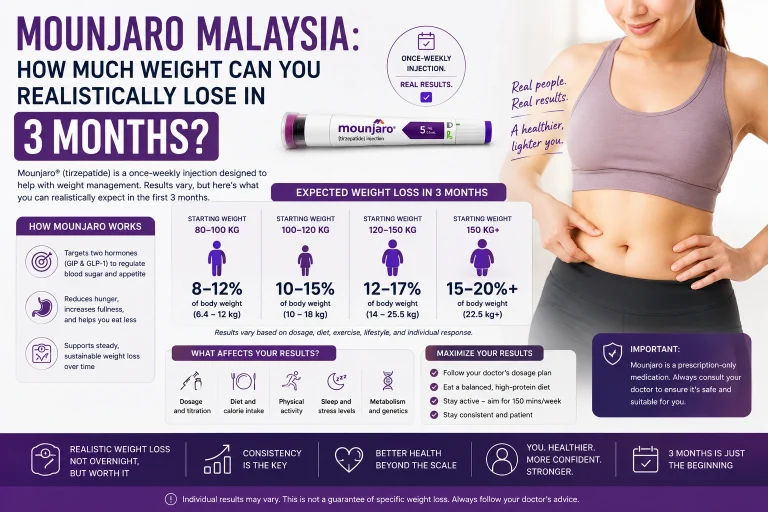
- Medical weight management where appropriate, which can be a powerful tool for people who need more than lifestyle change, and often improves the metabolic markers linked to visceral fat. Our Mounjaro weight loss injections page explains one supervised medical option.
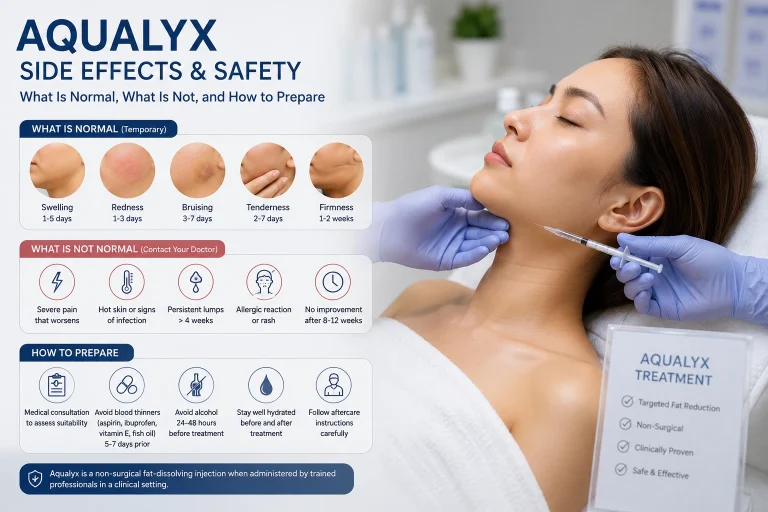
Importantly, spot reduction does not work, and localised treatments like fat dissolving injections address small pockets of subcutaneous fat for contouring, not the deep visceral fat that matters for health. Reducing visceral fat is about overall metabolic improvement, not targeting one area. If your goal is health rather than a contour, the whole body approach is what counts.
Why this deserves a proper medical look
Because visceral fat is hidden and its risks are silent, self assessment only goes so far. A proper medical assessment can measure your waist and body composition, check the metabolic markers that reveal hidden risk, and, crucially, put your results in context of your family history and background. From there, a realistic plan can be built, whether that is lifestyle focused or includes medical support.
This matters especially for people who look slim and therefore assume they are metabolically healthy, because they are the ones most likely to be caught out. Getting checked is not about vanity, it is about catching and reversing silent risk early, while it is most treatable.
Why a doctor led clinic in Rawang
Vivardi Clinics is a doctor led aesthetic and men’s health clinic in Rawang, Selangor. Metabolic health is a medical matter, and understanding your fat distribution, checking the markers that reveal hidden risk, and building a safe, effective plan all benefit from a doctor’s input. Where medical weight management is appropriate, we supervise it properly rather than leaving it to guesswork. Consultations are private and we follow the PDPA Act Malaysia.
Frequently asked questions
Can you have subcutaneous fat with little visceral fat?
Yes. You can carry visible, pinchable subcutaneous fat while having relatively little of the dangerous deep visceral fat, which means you may look softer but be reasonably healthy metabolically. The reverse also happens, where a slim person carries a harmful amount of hidden visceral fat.
What is the difference between visceral and subcutaneous fat?
Subcutaneous fat sits just under the skin and is the fat you can pinch, and it is the less harmful type. Visceral fat sits deep in the abdomen around the organs, cannot be pinched, and is the metabolically dangerous kind linked to diabetes, heart disease, and fatty liver.
Can you be slim and still be unhealthy?
Yes. Because visceral fat is hidden inside the abdomen, a slim looking person with a normal weight can carry a harmful amount of it, often signalled by a larger waist relative to their frame. Appearance is a poor guide to metabolic health.
How do I know if I have too much visceral fat?
Waist size relative to your height is a practical clue, with a waist over half your height suggesting more visceral fat. Blood tests for blood sugar, cholesterol, and liver markers reveal its effects, and family history and background matter. A doctor can assess this properly.
What reduces visceral fat?
Regular activity, improving diet quality, cutting refined sugar and processed food, managing sleep and stress, reducing alcohol, and, where appropriate, medical weight management. Visceral fat often responds faster than subcutaneous fat. Spot reduction does not work.
Do fat dissolving injections reduce visceral fat?
No. Fat dissolving injections address small pockets of subcutaneous fat for body contouring, not the deep visceral fat around your organs. Reducing visceral fat requires overall metabolic improvement, not a localised treatment.
Book a consultation
If you want to know whether you are carrying hidden fat that could affect your health, a proper assessment gives you the real picture, not just a number on the scale. Book a consultation or contact Vivardi Clinics in Rawang, Selangor. Everything is handled privately, by qualified doctors.
This guide was written and reviewed by the medical team at Vivardi Clinics in Rawang, Selangor. Last reviewed July 2026. It offers general education and is not a substitute for advice from your own doctor.

Medically reviewed by Dr. Dinesh Kumar, Medical Director, Vivardi Clinics. MBBS (AIMST), LCP-Certified Aesthetic Physician, Cert. Men’s Health. Last reviewed September 2026.
Care at Vivardi is provided by our team of qualified doctors. This page is for general education and does not replace a personal consultation.